Paro Tshechu rewards people who plan the small things early. The dances are extraordinary, and the setting is one of the finest in the Himalayas, but what separates a good festival morning from a frustrating one comes down to three decisions: what time you walk onto the ground, where you sit, and how many months ahead you commit. We run private festival journeys in Paro every spring, and those three decisions are the ones we spend the most time on with guests before they fly.
This guide covers the mechanics. What the thronged morning actually looks like hour by hour, how seating works when nothing is ticketed, what to wear inside a working fortress, and how far in advance the valley fills up.
What Paro Tshechu is, and when it falls
Paro Tshechu is a five-day religious festival held in the courtyard and festival ground of Rinpung Dzong, closing on the fifteenth day of the second month of the Bhutanese lunar calendar. In Gregorian terms, that lands in spring, usually across March or April. The whole event honors Guru Rinpoche, the eighth-century master who carried Buddhism across the Himalayas.
The word tells you the timing. Tshechu means "tenth day" — the day of the lunar month associated with Guru Rinpoche's acts, and the anchor around which every tshechu in Bhutan is built.
Paro's version draws the largest spring crowds in the country. Families come down from the side valleys in their best kira and gho, monks of the Paro Rabdey perform alongside lay dancers, and the dzong's whitewashed walls hold the sound of horns and cymbals like a bowl. It is a religious observance first and a spectacle second, and the crowd behaves accordingly.
Why do the dates move every year
Bhutan sets festival dates by the lunar calendar, so Paro Tshechu shifts across the Gregorian calendar from year to year. There is no fixed date to memorize.
Bhutan's Department of Tourism publishes confirmed dates well ahead of each season, and we cross-check them against Bhutan's festival calendar before we quote a single flight. Occasionally, the calendar carries a doubled or omitted lunar day, which nudges the whole festival. Confirm dates before booking anything non-refundable.
The throngdrel morning: what happens before dawn
The throngdrel is unfurled in full darkness on the final morning and rolled away before direct sunlight reaches it, which is why the whole day is built backward from about 3am.
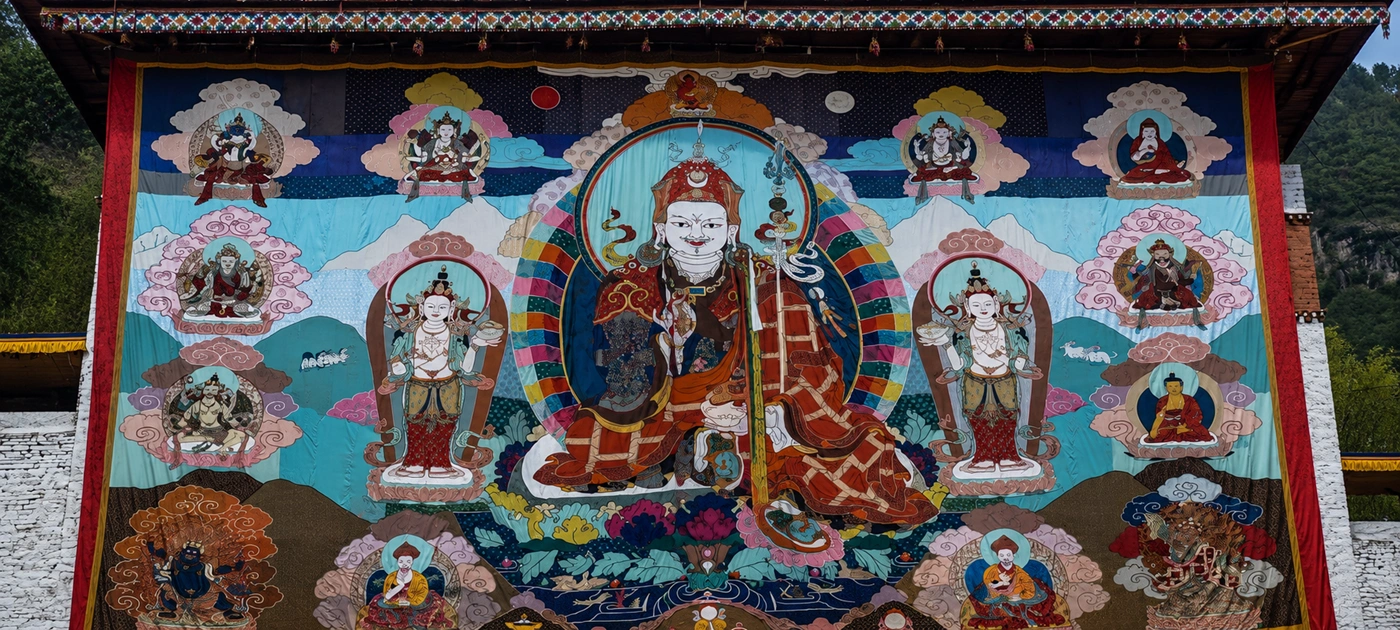
A thangka is a monumental appliqué thangka — Paro's shows Guru Rinpoche with his eight manifestations, worked in silk and stitched by hand, tall enough to cover the face of a multi-story building. The name means "liberation on sight." Seeing it is understood to cleanse the viewer of accumulated wrong actions.
Sunlight degrades old silk. That single conservation fact governs the timing of Bhutan's most photographed morning.
Here is how the hours run. From around 3am, families begin claiming ground in front of the display wall, spreading blankets and passing thermoses of suja, the salted butter tea. Around first light, monks raise the throngdrel with ropes, and it drops open in one long movement, and the crowd goes quiet in a way that is difficult to describe to someone who hasn't stood in it.
Then the lines form. People file beneath the lower edge of the thangka to receive a blessing, and monks distribute consecrated water and saffron rice. By roughly 8 a.m., the throng is folded and gone, and the courtyard dances begin.
Our crew is on the ground before 4am that morning to hold floor space, with folding cushions and blankets already laid out, so guests arrive at about 4:45 and step straight into a seat. We position that space on the western side of the ground, so the rising sun is behind you rather than in your lens. Nobody in our care spends that morning standing on tiptoe at the back.
Seating at Rinpung Dzong: How it Really Works
Seating at Paro Tshechu is not ticketed, numbered, or sold — the festival ground is free and open to everyone, and position is determined entirely by who arrives first. There is no VIP tier to buy your way into. Visitors and Bhutanese families sit on the same stone and grass.
The courtyard where the mask dances take place is the tighter space. Its perimeter fills early; the raised steps and balconies go first, and once the dancing starts, the ground itself stays clear for the performers. The open festival ground below the dzong holds the thronged crowd and is far larger, though the good sightlines still go before sunrise.
Three things make the difference. Arrive earlier than feels reasonable, bring something to sit on, and be willing to stay put once you're settled — leaving your spot at midday usually means losing it.
A note on the fortress itself. Rinpung Dzong was built in 1644 under the Zhabdrung Ngawang Namgyal and still functions as both a monastic center and the seat of district administration, so the festival is taking place inside someone's working office and someone else's monastery.
Our guide walks you across the Nyamai Zam cantilever bridge and up the hill the afternoon before the festival, precisely so you are familiar with the geography of Rinpung Dzong before you attempt it in the dark.
The dances, and how to read them
The mask dances, or cham, are teachings performed in movement, and knowing what each one depicts changes the day from pageantry into something readable. Each carries a specific meaning, and most Bhutanese in the crowd can name them on sight.
A few you'll see. The Shanag, or black hat dance, shows tantric masters taking control of the ground and driving out harmful forces. The Durdag brings the skeletal lords of the cremation ground, sharp and comic at once.
The Raksha Mangcham stages the judgment of the dead, with the virtuous and the wicked led away in front of you.
The Guru Tshengye brings out the eight manifestations of Guru Rinpoche in sequence, and it is the emotional center of the festival for most of the crowd.
Then there are the atsaras. These masked jesters manage the crowd, mock the solemnity, tease visitors, and hold the whole event together with a license nobody else has. They are not a comic sideshow bolted on. Their role is old and formally recognized, and one of Bhutan's dance traditions, the mask dance of the drums from Drametse, sits on UNESCO's list of intangible cultural heritage.
Ask your guide to name each dance as it starts. It's the difference between watching and following.
When to book Paro Tshechu, and what sells out first
Book Paro Tshechu nine to twelve months in advance, and treat flights, not hotels, as the true deadline. Paro is Bhutan's only international airport.
The approach through the valley is flown by a small number of specifically certified pilots, and seats around festival week are the first thing to disappear. We hold air before we hold anything else.
Hotel inventory in the Paro Valley is thin relative to the standards our guests expect, and the best-positioned properties commit their festival-week rooms early. Six months out, you are choosing from what's left. Twelve months out, you're choosing.
Your entry paperwork is the calmer part. Bhutan requires a visa arranged in advance through a licensed operator, along with the daily Sustainable Development Fee, and we handle both filings for you — the current requirements and fee structure are set out in our Bhutan visa and SDF guide, and we confirm live figures in your proposal rather than quoting them here, because they change.
One practical warning. Festival week is the single busiest moment in Bhutan's spring season, and a trip assembled at short notice will show it in the hotels, the flights, and the seat you end up with.
What to wear inside the dzong
Dress modestly and formally: covered shoulders, covered knees, long trousers or a long skirt, and a collared shirt or equivalent. This is a religious event in an active monastery, not an outdoor concert, and Bhutanese families arrive in their finest woven kira and gho with the ceremonial kabney or rachu. Matching that effort is a courtesy people notice.
Practical layering matters more than most visitors expect. The Paro Valley sits at roughly 2,200 meters, so a pre-dawn morning on stone is genuinely cold, while the midday courtyard in spring sun is hot. Bring a warm layer you can shed and something waterproof to sit on.
Etiquette in brief. Remove hats inside the dzong, walk clockwise around chortens and religious structures, never step onto the dance ground, and don't block the view of seated families to get a photograph.
Photography is fine in the courtyard and on the festival ground; inside temples and shrine rooms, it is not, and your guide will tell you where the line falls. Drones are not permitted.
Wear shoes you can slip off easily. You will take them off more than once.
Building the rest of the trip around the festival
Give the festival two full days and build the rest of Paro around it rather than through it. Two days let you take the thronged morning and a full courtyard day without racing, and it leaves room for the valley itself.
Schedule the climb to Taktsang for the day after the throngdrel morning, not before. The Tiger's Nest sits at about 3,120 meters, and the walk up is a solid half-day effort; doing it on three hours of sleep is a poor trade. Our full guide to Taktsang covers the timing and the pacing in detail.
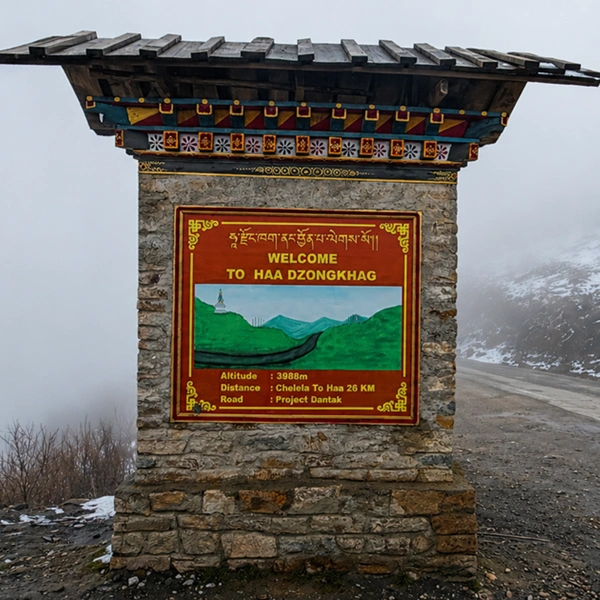
Elsewhere in the valley, Kyichu Lhakhang is among the oldest temples in Bhutan and takes an unhurried hour. The drive up to Chele La, at close to 3,990 meters and the highest motorable pass in the country, makes a good half-day when the courtyard has emptied.
And Paro's red rice, grown in the fields below the dzong, turns up at every meal you eat here — with ema datshi, the chili and cheese dish that anchors the national table.
Most guests pair Paro with Thimphu and Punakha across a week to ten days, which is how we usually shape our private Himalayan journeys through Bhutan.
The festival becomes the spine of the trip rather than the whole of it.
Frequently asked questions
Do you need tickets for Paro Tshechu?
No. Paro Tshechu is a free public religious festival with no tickets, no numbered seats, and no paid viewing tiers. Access to the dzong courtyard and the festival ground is open to everyone, and position depends entirely on arrival time. Visitors do need a Bhutan visa and the daily Sustainable Development Fee arranged in advance through a licensed operator.
What time should you arrive for the Paro Tshechu throngdrel?
Aim to be on the festival ground by 4am at the latest. Bhutanese families begin claiming space from around 3am, the throngdrel opens near first light, and it is rolled away by roughly 8am. Arriving at dawn means standing at the back. Our crew holds ground earlier still so guests can arrive at 4:45 to a seat.
Why is the Paro throngdrel only shown before sunrise?
Direct sunlight damages the aged silk appliqué, so the thangka is displayed in darkness and folded away before the sun reaches the ground. The conservation constraint has shaped the ritual: the pre-dawn viewing, the blessing lines beneath the lower edge, and the early finish are all consequences of protecting the textile.
How far in advance should you book a Paro Tshechu trip?
Nine to twelve months ahead. Flights into Paro are the binding constraint, since it is Bhutan's only international airport and festival-week seats sell out first. Strong hotel inventory in the Paro valley also commits early. Six months out, most of the best options are already gone.
What should you wear to Paro Tshechu?
Modest, formal clothing: covered shoulders and knees, long trousers or a long skirt, collared shirt. Remove hats inside Rinpung Dzong. Bhutanese guests attend in ceremonial kira and gho, so dressing carelessly is seen as disrespectful. Bring a warm layer for the pre-dawn cold and something waterproof to sit on.
Can you photograph the dances at Paro Tshechu?
Yes, in the courtyard and on the open festival ground. Photography inside temples and shrine rooms is not permitted, and drones are not allowed. Stay off the dance floor, and don't stand in front of seated families to get an angle. Your guide will confirm where the boundaries fall each day.
Is Paro Tshechu suitable for older travelers?
Yes, with planning. The main demands are the pre-dawn start, several hours of sitting on stone or grass, and the walk up to the dzong. On our private departures, we bring chairs and cushions, position guests close to the vehicle, and build a slow afternoon into the same day so nobody is asked to do the festival and Taktsang back-to-back.
How does Paro Tshechu differ from Thimphu Tshechu?
Paro Tshechu is Bhutan's largest spring festival, and Thimphu Tshechu is the largest autumn one. Paro's setting is the more dramatic of the two, with the dzong above the river and mountains behind it, while Thimphu's draws bigger crowds and a more urban atmosphere. Both display a throngdrel at dawn.
Planning your own festival morning
The festival itself asks nothing of you but attention. Everything else — the air seats, the room with the valley view, the dark walk up to the ground at four in the morning with your place already held — is logistics, and logistics are ours.
If you want the traditional morning done properly, our Paro Tshechu festival tour is built around that, with the Paro Valley, Thimphu, and Punakha shaped by the lunar dates. Tell us which spring you're thinking of, and we'll let you know what's still open.