Nepal's Top 5 National Parks: A Complete Guide
Nepal's protected area network is the operational backbone of the country's wildlife and high-mountain travel experience. The Department of National Parks and Wildlife Conservation manages a system that has shifted across the past five decades from a paradigm of royal hunting preserves to one of community-based conservation that incorporates buffer zone management committees and indigenous participation.
The transformation has produced one of the genuinely successful conservation stories in Asia — the Royal Bengal tiger population in Nepal doubled between 2010 and 2022, and the Greater One-horned rhinoceros population has recovered from near-extinction to the largest single-country population outside of India.
Five parks dominate the international travel circuit because of their accessibility, species concentration, and the cultural context surrounding each. Sagarmatha (Everest) anchors the high-altitude trekking economy with the Sherpa cultural infrastructure. Chitwan and Bardia anchor the wildlife safari category — Chitwan as the developed, commercial choice, Bardia as the quieter, more remote alternative. Langtang serves as the closest mountain wilderness to Kathmandu and the most accessible red panda habitat in Nepal. Rara protects the largest and deepest freshwater lake in the country in one of the most remote sections of the Karnali region.
This guide covers what each of the five parks offers, who lives in and around them, what wildlife travelers can reasonably expect to encounter, and how access works in practice. The aim is an operator-level overview that helps travelers match their priorities to the right park rather than picking by name recognition alone.
A note on conservation context. Several of the species covered in this guide are critically endangered or vulnerable under the IUCN Red List. Wildlife sightings on any safari or trek are weather-dependent, season-dependent, and habitat-dependent. We are direct with guests about realistic sighting probabilities — tiger sightings on a Chitwan or Bardia visit are possible but not guaranteed; rhino sightings in Chitwan are very likely; snow leopard sightings in Sagarmatha or Langtang are rare, even on trips dedicated specifically to tracking them. The conservation success of these parks rests on community participation, scientific monitoring, and the kind of low-impact tourism that we operate. Travelers booking through us support that model.
Park Comparison at a Glance
|
Park
|
Area
|
Highest Point
|
Primary Travel
|
Key Species
|
|
Sagarmatha
|
1,148 km²
|
8,848 m
|
High-altitude trek
|
Snow leopard, red panda, musk deer
|
|
Chitwan
|
952.6 km²
|
815 m
|
Wildlife safari
|
Bengal tiger, one-horned rhino, gharial
|
|
Bardia
|
968 km²
|
1,441 m
|
Wildlife safari
|
Bengal tiger, wild elephant, Gangetic dolphin
|
|
Langtang
|
1,710 km²
|
7,245 m
|
Mountain trek
|
Red panda, snow leopard, Himalayan tahr
|
|
Rara
|
106 km²
|
4,039 m
|
Lake and culture
|
Red panda, musk deer, endemic snow trout
|
Sagarmatha National Park
Sagarmatha National Park anchors the Everest trekking economy and is one of the most visited high-altitude protected areas in the world. The park was established in 1976 and inscribed as a UNESCO World Heritage Site in 1979. The name comes from the Nepali sagar (sky) and matha (head). The Sherpa community refers to Mount Everest itself as Chomolungma, the Goddess Mother of the World.
The park spans 1,148 square kilometers in the eastern Solukhumbu district and includes 25 peaks above 6,000 meters, the Khumbu Glacier (the world's highest), the Ngozumpa Glacier (Nepal's longest), and the Gokyo Lakes complex (designated a Ramsar wetland in 2007).
Geography and Hydrology
The park's verticality is the result of the ongoing tectonic collision between the Indian and Eurasian plates, which continues to elevate the Himalaya at several millimeters per year. The geological record is written into the rock — marine limestone layers with fossils of ancient sea creatures appear near the summit regions of Everest, while the exposed slopes are predominantly metamorphic gneiss and schist with granite intrusions forming the cores of major massifs like Lhotse and Ama Dablam.
The park serves as the upper catchment for the Dudh Koshi and Bhote Koshi river systems. The Gokyo Lakes — a chain of six turquoise lakes at altitudes between 4,700 and 5,000 meters — are critical freshwater reservoirs and hold spiritual significance for the local Sherpa community.
Wildlife
The park supports a meaningful predator-prey community despite the high altitude. Snow leopards (Panthera uncia, listed as Vulnerable) patrol the rocky alpine zones above 4,000 meters. Their prey base includes blue sheep (Pseudois nayaur) and Himalayan tahr (Hemitragus jemlahicus), the latter often visible on steep cliffs near Namche Bazaar and Kyanjin Gompa. A 2019 DNA study confirmed the presence of Pallas's cat (Otocolobus manul) on the southern flanks of Everest above 5,100 meters, indicating that the park's biodiversity is more layered than previously documented.
The bamboo forests at lower elevations support the red panda (Ailurus fulgens, Endangered) and the musk deer (Moschus leucogaster, Endangered). The park has 208 recorded bird species, including the Himalayan monal (Nepal's national bird), blood pheasant, bearded vulture, and the alpine chough, observed at extreme altitudes near the summit zones.
Sherpa Cultural Context
Approximately 20 Sherpa villages sit within the park boundary. The Sherpa community practices the Nyingma school of Tibetan Buddhism, and the religious framework historically prohibited hunting and animal slaughter within the Khumbu — a form of indigenous protection that predates the formal park designation by centuries.
Traditional resource management systems, including the Shingo Ngawa forest-product regulation, sustainably govern the collection of firewood and timber. The Tengboche monastery at 3,867 meters is the spiritual anchor of the region. The Mani Rimdu festival at Tengboche in October-November is the major cultural observance of the year.
How We Run Sagarmatha Region Departures
- Standard EBC trek (12-14 days), Three Passes trek (18-21 days), Everest Helicopter Tour (single morning), and Everest with Children family departures
- Senior guides with multi-year Khumbu tenure and IPPG-standard porter welfare
- Sagarmatha National Park permit and Khumbu Pasang Lhamu local permit are included in trek pricing
- Helicopter access in both directions on luxury EBC departures, eliminating Lukla fixed-wing weather risk
- Mani Rimdu festival timing is built into October-November departures, where guests want to attend
Chitwan National Park
Chitwan National Park was Nepal's first national park, established in 1973, and is the most commercially developed wildlife destination in the country. The 952.6-square-kilometer park spans the subtropical Inner Terai floodplains across the Narayani and Rapti river valleys, with the Churia Hills forming the northern boundary.
UNESCO inscribed Chitwan as a World Heritage Site in 1984. The park is the global model for the recovery of large mammal populations from near-extirpation — both the Royal Bengal tiger and the Greater One-horned rhinoceros have recovered substantially in Chitwan since the park's establishment.
Ecological Profile
The park's habitat is dominated by Sal (Shorea robusta) forest, which covers roughly 70% of the land area, with the remaining terrain comprising riverine forest and grasslands. The elephant grass (Saccharum ravennae) that grows to 8 meters provides the dense cover that rhinos and tigers prefer.
The park supports 68 recorded mammal species, more than 500 bird species, and 56 species of reptiles and amphibians. The Bengal tiger population exceeds 100 individuals — among the highest densities in any protected area globally. The Greater One-horned rhinoceros population is the largest in Nepal. Other significant species include the sloth bear, gaur (Indian bison), leopard, and the Gangetic dolphin in the Narayani river system.
Beeshazari Lake Ramsar Wetland
Beeshazari Lake in the Chitwan buffer zone is a 3,200-hectare oxbow wetland system designated as a Ramsar site of international importance in 2003. The name translates as 'twenty thousand lakes' for the interconnected lake complex. The wetland is critical habitat for the endangered gharial crocodile (Gavialis gangeticus), a fish-eating crocodile species with a lineage extending back 100 million years.
The lake also supports the marsh mugger crocodile, 121 recorded fish species, and a substantial migratory waterbird population, including the endangered Pallas's fish eagle, the vulnerable lesser adjutant stork, and the near-threatened ferruginous duck.
The Tharu Community
The Tharu community is the indigenous population of the Chitwan region and the cultural anchor of the wildlife travel experience. The community developed natural malaria resistance over centuries that allowed them to cultivate the Terai floodplains while other groups remained excluded from the malaria zone.
The cultural practice includes traditional mud-walled houses with geometric exterior decoration, the peacock and stick dances, the Maghi festival at the winter solstice as the Tharu new year, and dietary specialties, including freshwater mussels, snails, and crabs, drawn from river ecology.
The Bote, Majhi, and Musahar communities — the river-people communities — traditionally subsisted on fishing and ferrying, and their relationship to the river infrastructure is a meaningful cultural strand of the region beyond the better-known Tharu cultural presence.
Our Operating Standards in Chitwan
- Chitwan National Park entry permit and 13% VAT included in pricing
- Walking safari with experienced naturalist guides — the genuine wildlife experience that a vehicle safari does not match
- Canoe safari on the Narayani river for gharial, mugger crocodile, and bird observation
- Strict no-elephant-ride policy — we do not arrange elephant safaris regardless of guest request. The Nepal wildlife and welfare standards we follow rule it out
- Tharu cultural evening as part of every Chitwan departure — community-managed cultural programming with local performers
Bardia National Park
Bardia National Park is Nepal's largest and most undisturbed national park, covering 968 square kilometers in the remote western Terai. The park was established in 1988 and forms a contiguous protected landscape with the neighboring Banke National Park, together creating one of the most significant Tiger Conservation Units in South Asia. Bardia received the international TX2 award in 2022 for successfully doubling its wild tiger population since 2010 — a measurable conservation outcome that distinguishes Bardia from the more commercially developed Terai parks.
Why Bardia Differs from Chitwan
- Significantly lower visitor density — Bardia receives a fraction of the Chitwan tourist volume
- Walking safari opportunities with realistic tiger sighting probability — Bardia is one of the few protected areas globally where tigers are regularly observed on foot rather than from vehicles only
- Larger park area with more contiguous wilderness habitat
- Asian wild elephant population — Bardia is one of the few Nepal parks with regular wild elephant sightings, including the famous bulls Raja Gaj and Kanchha, first photographed in 1985
- Gangetic dolphin habitat in the Karnali river — the rare and endangered Platanista gangetica is one of the genuinely unusual wildlife observation opportunities Bardia offers
Habitat and Species
Bardia's vegetation mirrors Chitwan's broad pattern — Sal forest dominating roughly 70% of the area, with alluvial grassland, riverine forest, and savannah making up the remainder. The Karnali (specifically the Geruwa branch) and the Babai rivers define the park's hydrological structure.
The park supports 53 recorded mammal species, 407-513 bird species depending on the survey, 125 recorded fish species in the Karnali-Babai system, and the gharial and mugger crocodile populations. The reintroduction of the Greater One-horned rhinoceros in Bardia has been one of the longer-running translocation projects in Nepal, and the population is now established.
How We Run Bardia
- Bardia National Park entry permit included
- A walking safari is the standard experience rather than the vehicle safari that dominates Chitwan operations
- Karnali River jeep and dolphin observation on the dolphin-focused departures
- Tharu cultural programming with the local Bardia Tharu community, which maintains stronger traditional practices than the more commercially developed Chitwan equivalent
- Combined Bardia-Chitwan itineraries are available for travelers wanting both wildlife experiences
Langtang National Park
Langtang National Park was Nepal's first Himalayan national park, established in 1976. The park spans 1,710 square kilometers north of Kathmandu — making it the most accessible mountain wilderness from the capital — and includes the 7,245-meter Langtang Lirung massif, the high-altitude lakes of Gosaikunda (designated Ramsar in 2007), and the substantial protected forest of the central middle hills.
The park's altitudinal range, from 1,000 meters to over 7,000 meters, produces 14 distinct vegetation types across four major ecological zones.
Why Langtang Matters for Wildlife
Langtang is widely considered the best location in Nepal for red panda observation. The bamboo undergrowth in the temperate zone between 2,000 and 3,000 meters provides the species' primary habitat, and the population density in Langtang's protected forest is among the highest in the country.
The park also supports snow leopards in the alpine zones above 4,000 meters, Himalayan black bears in the subtropical and temperate forests, musk deer in dense undergrowth between 2,500 and 3,500 meters, and a substantial population of Himalayan tahr on the steep cliffs.
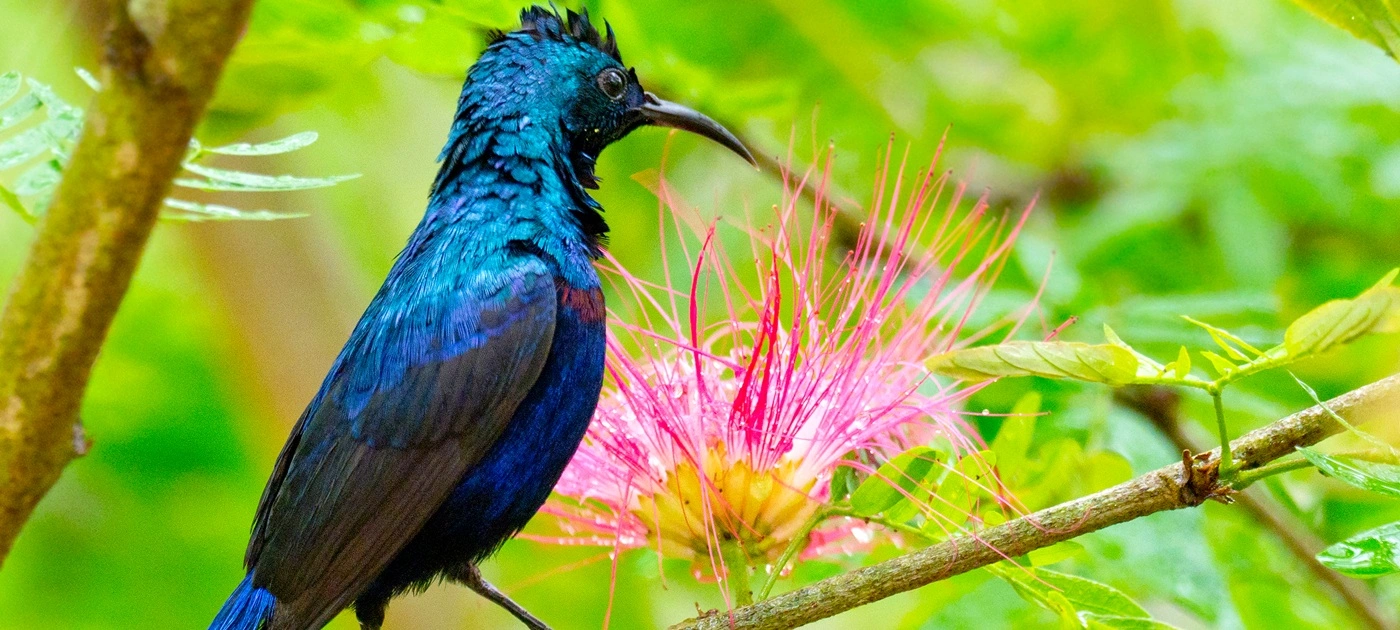
Bird species exceed 250, including the Himalayan monal, fire-tailed sunbird, and grandala. The Nepalese larch (Larix nepalensis) — the only deciduous conifer in Nepal — grows in the subalpine zone here, one of the park's genuinely unusual botanical features.
The Tamang and Yolmo Communities
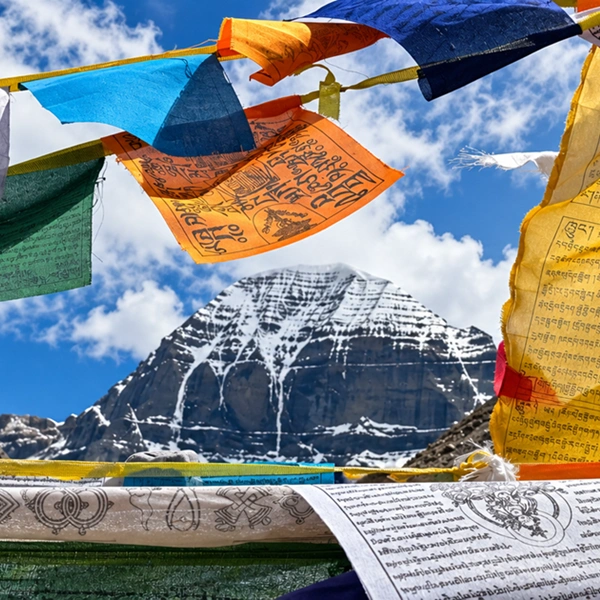
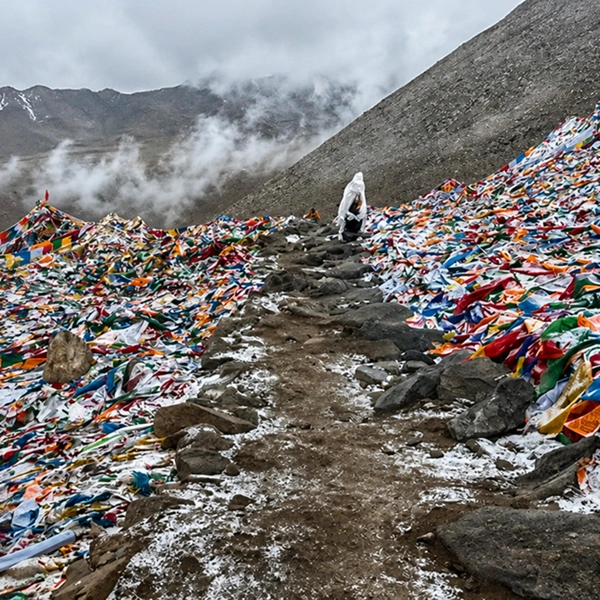
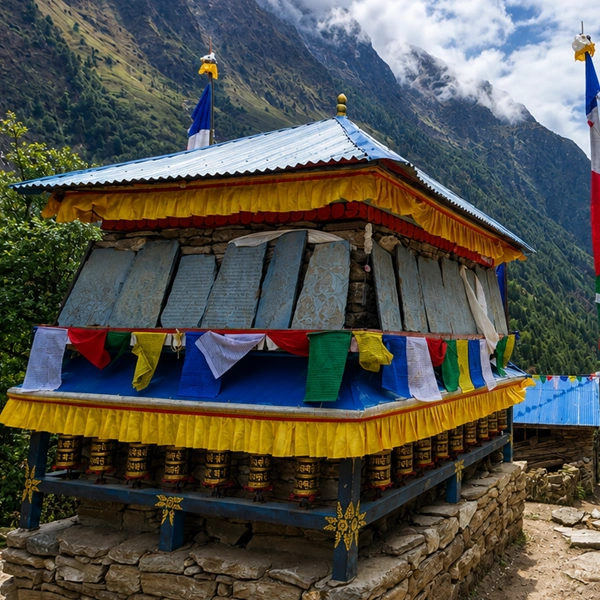
Langtang is the cultural anchor of the Tamang and Yolmo communities, both of which practice a syncretic tradition that blends Tibetan Buddhism with pre-Buddhist Bon practices. The heritage is visible in the monasteries (Kyanjin Gompa being the most architecturally significant within the park boundary), the intricate woodcarvings on traditional houses, and the prayer flag arrays at mountain passes.
The Tamang Heritage Trail in the lower park sections is a dedicated cultural trekking route that passes through Tamang villages with traditional architecture and homestays. The Yolmo community is concentrated in the Helambu region in the park's southeastern section.
The 2015 Earthquake and Community Recovery
The Langtang valley was the worst-affected single area in the 2015 Gorkha earthquake. The village of Langtang was completely destroyed by an earthquake-triggered avalanche, and the entire resident community of the village was killed or displaced along with the trekking party present at the time.
The decade since 2015 has involved substantial community rebuilding — the village of Langtang has been rebuilt at a slightly different location for geological safety reasons, the trekking infrastructure has been restored, and the eco-lodge accommodation standard at Kyanjin Gompa has emerged as a model for sustainable high-altitude tourism.
The Gosaikunda Lake at 4,300 meters remains a focal point of religious pilgrimage — thousands of Hindu and Buddhist pilgrims travel to bathe in the lake during the Janai Purnima festival each August. The lake is mythologically held to have been created by Lord Shiva's trident.
Our Langtang Operating Model
- Luxury Langtang Valley trek (8 days with helicopter return, the dominant product) and combined Langtang-Gosaikunda extension itineraries
- Langtang National Park entry permit and TIMS card included
- Helicopter access from Kathmandu to Syabrubesi on luxury departures, replacing the 7-hour mountain road
- Better lodge accommodation in Kyanjin Gompa with heated dining halls and warm rooms
- Senior guides with multi-year Langtang tenure and explicit knowledge of the post-2015 community context
Rara National Park
Rara National Park is Nepal's smallest national park by area at 106 square kilometers, located in the remote Mugu and Jumla districts of the Karnali region. Despite its small size, the park anchors one of the most distinctive landscapes in Nepal — Rara Lake, at 2,990 meters, is the largest and deepest freshwater lake in the country, with 10.8 square kilometers of surface area and a maximum depth of 167 meters. The park was established in 1976, and the lake was designated a Ramsar wetland in 2007.
Rara Lake — The Park's Anchor
The lake sits in an oval depression with an east-west axis, surrounded by coniferous forest of blue pine, spruce, fir, and juniper. The water is clear enough to mirror the surrounding forest and the snow-capped peaks of Chuchemara and Ruma Kand. The lake is the only known habitat for three endemic snow trout species (Schizothorax raraensis, S. macrophthalmus, and S. nepalensis), all of which were scientifically described from this single ecosystem in the 1980s.
The park supports red panda in the bamboo and forest habitat, musk deer, Himalayan black bear, and 272 recorded bird species — the lake serves as a critical stopover point for migratory waterfowl crossing the Himalayan barrier on their seasonal routes, with coots, grebes, pochards, and gulls all observed in significant numbers during migration windows.
The Sinja Valley and the Khasa Heritage
South of Rara National Park lies the Sinja Valley, the historical capital of the Khasa Kingdom, which ruled western Nepal from the 12th to the 14th centuries. The valley is the cradle of the Nepali language — the earliest inscriptions in the Devanagari script were found on the cliffs here.
The ruins of ancient palaces, the Kanaka Sundari temple complex, and the remains of an underground water supply system testify to the medieval civilization that developed in this remote valley. The local population continues to practice traditional Masto shamanism in stone temples called Dewals. The Raute community — the last nomadic hunter-gatherer community in Nepal, who continue to practice traditional foraging and hunting in the surrounding forests — moves through this region as part of their seasonal range.
How We Run Rara
- Domestic flight access (Kathmandu to Nepalgunj, Nepalgunj to Talcha airstrip) — the practical alternative to the 10+ day road approach
- Rara National Park entry permit included
- Light walking circuit around the lake (the full circumnavigation is a meaningful single-day walk), plus the optional Murma Top viewpoint hike for the panoramic perspective
- Sinja Valley cultural extension for travelers interested in the medieval Khasa Kingdom heritage and the Masto shamanic tradition
- Smaller group sizes and longer time at the lake — the Rara experience rewards slow pacing rather than rapid transit
Park Access and Seasonal Timing
Access Logistics
|
Park
|
Access Point
|
Transport Method
|
Time from Kathmandu
|
|
Sagarmatha
|
Lukla
|
Helicopter or fixed-wing flight
|
30-45 min flight + trekking access
|
|
Chitwan
|
Bharatpur / Sauraha
|
Road (5-6 hours) or domestic flight
|
5-6 hours road / 20 min flight
|
|
Bardia
|
Nepalgunj + drive
|
Flight to Nepalgunj plus 3-hour drive
|
1 hr flight + 3 hr drive
|
|
Langtang
|
Syabrubesi
|
Road (7 hrs) or helicopter
|
7 hrs drive / 35 min helicopter
|
|
Rara
|
Talcha airstrip
|
Kathmandu-Nepalgunj-Talcha flights
|
Two flights + short trek to the lake
|
Seasonal Timing
The five parks operate on broadly similar seasonal windows but with park-specific nuances that affect trip planning.
- Autumn (October to November): Strongest single window for all five parks. Post-monsoon clarity produces exceptional visibility in Sagarmatha, Langtang, and Rara. The wildlife in Chitwan and Bardia is concentrated along the riverbanks, where water sources are concentrated.
- Spring (March to May): Rhododendron blooms in Sagarmatha and Langtang. Rising temperatures in the Terai force wildlife toward the riverbanks in Chitwan and Bardia, significantly increasing the probability of sightings. Rara is accessible, and the lakeside is at its visual peak.
- Winter (December to February): High mountain trails in Sagarmatha and Langtang are partially blocked by snow, but lower-altitude trekking remains feasible. Chitwan and Bardia are at their strongest for birdwatching — migratory species in the wetlands peak in December and January.
- Monsoon (June to September): Generally avoided for trekking in the parks. Chitwan and Bardia remain operationally feasible, but visibility for wildlife observation drops in heavy rain, and leech presence on walking safaris is significant.
How to Choose Among the Five Parks
Travelers planning a single Nepal park visit should match their choice to their travel priorities. The five parks are genuinely different rather than substitutable.
- First Himalayan trekking experience: Sagarmatha (EBC trek) or Langtang (Langtang Valley trek). Sagarmatha is the iconic choice; Langtang is the closer, quieter, and more culturally focused alternative.
- Wildlife safari with high sighting probability: Chitwan is the developed commercial choice with the highest rhino-sighting probability. Bardia is the quieter alternative, with a higher probability of tiger sightings and greater walking-safari accessibility.
- Remote lake and cultural exploration: Rara, with the Sinja Valley extension for the medieval Khasa heritage and the broader Karnali frontier experience.
- Red panda observation specifically: Langtang is the strongest single park, followed by Sagarmatha (lower-altitude sections only) and Rara.
- Snow leopard tracking: Sagarmatha for the genuine wilderness experience; Langtang for the more accessible (but still rare-sighting) alternative. See our dedicated Snow Leopard Tracking in Nepal blog for the details.
- Multi-park combined itineraries: Chitwan-and-Sagarmatha is the classic combined cultural-and-trek pairing. Bardia-and-Langtang is the quieter version of the same combination. Rara stands alone better than the others because of the access logistics.
Frequently Asked Questions
Which is the best national park in Nepal?
The five parks are genuinely different rather than ranked. Sagarmatha is the iconic high-altitude experience for first-time Himalayan trekkers. Chitwan is a developed commercial wildlife destination with the highest probability of rhino sightings. Bardia is the quieter wildlife alternative with greater tiger-sighting potential. Langtang is the closest mountain wilderness with a strong red panda habitat. Rara is the remote lake-and-culture experience. The right choice depends on what the traveler specifically wants from the trip rather than on any objective ranking.
Can I see a tiger on a wildlife safari in Nepal?
Possible but not guaranteed. Chitwan and Bardia both have meaningful resident tiger populations. Bardia has a slightly higher sighting probability due to the accessibility of walking safaris and the lower visitor density, which allows tigers to move through more accessible habitat. Both parks produce successful tiger sightings on roughly 30-50% of dedicated 3-4 day wildlife safari departures, though the percentages vary significantly by season and by the operator's tracking approach. We are direct about realistic probabilities at the booking stage rather than promising sightings we cannot guarantee.
Where can I see one-horned rhinos?
Chitwan and Bardia both have established rhino populations. Chitwan has the largest population in Nepal — the probability of sighting on a 2-3-day Chitwan wildlife safari is very high, typically 80-90%. Bardia has a reintroduced rhino population that is smaller but established. For travelers prioritizing rhino sightings, Chitwan is the stronger choice. The Bengal Tiger Safari and One-Horned Rhino Safari blogs in our wildlife vertical cover the details.
Where can I see red pandas?
Langtang is the strongest single location in Nepal — the bamboo forest in the temperate zone has the highest population density, and the lower visitor pressure there makes encounters more likely. Sagarmatha and Rara also support red panda populations, but at a lower density. Specialized red panda tracking departures with experienced naturalist guides increase the sighting probability meaningfully — our Red Panda Tracking in Nepal blog covers the details.
How do the parks compare in cost?
National park entry permits are similar in structure but vary in cost. Chitwan charges NPR 2,000 plus 13% VAT for foreign nationals (the highest single park fee in Nepal). Bardia and the other Terai parks charge NPR 1,500. Sagarmatha, Langtang, and Rara charge NPR 3,000.
Total trip costs vary substantially more than the entry fees — Chitwan and Bardia luxury wildlife departures run USD 1,500-3,500 per person for 3-4 day trips. Sagarmatha trek pricing ranges from USD 4,500 to 9,000+, depending on duration. Langtang luxury treks run USD 5,000-7,500. Rara access costs USD 2,500-4,000 due to flight logistics.
When is the best time to visit Nepal's national parks?
Mid-October to late November is the strongest single window across all five parks — stable post-monsoon weather, good visibility in the mountain parks, and concentrated wildlife at the riverbanks in the Terai parks. Mid-March to mid-May is the second-strongest window, with rhododendron blooms in the mountain parks and rising temperatures in the Terai that increase the probability of wildlife sightings. Winter (December-February) is the best time for birdwatching in Chitwan and Bardia. Monsoon is generally avoided.
Are the parks safe for wildlife encounters on foot?
With an experienced guide team accompaniment, yes. Our walking safari operations in Chitwan and Bardia use senior naturalist guides who carry the appropriate safety equipment and know the specific behavior patterns of tigers, rhinos, and elephants in each park. The walking safari offers a meaningfully different experience from a vehicle safari — closer to the ecology, more involved in the tracking process, and able to access habitats that vehicles cannot reach. The risk profile is genuine but manageable with appropriate guide team accompaniment. We do not arrange unguided walking inside the parks under any circumstances.
What is the conservation status of these species?
Several of the key species are critically endangered or vulnerable under the IUCN Red List. Snow leopard is Vulnerable. Red panda is Endangered. The Royal Bengal tiger is Endangered. The one-horned rhinoceros is Vulnerable. The Gangetic dolphin is Endangered. The Gharial crocodile is Critically Endangered. The conservation success in Nepal — including the doubling of the tiger population between 2010 and 2022 — has been driven by community-based conservation models with active involvement of buffer zone management committees, anti-poaching operations, and the kind of low-impact tourism we operate. Travelers booking through us support this model.
Can I combine multiple parks in a single trip?
Yes, and we recommend it for travelers with two-week or longer Nepal trips. The classic combined itinerary pairs Chitwan or Bardia (3-4 days of wildlife) with Sagarmatha or Langtang (a multi-day trek). Travelers with three weeks available can combine Bardia, Langtang, and Sagarmatha for a comprehensive cross-altitudinal experience. Rara works better as a standalone trip because the access logistics make combining it with other park operations operationally complex.
Plan Your Nepal National Park Trip With Us
Tell us which park or combination you want to experience, your dates, your wildlife priorities, and any specific species you want to track. Our team returns a written proposal within 48 hours, covering the route, the senior guide assignment, realistic sighting probabilities for the species you specify, and combined-park options, where time allows. The Nepal national park system rewards travelers who choose well rather than just visit broadly — and our team helps you choose well.