Top 10 Reasons
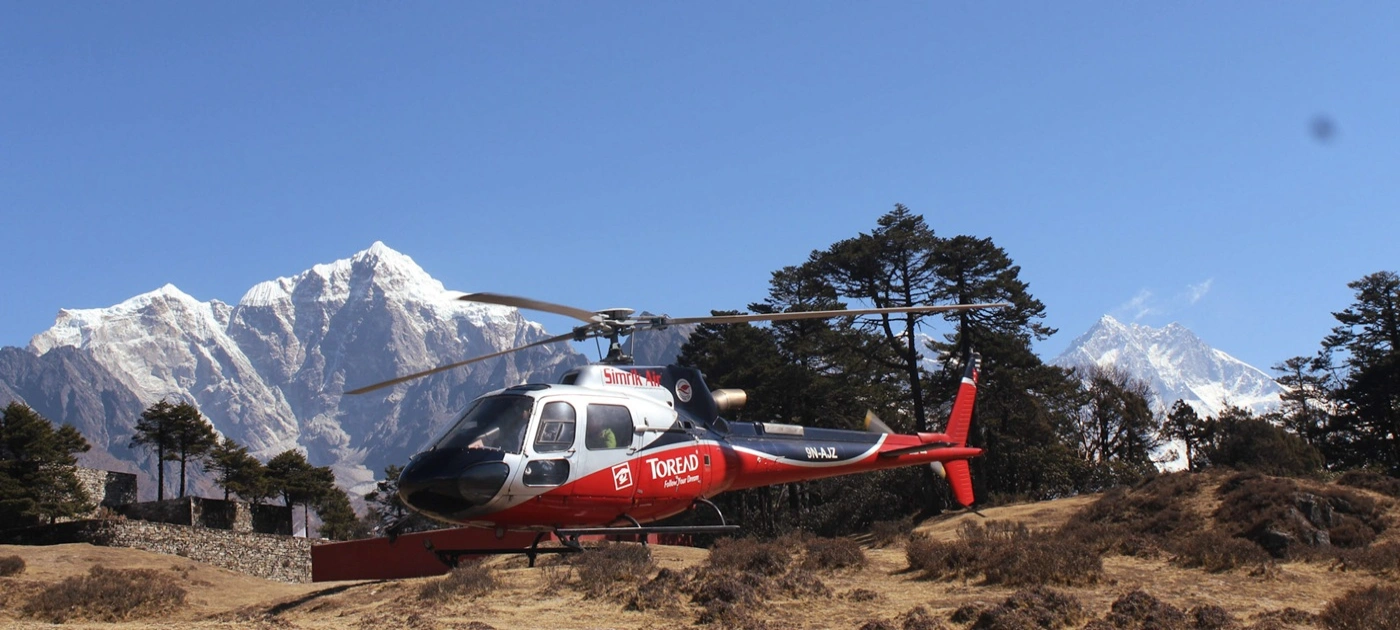
The Everest Base Camp helicopter tour is a single-day experience that takes travelers from Kathmandu to the upper Khumbu valley, lands at Kala Patthar or near Everest Base Camp for the close-quarters view of Mount Everest, includes breakfast at the Hotel Everest View at 3,880 meters for the panoramic Khumbu perspective, and returns to Kathmandu in time for lunch. The tour delivers what the standard 12-day EBC trek delivers visually — the same mountain views, the same Khumbu landscape, the same Sherpa cultural anchor — in a single morning rather than two weeks of walking.
The tour is not the right experience for every traveler, and we are direct with guests about when it does and does not make sense. Travelers wanting the trek itself — the cultural depth that comes from walking through Sherpa villages over multiple days, the physical achievement of reaching EBC on foot, the slow visual unveiling of the high mountains as the trek progresses — should do the trek.
The helicopter tour is the wrong product for them. But travelers who cannot commit two weeks, who have physical limitations that exclude the trek, who want the views without the altitude exposure of multi-day high-altitude trekking, or who are using the helicopter as a complement to other Nepal experiences rather than as a substitute for the trek — for those travelers, the helicopter tour delivers something genuinely meaningful. The ten reasons below cover what the experience actually offers and the operating standards that distinguish well-run tours from poorly-run ones.
1. You See Everest, Lhotse, Ama Dablam, and the Khumbu Valleys in a Single Morning
The most direct reason. The tour departs Kathmandu around 6:00-6:30 AM and reaches the Hotel Everest View at 3,880 meters roughly 75 minutes later. From the helicopter en route, travelers see the Himalayan range rolling east from Langtang through the Rolwaling peaks to the Khumbu — Cho Oyu, Pumori, Nuptse, Lhotse, Everest, Ama Dablam, and dozens of other named and unnamed peaks.
The aerial perspective is genuinely different from the ground-level view that two-week trekkers experience. From the trek, Everest appears in glimpses through breaks in the valley. From the helicopter approach, the entire Khumbu spreads out below in a single panoramic sweep. Most travelers describe this aerial transit as the visual high point of the experience — even more memorable than the landings themselves.
2. You land at Kala Patthar or near the base camp at over 5,000 Metres
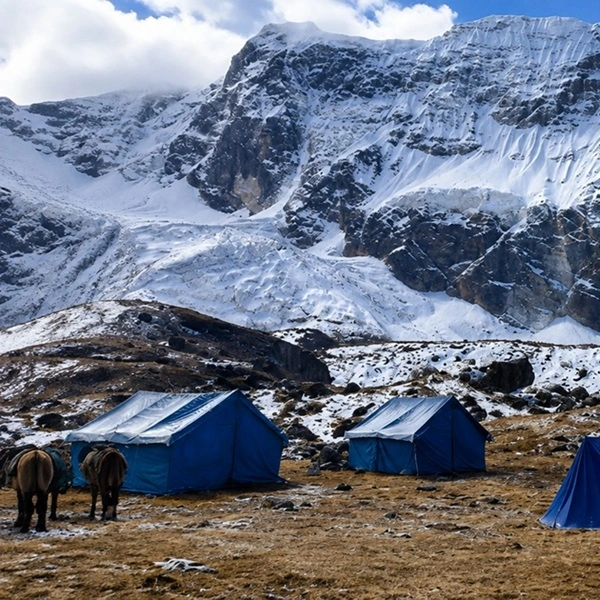
The tour includes a high-altitude landing, typically at Kala Patthar (5,545 meters) or at a flat area near Everest Base Camp, depending on weather and the specific operator's flight plan. The landing is brief — usually 10-15 minutes on the ground because of the altitude — but the perspective on Everest from this point is the same view that two-week EBC trekkers spend an entire trek to reach. Kala Patthar is the classic vantage point for the photographic Everest summit pyramid above the Khumbu Icefall and the South Col.
Travelers stand at the altitude that trekkers reach after twelve days of progressive ascent, see the same panorama, and continue back to the helicopter. The brevity is necessary at altitude — the body has not had time to acclimatize to 5,545 meters, and longer exposure is not safe — but the moment of standing at that altitude with Everest in close-quarters view is the same moment that defines the entire EBC trek for travelers who walk it.
3. You Have Breakfast at the Hotel Everest View at 3,880 Metres
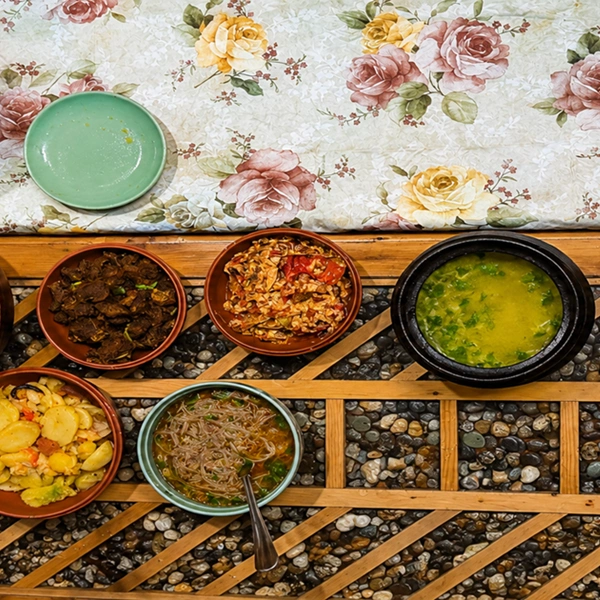
Between the high landing and the return to Kathmandu, the tour typically descends to the Hotel Everest View at 3,880 meters above Namche Bazaar for breakfast. The hotel is positioned specifically for the panoramic view of Everest, Lhotse, Nuptse, and Ama Dablam from a south-facing terrace at an altitude where the body can safely spend extended time.
Breakfast on the terrace with the mountain panorama as the backdrop is genuinely one of the experiences travelers remember most clearly from the tour. The Hotel Everest View was historically the highest-altitude hotel in the world by official certification, and the operating model is built around exactly this morning panoramic breakfast for both trekking and helicopter guests. The combination of altitude exposure for visual drama and lower altitude for safe extended time produces a controlled experience that the pure summit landing does not match.
4. You Complete the Experience in a Single Day Rather Than Two Weeks
The straightforward time efficiency argument. A full Everest Base Camp trek requires a minimum of 12-14 days — international flight days, the trek itself, contingency days for Lukla weather, and recovery time in Kathmandu after the descent. The helicopter tour fits the same visual experience into a single morning.
Travelers arriving in Nepal for a one-week trip can do the tour on day two or three and have the rest of the week for cultural Kathmandu, Pokhara, or Chitwan. Travelers visiting Nepal as part of a broader Asia itinerary can experience Everest without having to rebuild the entire trip around the trek's two-week minimum. Time savings are the dominant practical reason most travelers book the tour, and it is genuinely substantial — the experience that would consume an entire vacation as a trek fits into a single morning.
5. The Tour Works for Travelers Who Cannot or Do Not Want to Trek
The standard EBC trek requires 5-7 hours of walking per day for 12 days at altitudes between 2,800 and 5,545 meters, with significant ascents and descents. The fitness baseline is meaningful, and the cumulative altitude exposure is genuinely demanding. Travelers with knee injuries, cardiac conditions that contraindicate sustained altitude exertion, age-related fitness limitations, or simple disinterest in the multi-day walking commitment cannot or do not want to do the trek.
The helicopter tour gives those travelers the Everest experience without the trek's physical demands. The brief altitude exposure at Kala Patthar is meaningful but does not require the cumulative acclimatization that the multi-day trek requires. Travelers who would never reasonably attempt the EBC trek can take the helicopter tour and have the same visual experience that motivates those who walk it.
6. You see the Khumbu in Weather Windows, Trekkers Cannot use
The Khumbu Valley exhibits distinct weather patterns that affect both helicopter and trekking operations. Clear mornings are typically the best operating window — visibility is good, winds are stable, and afternoon cloud build-up has not yet developed. Helicopter operations can use a single clear morning to complete the entire tour. Trekking operations need consistent good weather across multiple days to make the trek productive.
A traveler arriving in Nepal during a marginal weather window can often complete the helicopter tour on the one clear morning, even though the multi-day stable weather needed for a good trek is not available. The single-window utilization is particularly valuable in shoulder seasons (early March, late May, late November, early December) where the operating windows are narrower.
7. The Photography Is Genuinely Excellent
From a photographic perspective, the tour produces images that are difficult to capture from the trek. The aerial transit through the Khumbu valleys delivers compositions — peaks framed against the valleys, the curve of the Imja Khola, the morning light catching the Everest ridge — that ground-level trekkers cannot reach, as such perspectives are available only from altitude.
The high elevation at Kala Patthar yields close-up images of Everest that match the standard trek images. The Hotel Everest View breakfast terrace produces panoramic compositions with the human element of the breakfast setting in front of the mountains. The combination produces a richer photographic record than the trek alone, and the controlled timing of the tour (departing in the optimal morning light, completing before afternoon cloud) supports good light throughout the experience.
8. The Tour Is a Genuine Day Trip That Fits the Modern Travel Calendar
The modern travel calendar increasingly favors intense, high-value single-day experiences over multi-week commitments. Business travelers passing through Asia for ten days do not have time for the full EBC trek, but can dedicate a single morning to Everest.
Families with school-age children cannot remove two weeks from the school calendar, but can include a single Everest day within a two-week Nepal trip, with cultural stops in Kathmandu, Pokhara, and Chitwan around it. Couples on honeymoon trips often want one Everest moment without restructuring the entire honeymoon around a trek. The helicopter tour fits all these calendars in a way the trek does not. The single-day format is not a compromise on what the tour delivers — it is what makes the experience accessible to the traveler profiles for whom the trek is operationally impossible.
9. It Pairs Well With Other Nepal Experiences
The tour functions exceptionally well as one element of a broader Nepal itinerary rather than as a standalone trip. A typical week-long luxury Nepal itinerary might include two days of cultural Kathmandu (Patan, Bhaktapur, Boudhanath), the helicopter tour on day three, two days at Tiger Mountain Pokhara Lodge for the Pokhara mountain views and the lakeside, a Chitwan or Bardia wildlife extension for two days, and a Kathmandu return day.
The helicopter tour anchors the high-mountain element of the trip without consuming the trip's entire structure. Travelers wanting the full Nepal experience — heritage cities, mountain views, wildlife, and Pokhara — can fit the helicopter day into the broader itinerary in a way the EBC trek cannot. Combined itineraries with Bhutan, Tibet, or Northern India also work because the helicopter day does not consume the Nepal portion of the trip.
10. Operating Standards Matter — and They Vary Significantly
Not every Everest helicopter tour is operated to the same standards. The difference between a well-run tour and a poorly-run one is significant in terms of safety, experience quality, and value. Travelers choosing the tour should ask specific questions about the operating standards of the operator they book through.
Operating Standards Worth Verifying
- Group size — well-run tours fly small groups (typically 4-5 passengers per helicopter) with full visibility through the side windows. Mass-tourism operators sometimes overbook the helicopter and produce a worse visual experience for every passenger
- Helicopter type — the Airbus AS350 (formerly Eurocopter B3) is the standard for high-altitude Himalayan operations because of its proven altitude performance. Older or less appropriate helicopters operate at a higher risk profile
- Pilot experience — Khumbu-specific pilot tenure matters meaningfully. The Khumbu valleys produce specific wind patterns, weather development, and altitude considerations that experienced Khumbu pilots manage better than rotating freelancers
- Weather decision-making — well-run operators delay or cancel tours when conditions warrant rather than pushing flights through marginal conditions. Travelers should book operators willing to lose the morning revenue rather than fly in unstable weather
- Oxygen support — at altitudes above 4,500 meters, supplemental oxygen should be available on the helicopter as standard. Well-run operators carry it; budget operators sometimes do not
- Insurance and emergency protocols — the operator should be insured for passenger liability, the pilots should hold current high-altitude certifications, and the operator should have a clear emergency landing and evacuation protocol
- Honest weather and itinerary disclosure — the operator should be direct at booking about the possibility of weather-related cancellation or partial completion, and the booking terms should reflect this honestly, rather than promising guaranteed delivery in conditions where guarantee is not operationally possible
How the Standard Operating Day Runs
Most luxury helicopter tours follow a similar operational structure. The specific timing varies by operator and by weather conditions on the day.
|
Time
|
Activity
|
|
05:30 - 06:00
|
Hotel pickup in Kathmandu, transfer to Tribhuvan Domestic Airport helipad
|
|
06:00 - 06:30
|
Briefing, weather check, oxygen orientation, helicopter departure
|
|
06:30 - 07:45
|
Aerial transit through the Himalayan foothills, refueling stop at Lukla, continued flight up the Khumbu valley
|
|
08:00 - 08:30
|
High-altitude landing at Kala Patthar (5,545 m) or near Everest Base Camp - 10-15 minutes on the ground
|
|
08:45 - 10:00
|
Descent to Hotel Everest View (3,880 m), breakfast on the terrace with Everest panorama
|
|
10:00 - 11:30
|
Return flight to Kathmandu via the Khumbu valley
|
|
11:30 - 12:00
|
Landing in Kathmandu, hotel return transfer
|
Total elapsed time from hotel pickup to hotel return is typically 6-7 hours. Most travelers are back at their Kathmandu hotel by lunchtime, with the rest of the day free for cultural exploration in Kathmandu, hotel pool time, or a planned afternoon spa session.
Who the Helicopter Tour Is Not Right For
The piece would not be balanced without addressing this directly. The tour is not the right experience for several traveler profiles.
- Travelers wanting the cultural trek experience: The EBC trek's value is partly the days walking through Sherpa villages, the lodge culture, and the cumulative arrival at Base Camp on foot. The helicopter tour does not deliver this. Travellers prioritising the cultural depth should do the trek.
- Travelers seeking a physical challenge: The EBC trek is a meaningful achievement. The helicopter tour is not. Travelers who specifically want to say they walked to Base Camp should do so.
- Travelers seeking extended time at altitude: The brief exposure at Kala Patthar is genuine but brief. Travelers wanting to spend extended time at altitude — for the mountaineering experience, for the photographic patience, for the cumulative time on the mountain — need the trek rather than the tour.
- Travelers with sensitivity to helicopter motion: High-altitude helicopter flights are bumpier than fixed-wing flights, and rapid altitude changes can cause motion-sensitivity discomfort. Travelers with known sensitivity should consider this before booking.
- Travelers with specific medical contraindications: Sudden ascent to 5,500 meters without acclimatization produces a meaningful altitude exposure that some medical conditions contraindicate — recent cardiac events, severe pulmonary conditions, late pregnancy, and recent head injury. The pre-trip medical screening is genuine rather than ceremonial.
Pricing and Operational Considerations
Typical Cost Ranges
Everest helicopter tours operate in two main pricing structures — shared group flights and private charter. Shared flights typically cost USD 1,100-1,500 per person for a 4-5-passenger helicopter, with all seats sold individually.
Private charter for a couple or small family runs USD 4,500-6,500 for the entire helicopter, which works out higher per person for two passengers but becomes economical for groups of three or four who want the privacy and schedule flexibility.
Our luxury operating model favors private charters for guests seeking a controlled experience without the group dynamic, while shared flights remain available for solo travelers and couples comfortable with the small-group setting.
Weather and Operational Reliability
The tour is weather-dependent, and our team is upfront about this at the time of booking. Roughly 85-90% of our tours operate on the originally scheduled day. The remaining 10-15% are rescheduled to the following day if weather conditions on the day are marginal or unsafe.
Travelers booking the tour should leave a one-day buffer in their Kathmandu schedule to accommodate possible rescheduling. Travelers on tight schedules who cannot accommodate the buffer should book the tour earlier in their Nepal stay rather than on the final day, so that a rescheduled day is still possible during the trip.
Best Operating Seasons
- Mid-October to early December (autumn): the strongest single window with stable post-monsoon weather and crisp visibility
- Mid-March to mid-May (spring): the second-strongest window with rhododendron bloom in the lower valleys and stable morning conditions
- Late December to February (winter): operationally feasible but cold at the high altitude landing and shorter operating windows because of earlier afternoon cloud development
- June to September (monsoon): generally not operated because of consistent cloud cover and afternoon thunderstorms
How Our Team Operates the Everest Helicopter Tour
- Small-group shared flights or private charter: Maximum 4-5 passengers per helicopter for shared flights, with side-window visibility for every passenger. Private charter available for couples and groups wanting the controlled experience.
- Senior pilots with multi-year Khumbu tenure: We work with operators whose pilot teams have proven Khumbu experience, rather than rotating in freelancers. The difference matters on marginal weather days.
- Airbus AS350 helicopters: Industry-standard high-altitude platform with proven performance at Himalayan altitudes.
- Supplemental oxygen on board: Available on every flight for passengers who feel discomfort at the high-altitude landing.
- Pre-trip medical screening: We confirm medical compatibility at booking and recommend against the tour for travelers with conditions that contraindicate sudden altitude exposure.
- Weather-decision discipline: We reschedule rather than push flights through marginal conditions. Travelers who book the tour accept this at the time of booking.
- Hotel Everest View breakfast included: Breakfast at 3,880 meters is included in the standard itinerary rather than offered as a separate add-on.
- Photography brief on departure: Pre-flight orientation on optimal photographic moments and helicopter window positions for the best shots.
Frequently Asked Questions
How long does the Everest helicopter tour take?
Total elapsed time from hotel pickup in Kathmandu to hotel return is typically 6-7 hours. Most travelers are back at their Kathmandu hotel by lunchtime. The actual flying time is roughly 3 hours total (1.5 hours each direction, including the Lukla refueling stop), with the remaining time at the high landing point (10-15 minutes) and at the Hotel Everest View breakfast (60-75 minutes).
Is the helicopter tour safe?
Operationally safe when operated to the standards described above — small-group flights, Khumbu-experienced pilots, AS350 helicopters, weather discipline, and supplemental oxygen on board. The tour carries the inherent risks of high-altitude helicopter travel, including weather variability and exposure to altitude at the landing site. We pre-qualify medical conditions at the inquiry stage, and we reschedule tours rather than push them through marginal weather. Travelers booking with operators who do not maintain these standards face a higher risk.
Will I get altitude sickness?
Possible, but uncommon, given the brief exposure at Kala Patthar. The sudden ascent to 5,545 meters without prior acclimatization results in a more aggressive altitude exposure than the multi-day trek's gradual ascent, but the brevity of the exposure (10-15 minutes on the ground) limits the time available for altitude sickness symptoms to develop in most travelers. Supplemental oxygen is available on board for passengers who feel discomfort. Travelers with specific altitude sensitivity should discuss the tour with our pre-trip team and consider whether the brief exposure is appropriate for their medical profile.
What if the weather is bad?
Approximately 85-90% of tours operate on the originally scheduled day. The remaining 10-15% are rescheduled to the following day if conditions are unsafe. Travelers should leave a one-day buffer in their Kathmandu schedule to accommodate possible rescheduling. If multiple days of bad weather make the tour impossible during the traveler's stay in Nepal, we either refund the tour cost or apply it to a future booking, depending on the booking terms agreed at the inquiry stage.
Can I take photographs during the tour?
Yes, and the photography is one of the strongest features of the experience. The helicopter's side windows are clear, and the seating arrangement provides every passenger with a window seat and direct visibility. Personal cameras, phone cameras, and drone-style equipment can all be used. Drones are not permitted at the Kala Patthar or Base Camp landing sites because of the airspace restrictions in the area. Our pre-flight briefing covers the photographic moments and the window positions that produce the best shots.
Is it worth the cost?
Depends on the traveler. The tour is meaningfully more expensive per hour than the EBC trek (the trek costs USD 3,000-5,000 spread across 12-14 days; the helicopter tour costs USD 1,100-1,500 per person in a single morning). Per hour, the helicopter is significantly more expensive. Per day, the helicopter is roughly comparable to a high-end safari day or a single-day private tour elsewhere in the world. Travelers who would value the Everest visual experience but cannot commit to two weeks find the cost worthwhile. Travelers who could equally well do the trek and prefer the multi-day immersion find the cost less appealing relative to the trek alternative.
Can I do the helicopter tour and the trek separately?
Yes — some travelers do both. A previous EBC trekker returning to Nepal sometimes books the helicopter tour to revisit the Khumbu without redoing the 12-day walk. The combined experience produces an unusual perspective — the trekker who walked through the same valleys on foot now sees them from above and recognizes the village layouts, the trail routes, and the cumulative geography from a different angle. We arrange this combination for guests who specifically want it.
How early should I book?
For the strongest seasons (mid-October to early December and mid-April to mid-May), we recommend booking 6-10 weeks ahead. The helicopter capacity is finite, and the strongest morning weather windows tighten earliest. Last-minute bookings (1-2 weeks before departure) are sometimes possible during shoulder seasons but rarely during peak weeks. Travelers planning the helicopter tour as part of a broader Nepal trip should book it at the same time as the rest of the itinerary rather than as a last-minute add-on.
Is the tour better in Spring or Autumn?
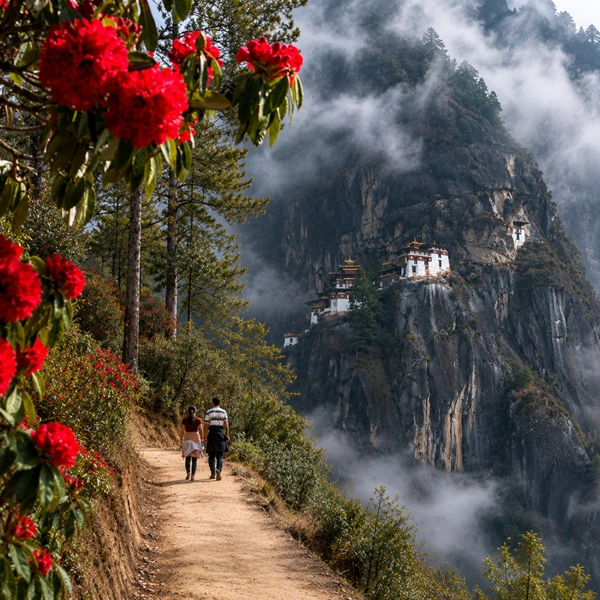
Autumn is generally the strongest single window for the helicopter tour because of the post-monsoon stable weather, crisp visibility, and lower likelihood of weather-related rescheduling. Spring is the second-strongest window with the rhododendron bloom adding a visual dimension to the lower-valley flight sections. Both windows produce excellent experiences. Travelers with date flexibility usually book in the autumn; travelers with calendar constraints often book whichever season fits their schedule.
Book Your Everest Helicopter Tour With Us
Tell us your dates, group size, and preference for a shared or private charter. Our team will return a written proposal within 24 hours that covers the operating standards, the senior pilot assignment, the weather contingency plan, and the integration of the tour into the broader Nepal trip we are arranging for you. The Everest helicopter tour is one of the most concentrated single-day experiences available in Asia - and one of the most rewarding when operated to the standards that the mountain deserves.