The Everest Three Passes Trek: An Honest Complete Guide
The Everest Three Passes Trek is the Khumbu region's premier expedition for serious trekkers who have already completed one of the standard high-altitude Nepal routes and want something genuinely harder. The standard Everest Base Camp trek covers around 130 kilometers and crosses no significant passes.
The Three Passes route extends across roughly 175-200 kilometers, with three high pass crossings each over 5,300 meters, and connects the Khumbu valley, the Gokyo lakes valley, and the Bhote valley, offering a panoramic view of the entire Everest region rather than just the EBC corridor.
After years of running Three Passes departures, our team has watched the rhythm of these trips settle into a clear pattern. The travelers who succeed on Three Passes are not first-time Himalayan trekkers. They are previous EBC, Annapurna Circuit, or Kilimanjaro veterans who have specifically chosen Three Passes because they want the harder route.
The traveler profile matters because the trek is unforgiving — the cumulative altitude exposure across the three passes, the longer total duration above 4,500 meters, and the technical character of the Cho La crossing in particular all reward proper preparation and punish improvisation. The reward for the right traveler is significant.
The Three Passes route delivers the most complete possible experience of the Everest region in a single trip — every major Khumbu valley, every standard highlight, all three high passes, and the broader topographical understanding that the EBC corridor alone does not provide.
This guide explains the route honestly. We profile each of the three passes individually, with what makes each one distinctive, give the typical day-by-day shape of the trek, name the hardest sections, compare Three Passes against the standard EBC route for travelers deciding between them, and explain how our team operates these departures at the luxury tier within the genuine constraints of high-altitude pass-trekking.
Important: The Three Passes Trek is not a first Himalayan trek. Travelers who have not previously completed a major high-altitude trek (Everest Base Camp, Annapurna Circuit, Kilimanjaro, or equivalent) should start with the standard EBC route rather than the Three Passes route. The cumulative altitude exposure, the multiple pass crossings, and the technical character of the Cho La in particular are genuinely unforgiving for trekkers without previous high-altitude experience. We are honest about this at the time of booking. Travelers who insist on Three Passes as a first Himalayan trek without our recommended baseline are politely declined.
What the Three Passes Are
The trek is named for its three high pass crossings, each linking two of the major Khumbu valleys. Understanding the three passes individually is the foundation for understanding the trek as a whole, because each pass has a distinct character, difficulty profile, and role in the overall route.
Kongma La — The First Pass (~5,535 meters)
Kongma La is the first pass on the standard counter-clockwise itinerary and crosses the ridge between the Imja valley (where Chukhung sits) and the upper Khumbu valley (where Lobuche sits). The crossing is typically done from Chukhung to Lobuche or in the reverse direction, depending on the route plan. Kongma La is the highest of the three passes by altitude.
It is generally considered the toughest physically because it is usually crossed earlier in the trek when acclimatization is still building, and the Chukhung-side approach involves substantial elevation gain across loose moraine before the pass itself. The descent from Lobuche is steep and tiring but technically straightforward. Trekkers who succeed on Kongma La typically find Cho La and Renjo La more manageable because their bodies have further acclimatized by then.
Cho La — The Technical Pass (~5,420 meters)
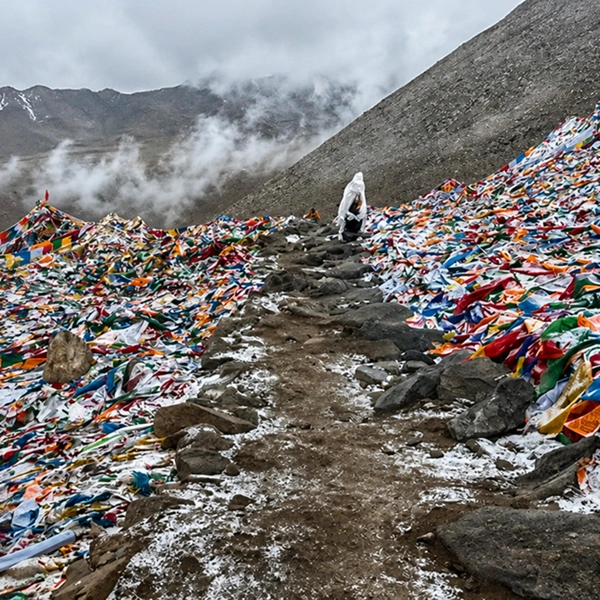
Cho La is the middle pass, linking the upper Khumbu valley near Dzongla to the Gokyo lakes valley near Thagnak. It is the pass with the most technical character on the trek. The east-side approach involves a glacier crossing where conditions vary significantly by season — in spring and autumn, the glacier is generally stable, and crampons are useful but not always essential; in winter or after fresh snow, crampons become genuinely necessary, and the glacier crossing requires careful route-finding.
The pass itself is dramatic, and the descent into the Gokyo valley produces the first views of the famous Gokyo lakes. Cho La is the pass that most often forces itinerary adjustments — bad weather or unstable glacier conditions can require a wait day at Dzongla or a route change. Trekkers should expect flexibility with this pass and understand that the safest decision may override the planned schedule.
Renjo La — The Quiet Pass (~5,360 meters)
Renjo La is the third pass on the standard counter-clockwise itinerary and crosses from the Gokyo valley to the Bhote valley near the village of Lungden or Marlung. It is generally considered the most beautiful of the three passes for the views — the panoramic view of Everest, Lhotse, and Makalu from the Renjo La summit is widely regarded as one of the great views in the Khumbu, and arguably better than the Kala Patthar view because Everest sits in the center of the frame rather than being partially obscured by the Nuptse-Lhotse ridge.
Renjo La is also the quietest of the three passes — visitor traffic on the Bhote valley side is significantly lower than the EBC corridor or the Gokyo valley. The crossing is technically the easiest of the three but the altitude exposure is comparable. Most travelers find Renjo La the most rewarding single day of the trek.
How the Trek Compares to Standard EBC
Most travelers researching the Three Passes are previous EBC trekkers, and the comparison between the two routes is the most important framing decision. The honest version below.
|
Variable
|
Three Passes Trek
|
Standard EBC Trek
|
|
Total duration
|
18-21 days
|
12-14 days
|
|
Total distance
|
~175-200 km
|
~130 km
|
|
Highest point
|
Kongma La ~5,535 m
|
Kala Patthar ~5,545 m
|
|
Days above 4,500 m
|
9-11 days
|
4-5 days
|
|
Pass crossings
|
Three (Kongma, Cho, Renjo)
|
None
|
|
Technical character
|
Cho La may need crampons
|
Non-technical throughout
|
|
Visitor density
|
Low on Bhote and Renjo La
|
High on the EBC corridor
|
|
Includes EBC and Kala Patthar
|
Yes
|
Yes
|
|
Includes Gokyo Lakes
|
Yes
|
No
|
|
Best for
|
Previous EBC veterans
|
First Himalayan high trek
|
The honest framing: Three Passes is a meaningfully harder trek than standard EBC and roughly twice the time investment. The reward is the complete Khumbu experience, including the Gokyo lakes that the standard EBC route does not include, the panoramic views from the three pass crossings, and the genuine sense of accomplishment that the harder route delivers. Three Passes is not a marginally harder version of EBC. It is its own trek, and travelers should choose between them rather than treating Three Passes as an upgrade.
The Standard 18-21 Day Itinerary
Three Passes is typically run as a counter-clockwise loop starting and ending at Lukla. The standard itinerary spends 4-5 days on the Khumbu valley approach (the same as standard EBC), then crosses Kongma La into the upper Khumbu, continues to EBC and Kala Patthar, crosses Cho La into the Gokyo valley, climbs Gokyo Ri for the lake views, crosses Renjo La into the Bhote valley, and descends back to Lukla via Thame.
The clockwise direction is also possible and crosses the passes in the reverse order — both directions work, but counter-clockwise is the more common operational choice because it stages the harder Cho La crossing after Kongma La acclimatization rather than as the first pass.
Days 1-2: Kathmandu and Helicopter to Lukla, Lukla to Phakding
The trek starts the same way as the standard EBC route — a pre-trek day in Kathmandu with a full briefing and gear check, helicopter access to Lukla on day two, and the first short walking day from Lukla to Phakding to settle into the trekking rhythm. Travelers familiar with the standard EBC route will recognize this start.
Days 3-5: Phakding to Namche, Namche Acclimatization, Namche to Tengboche
The standard Khumbu approach. The Hillary Suspension Bridge and the Namche Hill on day three (the first hard section that filters trekkers regardless of which route they are on), the mandatory Namche acclimatization day on day four with the Everest View Hotel hike, and the Phunki Tenga to Tengboche climb on day five. This part of the trek is genuinely identical to the standard EBC route.
Days 6-7: Tengboche to Dingboche, Dingboche Acclimatization
Tengboche to Dingboche on day six, then a critical acclimatization day at Dingboche on day seven. The acclimatization day is more important on the Three Passes trek than on the standard EBC trek because the cumulative altitude exposure over the trek is significantly greater. We typically use the Dingboche acclimatization day for an ascent to Nangkartshang Peak at around 5,090 meters, which provides genuine altitude exposure plus the views of Makalu in the distance.
Day 8: Dingboche to Chukhung
A short walking day to Chukhung at around 4,730 meters in the Imja valley. Chukhung is the staging village for the Kongma La pass crossing the following day. The afternoon at Chukhung is used for an optional acclimatization hike up Chukhung Ri at around 5,550 meters if conditions permit, which adds further altitude exposure before the pass.
Day 9: Chukhung to Lobuche via Kongma La
The first pass day. Pre-dawn departure from Chukhung, climb across the lateral moraine and up to the Kongma La at around 5,535 meters, then a steep descent into the upper Khumbu valley to Lobuche at around 4,910 meters. The total walking time is typically 9-11 hours, including the time spent crossing the pass. The Kongma La descent is on loose scree and demanding on the knees. Most trekkers arrive at Lobuche genuinely tired and grateful for the rest.
Days 10-11: Lobuche to Gorak Shep to EBC, Gorak Shep to Kala Patthar to Dzongla
The standard EBC and Kala Patthar days. Day ten covers the Lobuche to Gorak Shep moraine crossing and the EBC visit, all of which is identical to the standard EBC route. Day eleven is a long day — pre-dawn Kala Patthar summit climb at around 5,545 meters for sunrise on Everest, then a return to Gorak Shep, breakfast, and onward to Dzongla at around 4,830 meters for the staging position before Cho La. The day is long because the schedule is compressed by the Cho La crossing the following morning.
Day 12: Dzongla to Thagnak via Cho La
The second pass day is the most technical of the trek. Pre-dawn departure from Dzongla, climb to Cho La at around 5,420 meters, glacier crossing on the east side (where conditions determine whether crampons are needed), descent into the Gokyo valley, and arrival at Thagnak at around 4,700 meters. Total walking time is typically 8-10 hours. The glacier crossing is the technical highlight of the entire trek and varies significantly by season. We carry crampons on every Three Passes departure regardless of forecast, and our guides assess conditions on the morning of the crossing.
Days 13-14: Thagnak to Gokyo, Gokyo Ri Climb and Acclimatization
Day thirteen is a short walking day from Thagnak to Gokyo at around 4,790 meters, sitting on the shore of the third Gokyo lake. Day fourteen is the Gokyo Ri summit climb at around 5,360 meters, which offers panoramic views of Everest, Lhotse, Makalu, and Cho Oyu, ranking alongside Kala Patthar as one of the great Khumbu viewpoints. Many trekkers consider the Gokyo Ri view marginally better than Kala Patthar because the view of Everest is clearer, and the Gokyo lakes appear in the foreground.
Day 15: Gokyo to Lungden via Renjo La
The third pass day. Pre-dawn departure from Gokyo, climb to Renjo La at around 5,360 meters, panoramic view from the summit, then descent into the Bhote valley to Lungden or Marlung at around 4,360 meters. Renjo La is the quietest of the three passes by far — the Bhote valley side sees a fraction of the visitor traffic of the EBC corridor or the Gokyo valley. Many trekkers report Renjo La as the most rewarding single day of the trek because of the combination of panoramic views and genuine solitude.
Days 16-18: Lungden to Thame to Namche to Lukla
The descent through the Bhote valley to Thame, then onward to Namche and back to Lukla across three days. The Bhote valley is culturally interesting in its own right — it is a quieter and less-visited Sherpa region than the main EBC corridor, and the village of Thame is the home community of several of the most famous Khumbu mountaineers. The descent days are physically easier than the previous weeks and the body recovers significantly.
Days 19-20: Helicopter from Lukla to Kathmandu, Recovery Day
Helicopter access from Lukla back to Kathmandu rather than a fixed-wing flight, eliminating the genuine flight delay risk that catches standard trekkers at Lukla airport. The final day in Kathmandu is the recovery day — proper hotel, hot shower, debrief dinner with the guide team, and a relaxed transfer to the airport on departure day.
The Hardest Sections of the Three Passes Trek
Five sections deserve specific attention. Trekkers who arrive prepared for these sections specifically have meaningfully better trips than trekkers who treat the trek as a uniform difficulty level.
1. The Kongma La Crossing (Day 9)
The first pass is typically the hardest physically because it is crossed before full acclimatization has built. The Chukhung-side ascent involves substantial elevation gain across loose moraine to the highest point of the entire trek, then a steep descent to Lobuche on the other side. The total walking time of 9-11 hours at high altitude is genuinely demanding. Trekkers who have struggled on Namche Hill or the Tengboche climb earlier in the trek are typically warned by our guides at this point that the Kongma La day will be the test.
2. The Cho La Glacier Crossing (Day 12)
The technical highlight and the day when conditions matter most. The east-side glacier varies significantly by season and even by week — in stable conditions, it is a careful but manageable crossing, in unstable conditions, it can require crampons, route-finding, and significantly slower pacing.
Bad weather can force a wait day at Dzongla or a route change. Trekkers should expect flexibility on this day and accept that the safest decision sometimes overrides the planned schedule. Our guides are trained to make the right decision when conditions warrant.
3. The Kala Patthar to Dzongla Long Day (Day 11)
The compressed scheduling of day eleven catches trekkers off guard. Pre-dawn Kala Patthar summit climb at around 5,545 meters; return to Gorak Shep, breakfast, then the onward walk to Dzongla, covering 7-8 hours of total walking time. The day is long because the schedule has to position the trekker for the Cho La crossing the following morning.
Trekkers underestimate this day because Kala Patthar is technically the same climb as the standard EBC trek, but on the Three Passes, it falls within a longer overall day with the Dzongla approach added on.
4. Cumulative Altitude Exposure
Three Passes spends 9-11 days above 4,500 meters compared to 4-5 days on the standard EBC route. Cumulative altitude exposure compounds over the trek — sleep gets progressively worse, appetite drops, fatigue accumulates, and the body's adjustment to thin air follows its own timeline regardless of operator.
The single most common point of trip failure on Three Passes is not a specific pass crossing — it is the gradual cumulative attrition that catches trekkers by day twelve or thirteen. Proper acclimatization pacing across the trek matters more than fitness on any individual day.
5. The Mental Element on Day 16+
By day sixteen, most trekkers have crossed all three passes and are descending through the Bhote valley. The physical demands have eased, but a new challenge arises — the mental fatigue of being at altitude for over two weeks, the cumulative discomfort of basic accommodation, and the longing for proper food and a hot shower. Trekkers who have not mentally prepared for the duration sometimes hit a low point in the final descent days. The honest framing in advance helps.
Five Hardest Sections at a Glance
|
Day
|
Section
|
Walking Time
|
Max Altitude
|
Character
|
|
9
|
Kongma La crossing — Chukhung to Lobuche
|
9-11 hours
|
5,535 m
|
Highest
|
|
11
|
Kala Patthar plus onward to Dzongla
|
8-10 hours
|
5,545 m
|
Compressed
|
|
12
|
Cho La crossing — Dzongla to Thagnak
|
8-10 hours
|
5,420 m
|
Technical
|
|
14
|
Gokyo Ri summit climb
|
4-6 hours
|
5,360 m
|
Steep ascent
|
|
15
|
Renjo La crossing — Gokyo to Lungden
|
8-9 hours
|
5,360 m
|
Best views
|
Seasonal Timing
Three Passes operates in two windows. The seasonal choice matters more on this trek than on standard EBC because the pass crossings — particularly Cho La — are weather-dependent in ways that the EBC corridor is not.
Pre-Monsoon Spring (Mid-March to Mid-May) — Strongest Window
Spring is the strongest single window for Three Passes. The passes are typically clear of winter snow accumulation by mid-April. The Cho La glacier is in stable spring condition. Visibility on the pass days is consistently good through April and into early May.
The lower forest sections through Phakding, Namche, and Tengboche showcase the rhododendron bloom, adding a visual dimension that the autumn window lacks. The cost is the slight risk of late-season snow on the higher passes in early April and the cold on Kala Patthar at sunrise (which is genuinely cold in any season, especially in early April). Mid-April to early May is the operational sweet spot.
Post-Monsoon Autumn (Mid-October to Mid-November) — Strong Second Window
Autumn delivers the most stable weather window of the year on the standard EBC corridor, and the same pattern applies to Three Passes. Clear skies, crisp visibility, low precipitation risk, and the Cho La glacier is in stable late-season condition before winter snow accumulation begins.
October produces the highest visitor density on the EBC corridor (which Three Passes shares for the first half of the route), but the Bhote valley descent on the Renjo La side remains genuinely quiet even in peak season. Late October through early November is the strongest single week for stable weather. By mid-November, the temperatures on the high passes drop significantly, and trekkers should expect colder pre-dawn departures.
Winter (Late November to February) — Restricted
Winter departures from Three Passes are operationally challenging, and we generally do not run them. Cho La accumulates significant snow through the winter, and the glacier crossing becomes genuinely dangerous between December and February.
Several teahouses on the Bhote valley side reduce their winter operations as the resident communities consolidate. Trekkers with winter mountaineering experience can sometimes attempt winter Three Passes, but the route is not appropriate for general luxury trekking guests in this season.
Monsoon (Late June to Mid-September) — Not Recommended
We do not run Three Passes in the monsoon. Pass crossings become genuinely dangerous in heavy rain; glacier conditions on Cho La are unpredictable, and visibility on every pass is consistently obscured by cloud during the monsoon weeks. Travelers planning the Three Passes should plan around the spring or autumn windows.
Practical Logistics
Permit Structure
Three Passes uses the same permit structure as the standard EBC trek — a TIMS card and a Sagarmatha National Park entry permit, both arranged through our office before the trek. Three Passes does not require restricted-area permits (unlike Manaslu or Upper Mustang) because the route stays within the standard boundary of Sagarmatha National Park.
The simpler permit structure means that booking lead time is shorter than restricted-area treks — last-minute bookings are operationally possible if our team has guide and lodge availability, though we recommend 4-6 months ahead for the strongest seasons.
Group Size and Composition
Our luxury Three Passes departures cap at six guests per trip, with most departures running 2-4 guests. Many of our trips are private. Three Passes is not a route for solo travelers without prior high-altitude experience — the cumulative demand and the technical character of the Cho La crossing both reward having a guide team rather than walking alone. Solo travelers wanting to do the Three Passes typically join our scheduled departures or arrange a private trip.
Lead Time
- Spring departures (mid-March to mid-May): book 5-7 months ahead — the strongest single window concentrates demand
- Autumn departures (mid-October to mid-November): book 6-8 months ahead — autumn is the highest-demand window for Khumbu region trekking
- Last-minute bookings (4-8 weeks before departure) are operationally possible, but inventory is harder to secure
Access Logistics
- Kathmandu to Lukla — helicopter access in both directions on our luxury Three Passes departures, eliminating the four-day descent and the genuine Lukla weather risk that affects fixed-wing flights
- Lukla to Phakding — short walking day, starting the trek properly
- Lukla back to Kathmandu — helicopter return rather than fixed-wing, fitting the trip into a 19-21 day total versus the 24-28 day fixed-wing alternative
Equipment Specific to Three Passes
- Crampons or microspikes — carried on every departure for the Cho La crossing. We provide these as part of the kit
- Trekking poles are non-negotiable — the Kongma La and Cho La descents both involve sustained steep terrain that destroys knees without poles
- Expedition-grade down jacket — the pre-dawn departures on the three pass days operate at temperatures that make standard hiking jackets inadequate
- Spare batteries kept in inner pockets at body temperature — three pre-dawn cold-weather pass crossings drain camera and headlamp batteries fast
- Buff or balaclava for airway protection — the Khumbu Cough is a real risk across the longer altitude exposure on this trek
How Our Team Operates: Three Passes Departures
- Maximum group size: 6 guests; most departures are private. We do not run mass-tourism Three Passes groups. The pass-day pacing and the technical character of Cho La both work better with smaller teams.
- Senior guides with multi-year Three Passes tenure. Three Passes guides need to know the conditions of the Cho La glacier across seasons, the weather patterns on the three pass days, the relationships with villages across both the EBC corridor and the Bhote valley, and the evacuation logistics specific to the higher passes. Our lead guides on this route have multi-year tenure rather than rotating across our portfolio.
- Mandatory pre-trek high-altitude experience baseline. We confirm at the time of booking that every Three Passes guest has prior high-altitude trekking experience (EBC, Annapurna Circuit, Kilimanjaro, or equivalent). Travelers without that baseline are politely directed to the standard EBC route as the appropriate first Himalayan high-altitude trek.
- Crampons and pass-crossing equipment provided. Crampons or microspikes are carried on every departure regardless of the forecast. Our guides assess the conditions at Cho La in the morning of the crossing. The cost of carrying unused gear is meaningless compared to the cost of needing it without having it.
- Helicopter access in both directions to Lukla. Inbound and outbound helicopter rather than fixed-wing flight, fitting Three Passes into a 19-21 day total trip and eliminating the genuine flight delay risk.
- IPPG-standard porter welfare. Maximum 25-kilogram loads, age 18 minimum, full medical evacuation insurance, equipment provision, equal lodge accommodation, equal food rations from the same kitchen as the guest team. Particularly important on Three Passes because the porter team is together with the guest team for 18-20 days without rotation.
- Six-month structured pre-trek training program. Three Passes requires more sustained fitness than the standard EBC route. Every confirmed guest receives a structured training program covering cardio progression, weighted hiking, strength work, stair climbing, and altitude familiarisation strategies.
- Mandatory pacing protocol on the three pass crossings. Pre-dawn departure, calibrated ascent rate, regular hot drink stops, descent pacing matched to the slowest member, and contingency plans for trekkers who develop altitude symptoms en route. The pacing is non-negotiable regardless of guest preference.
- Mature evacuation infrastructure. Helicopter evacuation is available from most points along the route. Travel insurance with helicopter evacuation cover up to 6,000 meters is mandatory and confirmed at booking. Our guides carry a satellite communication and altitude assessment kit on every departure.
- Honest weather and conditions disclosure. We tell every guest at the time of booking that Cho La conditions may require itinerary adjustments and that the safest decision sometimes overrides the planned schedule. Travelers booking the Three Passes need to accept this flexibility before commitment.
Frequently Asked Questions
How hard is the Three Passes Trek compared to the standard EBC?
Meaningfully harder. The trek is roughly 50% longer, includes three pass crossings each over 5,300 meters, spends 9-11 days above 4,500 meters versus 4-5 days on standard EBC, and includes the technical Cho La glacier crossing, where conditions may require crampons. Trekkers who completed standard EBC comfortably typically still find Three Passes a meaningful step up. Trekkers who struggled on the standard EBC route should not attempt the Three Passes.
Do I need previous high-altitude experience?
Yes. We require a baseline of previous high-altitude trekking experience — Everest Base Camp, Annapurna Circuit, Kilimanjaro, or equivalent — before booking Three Passes. The cumulative altitude exposure and the technical character of Cho La are genuinely unforgiving for first-time high-altitude trekkers. Travelers without that baseline are directed to standard EBC as the appropriate first Himalayan high-altitude trek. We are honest about this at the inquiry stage rather than after booking.
Which is the hardest of the three passes?
Different trekkers say different things, but Kongma La is most often cited as the hardest physically because it is the highest of the three and is crossed earliest in the trek when acclimatization is still building. Cho La is most often cited as the hardest technically because of the glacier crossing. Renjo La is generally considered the easiest of the three, but the altitude exposure is comparable. The honest answer is that all three are demanding, and trekkers should not assume any of them is straightforward.
What about Cho La in bad weather?
Cho La is the pass most often affected by the weather. Bad conditions can require a wait day at Dzongla or a route change that skips Cho La entirely (descending back to the EBC corridor and rejoining the route via the standard trail). Our guides assess conditions on the morning of the crossing and call the descent decision when conditions warrant. Travelers booking Three Passes need to accept this flexibility — the safest decision sometimes overrides the planned schedule. Trip insurance covers itinerary adjustments due to weather; the financial loss is operational rather than total.
Do I need crampons?
Sometimes, for Cho La, depending on the season and conditions. We carry crampons or microspikes on every Three Passes departure regardless of the forecast. In stable spring and autumn conditions on the Cho La glacier, they are often useful but not strictly necessary.
In winter, after fresh snow, or in unusual conditions, they become genuinely necessary. The cost of carrying unused gear is meaningless compared to the cost of needing it without having it. Crampon technique is taught on the morning of the Cho La crossing for trekkers who have not used them before.
When is the best time to do Three Passes?
Mid-April to early May (spring) is the operational sweet spot. The passes are clear of winter snow accumulation, the Cho La glacier is in stable spring condition, visibility is consistently good, and the rhododendron bloom in the lower forest sections adds a visual dimension. Late October through early November (autumn) is the strong second window with the most stable weather of the year, but without the spring forest color. Winter is restricted due to the risk of pass closures on Cho La. Monsoon is not recommended.
Can I customize the itinerary?
Within limits, yes. The base 18-21 day route is well-defined by the geography of the three passes, but the distribution of rest days, the inclusion or exclusion of side ascents (Chukhung Ri, Nangkartshang, Gokyo Ri, Hotel Everest View), and the duration in specific villages can be adjusted.
The mandatory acclimatization days at Namche, Dingboche, and pre-pass-crossing villages cannot be compressed without compromising safety. Travelers wanting longer itineraries can add the Island Peak summit climb at the end of the trek (a separate optional climbing extension that requires basic technical mountaineering capability).
How much should I budget?
Luxury Three Passes departures (19-21 day standard route with our operating standards, helicopter access in both directions, IPPG porter welfare, private guide team) typically run USD 7,500-10,500 per person depending on group size and date. Island Peak climbing extensions add USD 2,500-4,000 per person. International flights, travel insurance, gratuities, and discretionary purchases are additional. The lead time for booking is 5-7 months ahead for the strongest seasons.
How fit do I need to be?
Solid fitness essential. Trekkers should be able to walk 6-9 hours per day for 18-20 consecutive days at altitude with a 5-7 kilogram day pack. The pass days require 8-11 hours of walking with significant ascent and descent. We recommend three to six months of focused preparation, including cardio progression, weighted hiking, stair climbing, and, where possible, some altitude exposure or hypoxic training. Trekkers who completed standard EBC comfortably typically have the fitness baseline. Trekkers who completed standard EBC with significant struggle should reconsider Three Passes.
Is altitude sickness a serious risk?
Yes. The cumulative altitude exposure across Three Passes is significantly greater than standard EBC, and trekkers spend more consecutive nights above 4,500 meters. Altitude sickness is a real risk that we monitor for from day six onward. Our guides carry the altitude assessment kit and follow a strict protocol: mild symptoms trigger immediate rest and reassessment, moderate symptoms trigger descent to the previous overnight altitude, and severe symptoms trigger immediate helicopter evacuation.
The single most common cause of trip failure on Three Passes is gradual, cumulative attrition rather than acute symptoms — we monitor sleep, appetite, and resting heart rate throughout the trek to catch the gradual deterioration before it becomes a problem.
Does the trek include EBC and Kala Patthar?
Yes. The standard Three Passes itinerary includes both Everest Base Camp (day ten) and the Kala Patthar summit climb (day eleven). Trekkers do not have to choose between Three Passes and the standard EBC highlights — Three Passes includes them and adds the three passes, the Gokyo lakes, plus the Bhote valley on top.
How early should I book?
Five to seven months ahead for the strongest seasons. Spring (mid-March to mid-May) and autumn (mid-October to mid-November) are the two operating windows, and inventory at the better lodges and with the senior guide team tightens earliest. Travelers contacting us in November for an April departure are usually too late for the strongest dates. Last-minute bookings (4-8 weeks before departure) are operationally possible but harder to fit at the right accommodation tier.
Plan Your Three Passes Trek With Us
Tell us your dates, your prior high-altitude experience, your fitness baseline, and any interest in the Island Peak climbing extension. Our team returns a written proposal within 48 hours covering the route, the senior guide assignment, the scope of helicopter access, the equipment we provide for the Cho La crossing, and the section-by-section briefing that prepares you properly for the three pass days. Three Passes is the Khumbu's harder trek — and one of the most rewarding for travelers who have already seen the easier route and want what comes next.