Booking Bhutan is not like booking anywhere else.
You cannot just fly in. Every international visitor pays a 100 USD Sustainable Development Fee per person, per night. You cannot travel without a licensed guide. You cannot stay at unapproved properties. The government has built a wall around the Kingdom made of pricing and policy, and it has worked. Where Nepal gets 1.5 million tourists a year, Bhutan caps itself at near 300,000. Deliberately.
What this creates, for our guests, is the rarest thing in modern travel: a country where luxury still means something.
At Alpine Luxury Treks, we have built Bhutan itineraries for over a decade. We know which hotel matches which traveler. We know the difference between the Aman circuit and the Six Senses circuit, and why one suits contemplative travelers while the other suits wellness-driven travelers. We know why Gangtey Lodge keeps winning awards despite having only twelve rooms. And we know the traps — properties that look luxurious on websites but disappoint in reality.
This is the full list. Ten hotels. No filler.
How Luxury Hospitality in Bhutan Actually Works
Before we talk hotels, understand the market.
The Circuit Model vs the Standalone Model
Bhutan is divided into distinct valleys. Paro, Thimphu, Punakha, Gangtey (Phobjikha), and Bumthang. Most luxury itineraries move through three to five of these valleys over seven to fourteen days.
The biggest brands — Aman and Six Senses — each operate five lodges, one in every major valley. They are designed as circuits. You check into their first lodge, and you do not leave the brand ecosystem until you fly home. Private guides, private drivers, valley-to-valley handoffs — everything is internal.
The boutique brands are different. Gangtey Lodge, Zhiwa Ling, Bhutan Spirit Sanctuary, and Dhensa — these are single properties. You stay at one, then move to a different brand in the next valley. It is more modular. It is also often more interesting, because you get to experience multiple hospitality philosophies in one trip.
For most of our guests, we build hybrid itineraries. A couple of nights at a Six Senses lodge for the wellness infrastructure, followed by a Gangtey Lodge stay for the boutique intimacy, finishing at Amankora Punakha for the farmhouse authenticity. The best Bhutan trips deliberately mix brands.
What the 100 USD SDF Actually Buys
The Sustainable Development Fee is not a hotel charge. It is a government levy applied to every night you spend in Bhutan, in addition to your accommodation.
What it funds is genuine: free universal healthcare, free Education, carbon-negative status (Bhutan is the only country in the world that absorbs more carbon than it emits), forest conservation, and cultural preservation. When you pay the SDF, you are subsidizing the reason Bhutan still looks like Bhutan.
For budget purposes, expect the SDF to add between 700 and 1,400 USD per person to a standard week-long trip. Indian nationals pay a reduced SDF of approximately 1,200 INR per night. A 5% GST applied from January 1, 2026, also factors into the total cost.
How We Picked These Ten Hotels
Four criteria. Every property on this list clears all four.
Independently verified recognition. Every hotel on this list has either earned a MICHELIN Key, a Condé Nast Gold List inclusion, a National Geographic Unique Lodges mention, or a South Asian Travel Awards honor. We do not rely on marketing language. We rely on what judges, critics, and repeat guests confirm.
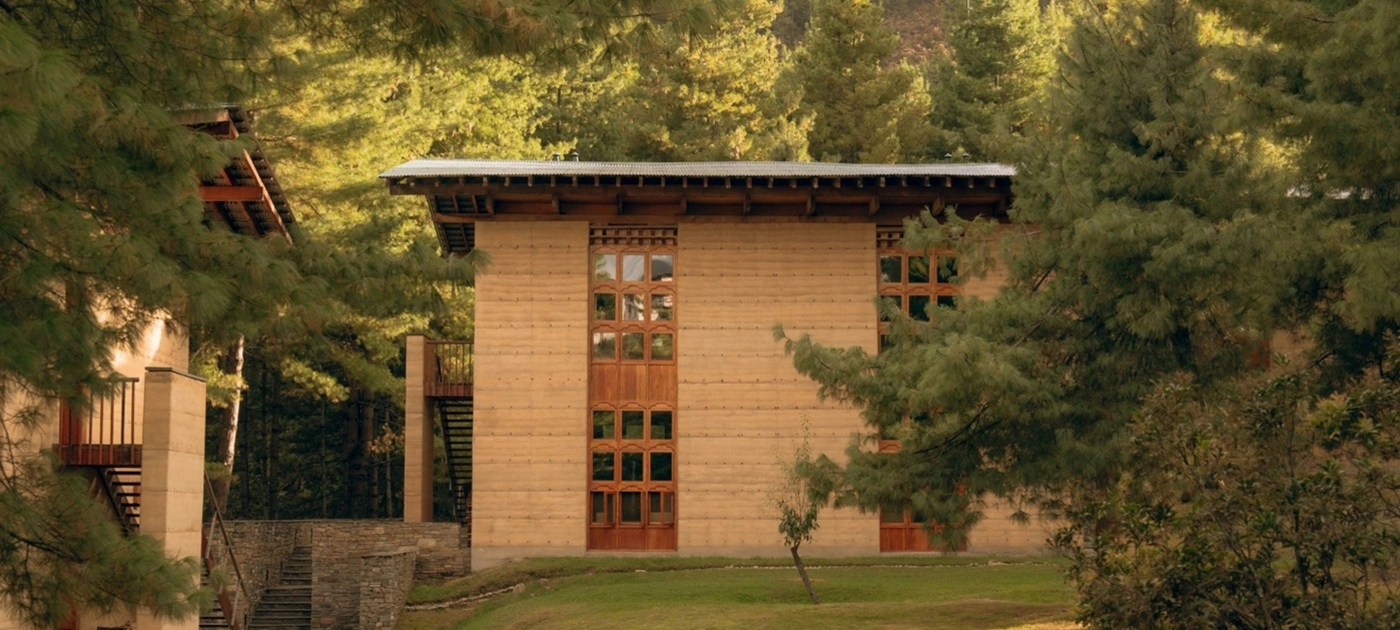
Architectural and cultural integrity. Bhutan mandates traditional architecture for all commercial buildings. Some hotels meet that requirement reluctantly. The ten below embrace it. Every property either preserves or advances Bhutanese architectural heritage.
Operational maturity for the international luxury traveler. High-speed internet. Reliable power. Multilingual staff. Medical support. These are non-negotiable, especially at altitudes between 2,200 and 3,000 meters. Every property here meets this bar.
Our own firsthand inspections. We have personally visited or booked guests into every single one. That is not a claim competitors can make easily.
Bhutan Luxury Hotels at a Glance
|
Hotel
|
Best For
|
Valleys / Locations
|
|
Amankora
|
Seamless 5-valley ultra-luxury circuit
|
Paro, Thimphu, Punakha, Gangtey, Bumthang
|
|
Six Senses Bhutan
|
Wellness + sustainability circuit
|
Paro, Thimphu, Punakha, Gangtey, Bumthang
|
|
COMO Uma
|
Refined luxury at an accessible entry point
|
Paro, Punakha
|
|
Pemako
|
Design vanguard, tented villas
|
Thimphu, Punakha
|
|
Gangtey Lodge
|
Boutique intimacy, “quietcation.”
|
Phobjikha Valley (Gangtey)
|
|
Zhiwa Ling Heritage
|
100% Bhutanese-owned, cultural depth
|
Paro
|
|
Bhutan Spirit Sanctuary
|
All-inclusive Sowa Rigpa wellness
|
Neyphu Valley, Paro
|
|
&Beyond Punakha River Lodge
|
Safari-style adventure luxury
|
Mo Chhu River, Punakha
|
|
The Postcard Dewa
|
Ultra-intimate urban hideaway
|
Khasadapchu, Thimphu outskirts
|
|
Dhensa Boutique Resort
|
Understated valley serenity
|
Punakha Valley
|
1. Amankora
5 lodges across Paro, Thimphu, Punakha, Gangtey, Bumthang · 72 suites total · Best for: seamless ultra-luxury circuits
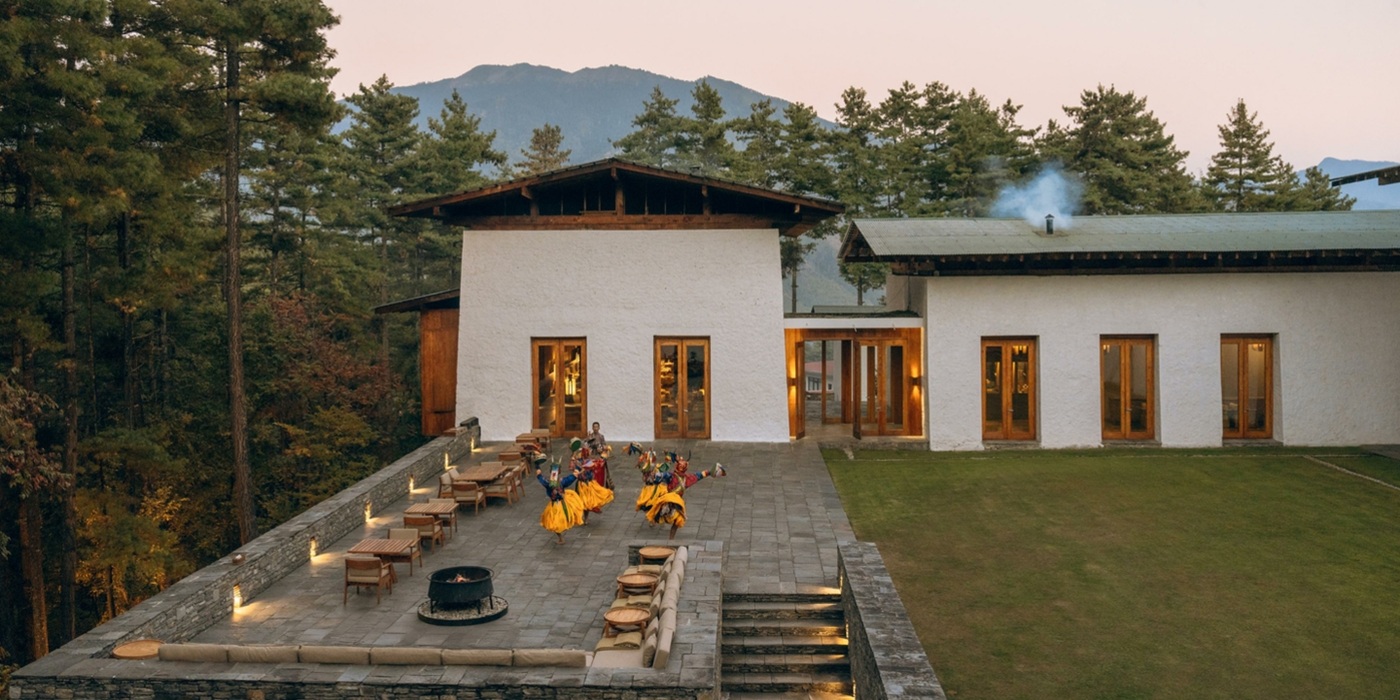
Aman arrived in Bhutan in 2004. It set the standard. Everything that has come since is measured against what Amankora established.
Five lodges across the western and central valleys. Seventy-two suites total. Designed by the late Kerry Hill, one of the most important hospitality architects of his generation. Awarded Two MICHELIN Keys in 2025, the highest hotel recognition in global hospitality.
The genius of Amankora is the circuit. You do not stay at one Aman lodge. You move through all five, and the brand becomes your shadow infrastructure for the entire trip. Private guides hand you off at the valley borders. Drivers are brand-trained. Even the scent of cedar wood smoke in the bukhari stoves is calibrated across lodges.
The Architecture
Kerry Hill’s design philosophy for Amankora was radical at the time: introduce stabilized earth technology to Bhutanese traditional construction, preserving the aesthetic while dramatically extending structural life. His lodges use a “plywood box within a building shell” concept. Sleek minimalist interiors. Fortress-like exteriors. Nothing generic.
Amankora Thimphu is sixteen suites hidden inside a virgin pine forest above the capital. It feels like a fortress. Amankora Punakha is built around a 300-year-old farmhouse, accessed dramatically via a suspension bridge over the Mo Chhu river — a ten-minute drive from the Punakha Dzong. Each lodge adapts to its valley. None repeats.
Why It Costs What It Costs
Amankora sits at the absolute top of Bhutan pricing. Their rates reflect an operational depth few hotels match. For example, Amankora Paro subsidizes the electricity bills of the neighboring Drukgyel Dzong so the historic fortress remains beautifully illuminated at night. That is the level of environmental control the brand commits to.
For our high-net-worth clients who want zero logistical friction throughout their entire Bhutan trip, Amankora is the default choice. For guests who want to experience multiple hospitality philosophies on one trip, we strategically blend Amankora with boutique properties.
2. Six Senses Bhutan
5 lodges across Paro, Thimphu, Punakha, Gangtey, Bumthang · 82 suites & villas · Best for: wellness-led travelers and sustainability focus
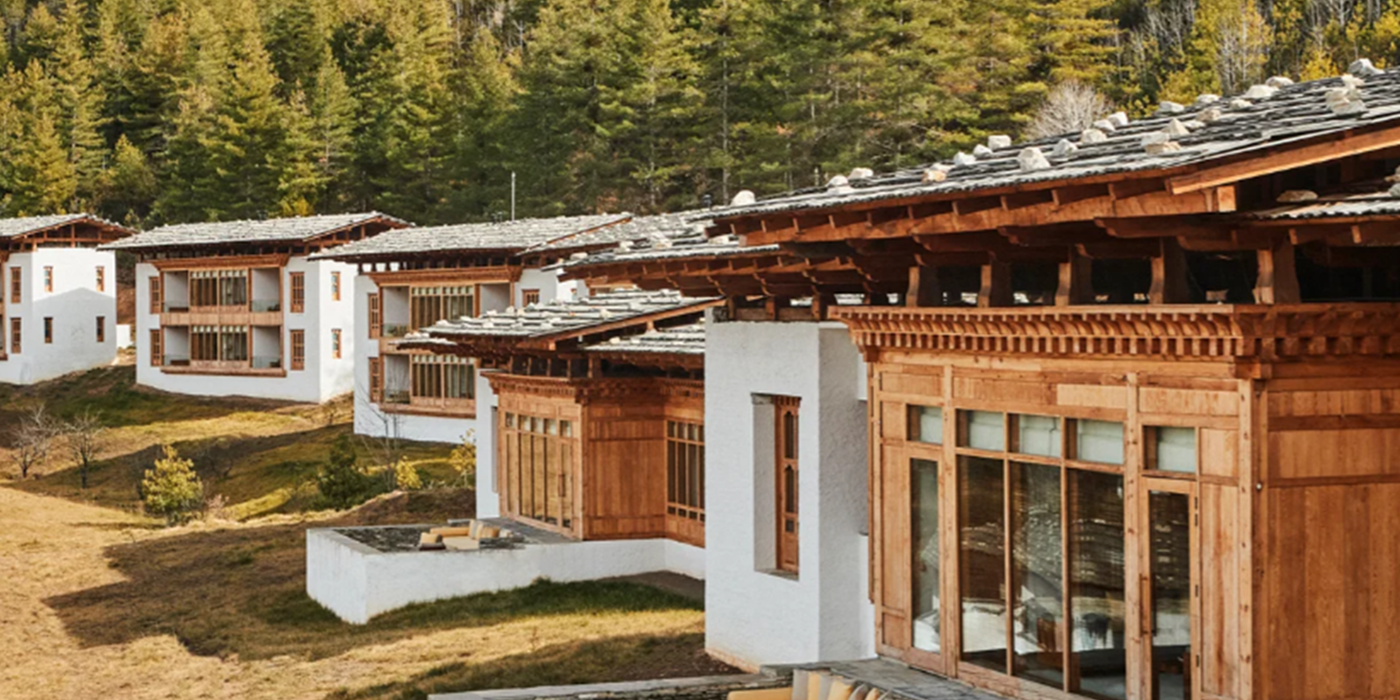
Six Senses entered Bhutan in 2018 and took the Aman blueprint — five valleys, one seamless circuit — then rebuilt it around wellness and measurable sustainability.
Five lodges. 82 suites and villas. One MICHELIN Key in 2025. GSTC-certified properties since late 2024. The brand does not just market sustainability; it publishes data.
The Lodges
Six Senses Thimphu is called the “Palace in the Sky.” It sits at cloud level, surrounded by apple orchards, with panoramic views from a massive sunken terrace and infinity pools.
Six Senses Punakha is called the “Flying Farmhouse.” Bold cantilevered architecture juts over the valley’s rice terraces. It is one of the most photographed hotel buildings in South Asia for a reason.
Six Senses Paro, Gangtey, and Bumthang follow the same emotional-response-to-landscape philosophy. Each lodge is designed specifically around the valley it sits in. No identical templates.
The Sustainability Data
This is where Six Senses most sharply distinguishes itself from competitors. In 2025 alone, across its Bhutan properties, the brand:
Avoided the use of 2,593,299 plastic bottles through rigorous in-house water purification. Produced 142,365 kilograms of compost for local soil enrichment. Restored 9,026 square meters of fragile habitat. Grew 77,007 kilograms of vegetables and 118,701 organic eggs entirely in-house for its restaurants.
These are verifiable numbers from the brand’s sustainability reporting. For our eco-conscious guests who want their luxury stay to actually mean something in quantitative terms, Six Senses is unmatched in Bhutan.
Wellness Infrastructure
Six Senses operates the largest spa facilities in Bhutan. Their wellness programming includes sleep therapy, breathwork, biohacking assessments, and bespoke Ku Nye massage protocols. For guests coming specifically for transformation rather than sightseeing, Six Senses is often the answer.
3. COMO Uma
Paro & Punakha · 29 + 11 rooms · Best for: discerning independent travelers seeking refined luxury
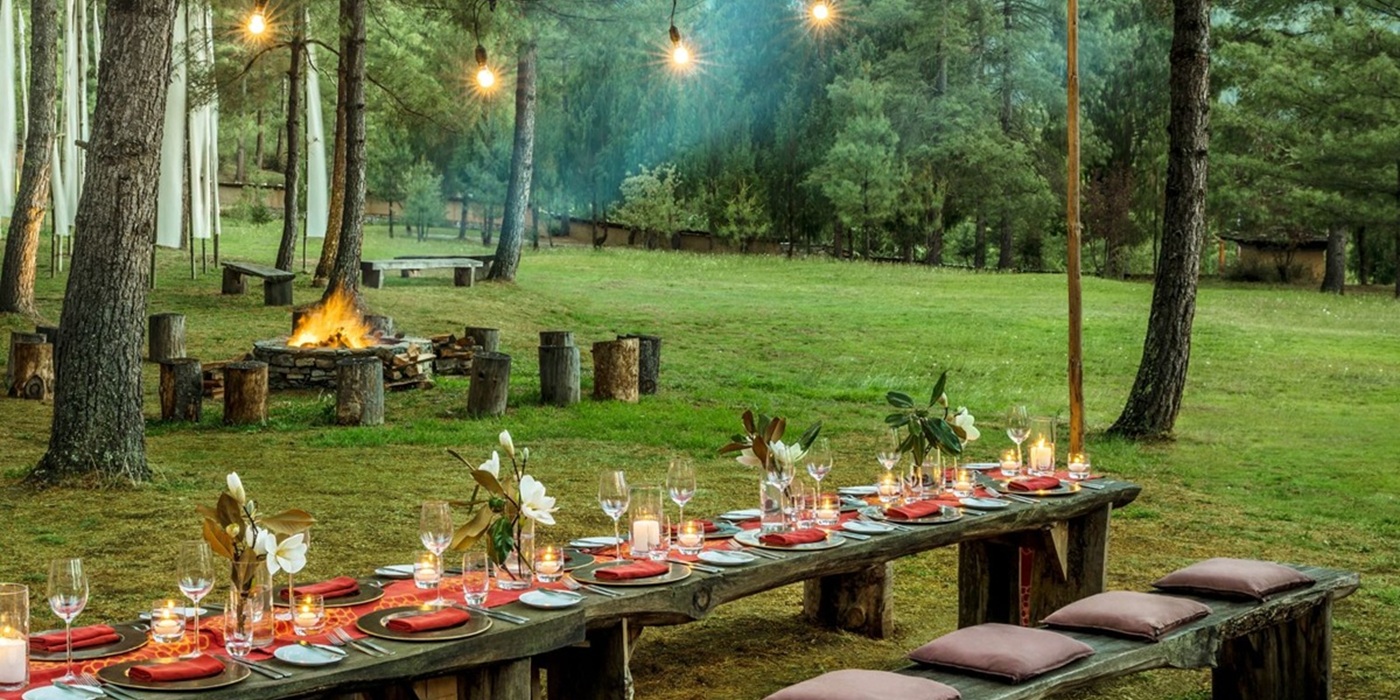
COMO Uma is what we recommend for guests who want world-class luxury without stepping into the 1,500-USD-a-night tier at Aman or Six Senses. The quality is extraordinary. The entry point is more sensible.
Two properties. COMO Uma Paro is intimate: 20 luxury rooms and 9 private villas tucked into a pine forest hillside. COMO Uma Punakha is even more exclusive: just 11 rooms overlooking the serpentine Mo Chhu river from a verdant hillside.
The Tiger’s Nest Advantage
COMO Uma Paro sits closest to the trailhead for Tiger’s Nest (Taktsang Monastery), Bhutan’s most iconic hike. For guests whose trip is anchored around summiting the Tiger’s Nest, booking at COMO Uma means you wake up, eat breakfast, and begin the hike within fifteen minutes. No long valley transfer. No early wake-up logistics.
COMO Shambhala Wellness
COMO operates its own proprietary wellness brand, COMO Shambhala, across the group. The Bhutan spas deliver Asian-inspired holistic protocols to a standard that matches the brand’s properties in Thailand and the Maldives. For our returning COMO guests from their stays in Phuket or at Parrot Cay, the consistency is reassuring.
The Bukhari Restaurant
Widely considered one of the finest dining rooms in Bhutan. Seasonally inspired Bhutanese cuisine alongside sophisticated international and Indian dishes. Local red rice served with refined Western preparations. Ema Datshi has been elevated to fine-dining presentation without losing its soul.
Access to indoor swimming pool, archery range, and yoga studios comes complimentary. For independent travelers who value culinary excellence alongside accommodation, COMO Uma is our most frequent recommendation.
4. Pemako
Thimphu & Punakha · Urban fortress + tented villas · Best for: design-focused travelers and adventurers
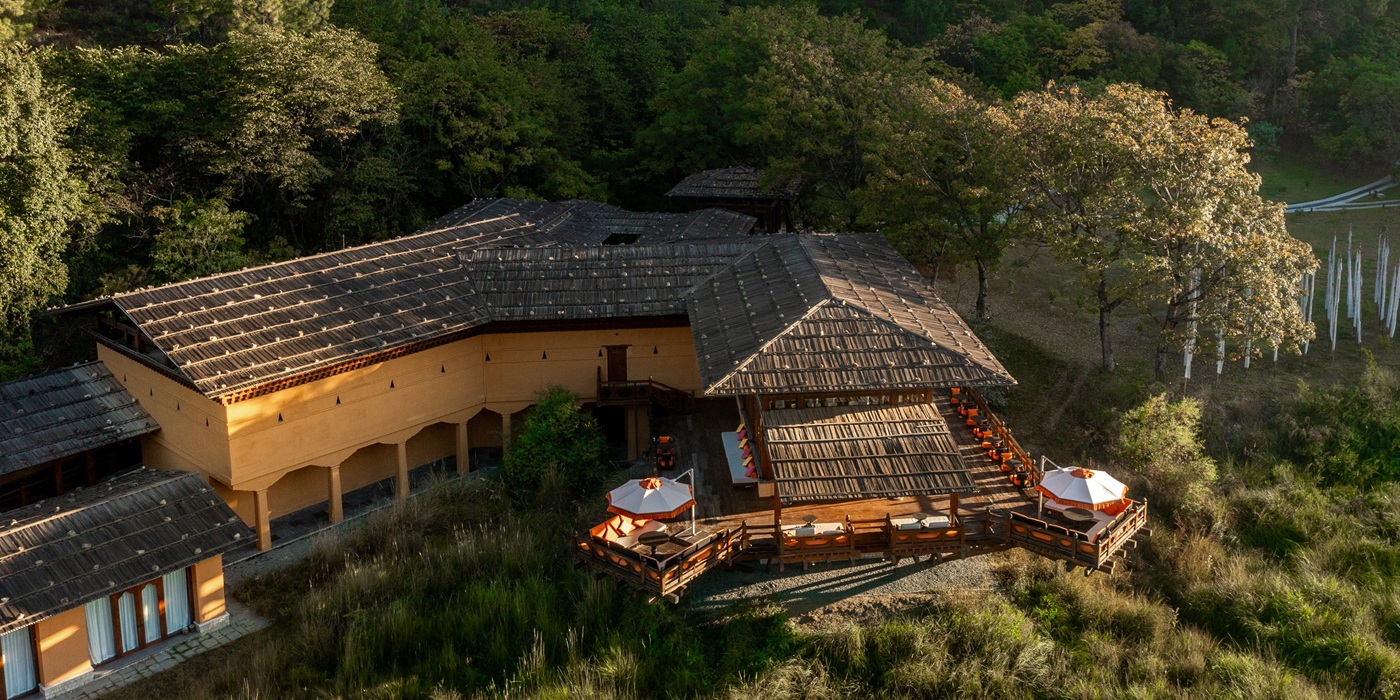
Pemako is the design vanguard of Bhutan’s luxury market. Two properties. Completely different concepts. Both executed at the highest level.
Pemako Thimphu: The Urban Fortress
Pemako Thimphu operates from the monumental building formerly known as Taj Tashi, in the heart of the capital. Dramatic medieval fortress-style architecture. Sprawling indoor heated pool. An in-house lama who offers sacred blessings to guests.
This is the property we recommend for guests seeking a luxurious urban base to explore Thimphu’s landmarks — the Memorial Chorten, Tashichho Dzong, and the Giant Buddha Dordenma — before moving on to more remote valleys.
Pemako Punakha: The Tented Masterpiece
Pemako Punakha is extraordinary. Sixty acres of wild Mo Chhu river valley. Nineteen ultra-modern tented villas designed by Bill Bensley, one of the most celebrated hospitality architects in the world. This was Bhutan’s first luxury tented resort.
The villas themselves break every convention. Expansive outdoor decks. Private temperature-controlled plunge pools. Freestanding copper bathtubs positioned against massive viewing windows. Bensley’s design is deeply local: dark carved woods, folkloric artifacts, bold accents of kasaya orange drawn from monastic robes.
The Alchemy House serves traditional Bhutanese cuisine in a historic, restored setting. The Five Nectars Bar frames panoramic river views for evening cocktails. For guests who want the Bhutan wilderness experience without compromising modern luxury, Pemako Punakha has no equal.
5. Gangtey Lodge
Phobjikha Valley · 12 Farmhouse Suites · Best for: quietcation travelers and black-necked crane season
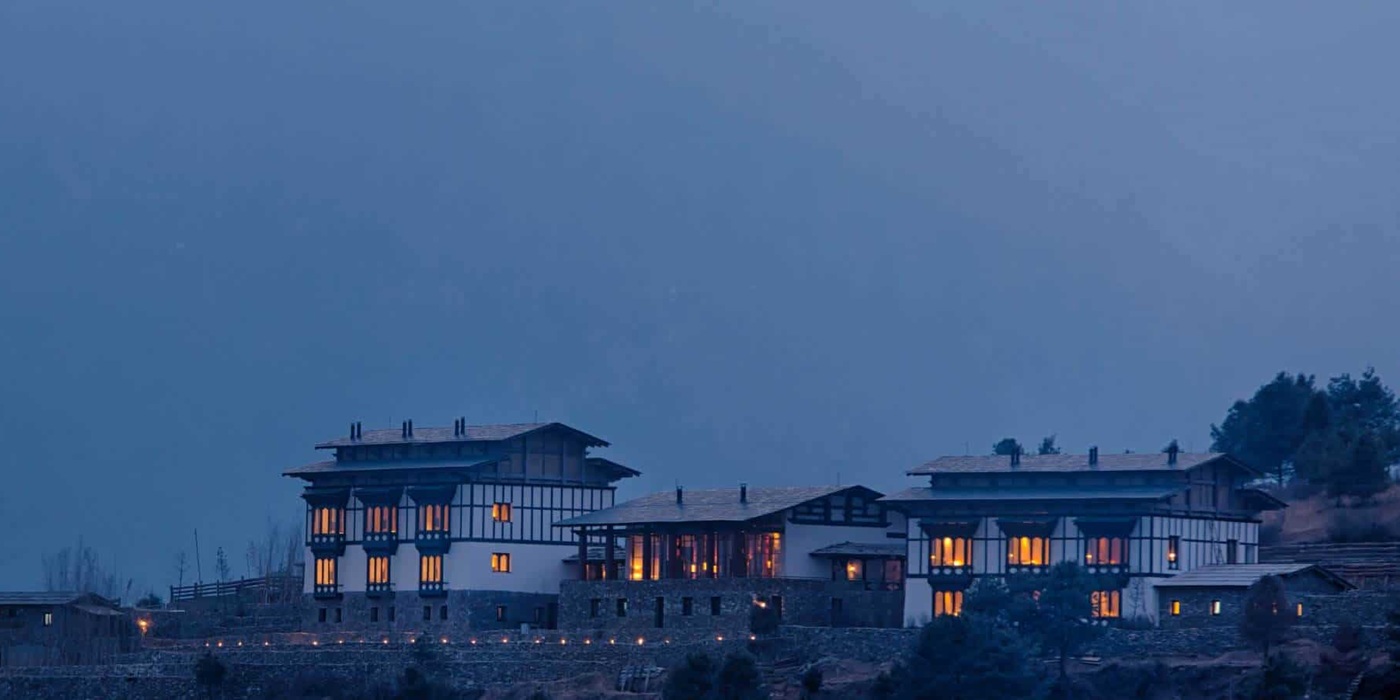
Gangtey Lodge is the proof that boutique can beat scale in Bhutan.
Twelve Farmhouse Suites. That’s it. An independent property with no multinational parent. In 2025, it was awarded Two MICHELIN Keys (matching Amankora) and featured on Condé Nast Traveler’s Gold List. That recognition, for a twelve-room lodge, is staggering.
The location is the Phobjikha Valley — remote, protected, and visually arresting. The valley is a glacial U-shape at 3,000 meters, surrounded by monastic villages. In the winter months, it becomes the roosting ground for the endangered Black-necked Cranes migrating from Tibet. Gangtey Lodge has private viewing areas built specifically for observing them.
The Farmhouse Suites
Twelve identical suites, each designed around meditative observation. Free-standing English roll-top bathtubs positioned directly in front of floor-to-ceiling panoramic windows. The view from the tub: the valley floor, and the 17th-century Gangtey Monastery beyond.
Heated hand-cut stone floors. Massive exposed timber beams. Ornate woodwork that would have taken traditional Bhutanese craftsmen months per suite.
The Quietcation Philosophy
Gangtey Lodge deliberately operates a low-stimulation environment. No background music in public spaces. No TVs in rooms unless requested. Minimal technological intrusion. The philosophy is called “quietcation” — a deliberate removal of distractions to allow mental recalibration.
Guests can walk ten minutes to join monks for guided meditation at the nearby shedra (monastic college). It is the kind of experience that sounds gimmicky on paper. In practice, we have seen hardened executives come back changed by it.
For our contemplative travelers, for guests recovering from intense work periods, and specifically for couples celebrating milestone anniversaries, Gangtey Lodge is the property we push hardest.
6. Zhiwa Ling Heritage
Paro Valley · 45 suites · Best for: cultural depth and indigenous authenticity
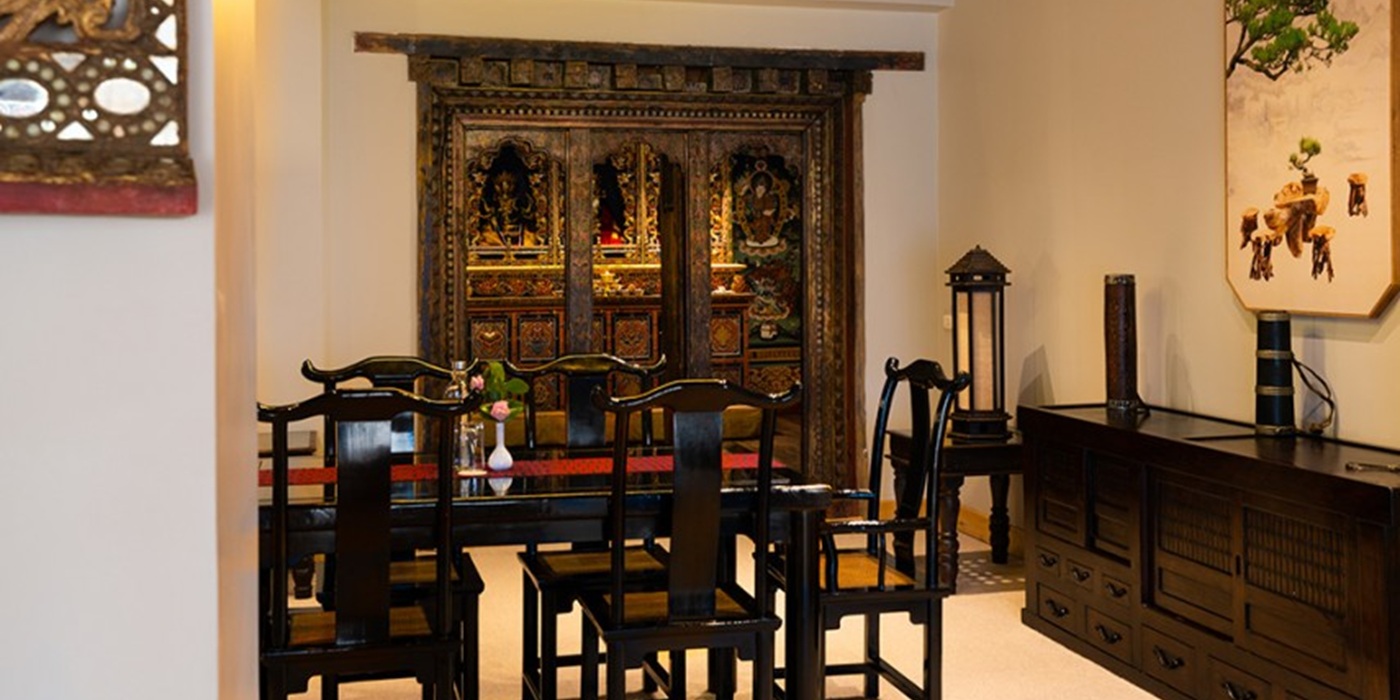
Zhiwa Ling Heritage is the only five-star hotel in Bhutan that is entirely Bhutanese-owned, Bhutanese-designed, and Bhutanese-operated. That matters.
Most luxury in Bhutan is international capital dressed in local architecture. Zhiwa Ling is the opposite. It is a monument to what Bhutan can build for itself. National Geographic named it a Unique Lodge of the World. It holds consistent top honors at the South Asian Travel Awards and a 2025 Bhutan Green Hotel Standard certification from the SUSTOUR Project.
The Construction Story
The hotel was built over five years by more than sixty local artisans. No nails. The massive timber beams forming the main structure were joined entirely by hand using ancient fortress methodologies, the same techniques used to build Bhutan’s centuries-old Dzongs.
Every cornice, pillar, and wall is adorned with intricate hand-painted Buddhist mythology. The spiritual epicenter is an active in-house temple, built from 450-year-old timbers salvaged from Gangtey Monastery. Guests can meditate alongside resident monks in a sacred space that is genuinely old, not decoratively so.
The Experiences
This is where Zhiwa Ling delivers what the big international brands cannot quite match. Interactive traditional cooking at an open-air mud stove (Soe-Thab). Ceramic painting guided by the in-house artisan. Therapies at the Menlha Spa, featuring the country’s largest indoor heated swimming pool alongside traditional outdoor hot-stone baths (Dotsho).
For our culturally driven guests, especially those who value supporting Bhutanese ownership over international hospitality giants, Zhiwa Ling is the obvious choice. It punches far above its price point.
7. Bhutan Spirit Sanctuary
Neyphu Valley, Paro · 28 rooms · Best for: wellness-inclusive transformation retreats
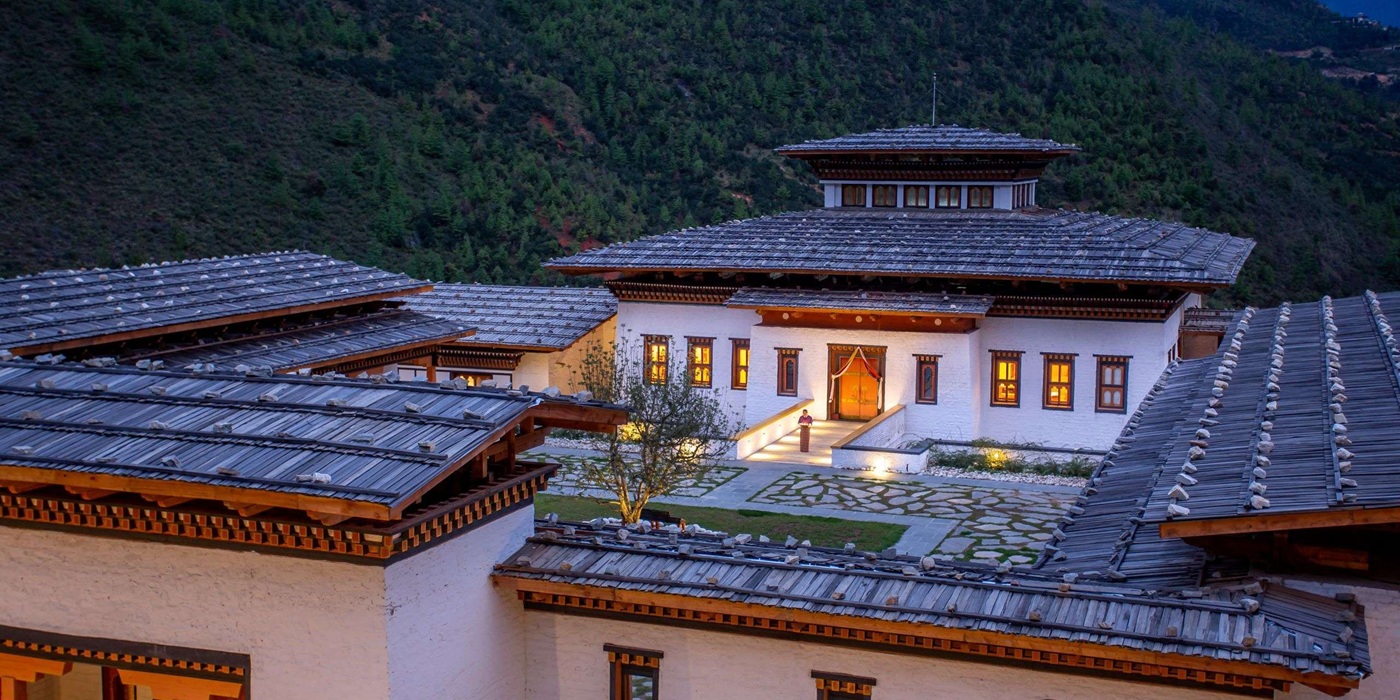
Bhutan Spirit Sanctuary is not a hotel. It is a wellness retreat that also offers accommodation.
Member of Small Luxury Hotels of the World. 28 rooms. Located fifteen minutes from Paro International Airport in the serene Neyphu Valley. Its defining feature: a fully wellness-inclusive operational model that upends the traditional luxury hotel format.
The Wellness-Inclusive Model
Room rates automatically bundle all farm-to-table meals, non-alcoholic beverages, daily yoga and meditation, and at least one signature wellness treatment per guest, per day. There is no à la carte spa menu. Your treatments are prescribed, not selected.
The guest journey begins with a mandatory consultation with an in-house Traditional Bhutanese Medicine doctor. Your elemental balance is assessed. A personalized protocol is built from a library of over sixty locally foraged medicinal herbs grown in the sanctuary’s own greenhouse.
Treatments include moxibustion, hot oil compressions, and Ku Nye massages. Six treatment rooms accommodating ten beds. Separate male and female saunas and steam rooms specifically designed to support recovery from mountain hiking. A stunning heated indoor pool encased in floor-to-ceiling glass with unadulterated valley views.
Who This Is For
Bhutan Spirit Sanctuary is not for every traveler. Guests who expect a cocktail bar and pool-party atmosphere will be frustrated. Guests who arrive exhausted, stressed, or in need of genuine physiological recovery will not want to leave.
Our most dedicated wellness clients — many of whom return annually — spend five to seven nights here as the sole anchor of their Bhutan trip. See our [Bhutan Wellness Retreat Package] for how we structure these.
8. &Beyond Punakha River Lodge
Mo Chhu river, Punakha · Max 20 guests · Best for: safari-style adventure luxury
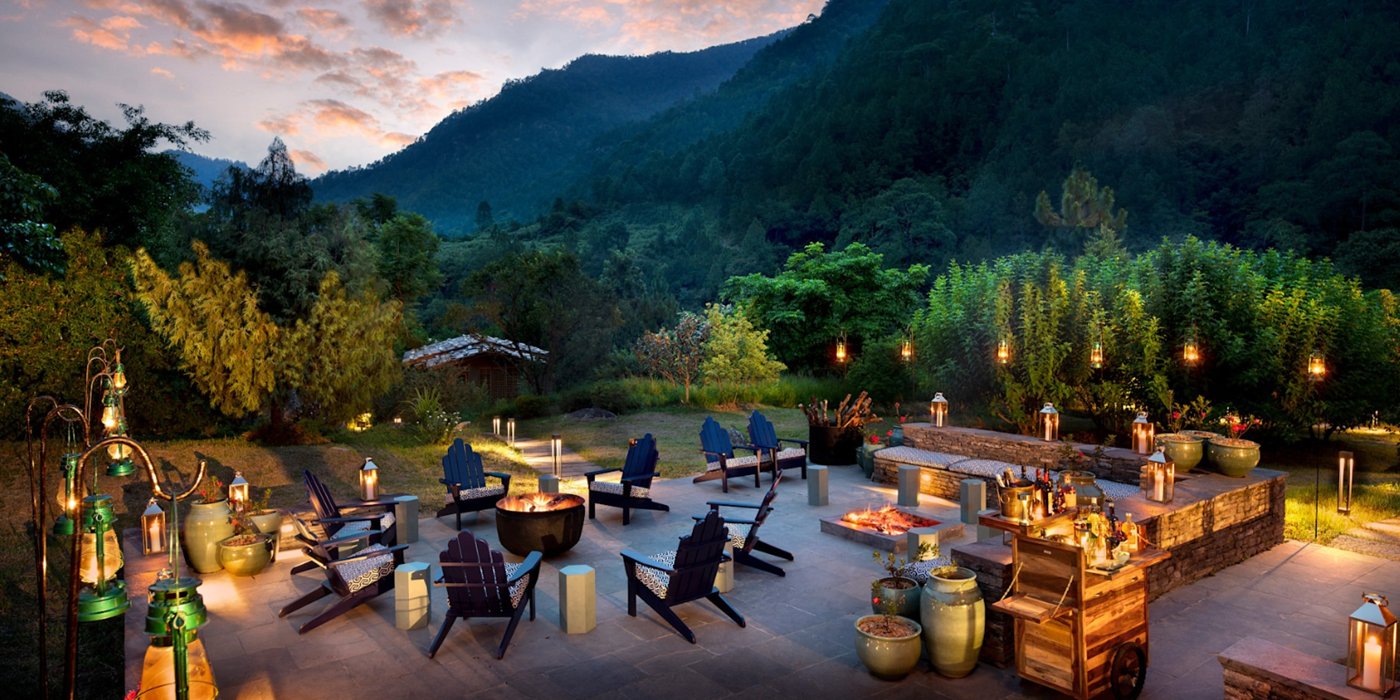
&Beyond built its reputation on luxury African safari. The Punakha River Lodge is the brand’s first Asian property. They translated the safari operational model directly into the Himalayan context, and it works.
A maximum of twenty guests at any time. The most exclusive footprint of any Bhutan lodge. Suspended, safari-style tented suites and an exclusive two-level River House designed for couples.
The Safari DNA
What &Beyond does differently is experiential intensity. Most Bhutan lodges lean into stillness. &Beyond leans into adrenaline.
Whitewater rafting on the Mo Chhu. High-altitude mountain biking. Archery sessions. Rigorous hiking expeditions to the Khamsum Yuelley Namgyal Chorten. The lodge’s program design mimics a luxury safari: full days out, high-energy activities, and evenings spent relaxing by the river.
The Architecture
The tented suites feature “star baths” — uninhibited views of the night sky from your bathtub. Indoor and outdoor showers. Porous boundaries between interior and wilderness.
True to &Beyond’s African conservation heritage, the lodge supports Bengal tiger conservation through Tiger Watch and hires nearly 80 percent of its staff from surrounding rural villages. For our adventure-oriented guests and couples looking for something other than contemplative Bhutan, this is the answer.
9. The Postcard Dewa, Thimphu
Khasadapchu, Thimphu outskirts · 13 rooms + 2 suites · Best for: ultra-intimate urban hideaway
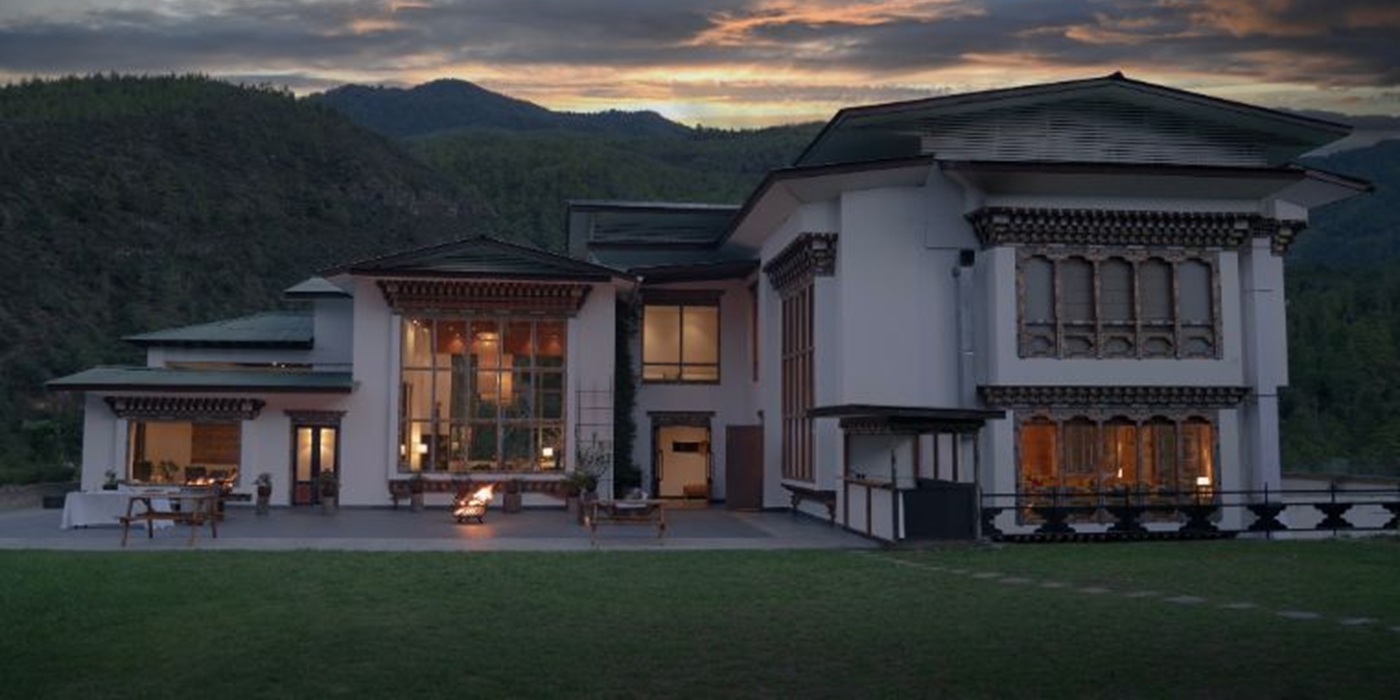
The Postcard Dewa won “Asia’s Leading Boutique Hotel” at the World Travel Awards in 2022 and “Bhutan’s Leading Boutique Hotel” in 2025. Yet most travelers have never heard of it. That is by design.
The property operates at a deliberately limited scale: just thirteen rooms and two luxury suites. Located in the Khasadapchu valley on the outskirts of Thimphu, insulated from the capital by dense Himalayan blue pine forest.
The Rooms
Rooms here are huge. 995 to 2,100 square feet. Every room has a private sit-out. Traditional Bhutanese architectural detailing throughout. The Dewa Suite includes a private garden and a dining gazebo.
The Postcard brand is known in India for intimate luxury that feels like a private estate rather than a hotel. In Bhutan, they have executed that concept beautifully.
Fiercely Local Cuisine
The Postcard Dewa deliberately rejects international hotel menus. Their kitchen highlights local red rice, buckwheat, fresh mountain trout, and Ema Datshi, authentically executed.
They curate unique local experiences: guided 30-minute hikes to the 7th-century Nyenzerkha Lhakhang temple, family-friendly archery, and Khuru (darts) picnics by the Wang Chhu River. For our guests who want urban proximity without sprawling resort scale, we send them to The Postcard Dewa.
10. Dhensa Boutique Resort
Punakha Valley · 24 rooms across 6 cottages · Best for: understated valley serenity
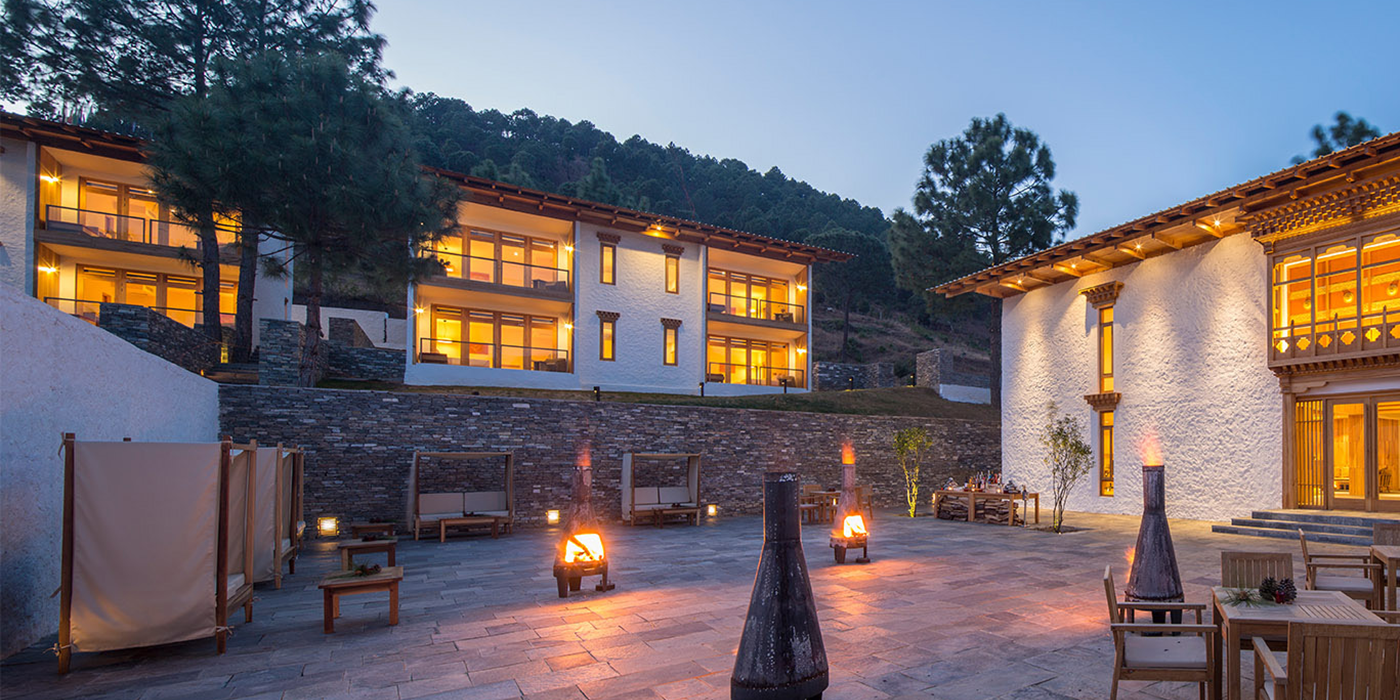
Dhensa is the understated counterpoint to everything else on this list. No Michelin Keys. No splashy architecture. No brand hype. Just a genuinely excellent boutique retreat in one of the most beautiful valleys in Bhutan.
The property opened in 2014 and sits on a picturesque hill overlooking the Punakha River and hundreds of terraced paddy fields. Twenty-four rooms across six distinct cottages. Clean lines, natural materials, and the architectural philosophy are about framing the landscape rather than competing with it.
Kibu Spa and Wood-Fired Hot Tubs
Dhensa’s signature wellness experience is the outdoor wood-fired hot tubs overlooking pine forests. The Kibu Spa is housed in its own cottage with a steam room and sauna. The setup prioritizes recovery and quiet over high-volume spa programming.
The Location
Dhensa is a short drive from three of Bhutan’s most iconic landmarks: the magnificent Punakha Dzong, the 520-foot Punakha Suspension Bridge, and the Dochula Pass. For guests who want to base themselves in Punakha for three or four nights and explore the full valley, Dhensa offers the best value-to-quality ratio among our recommended properties.
Which Bhutan Luxury Hotel Is Right for You?
|
If You Are…
|
We Recommend…
|
|
Seeking the definitive ultra-luxury Bhutan circuit
|
Amankora (5-lodge circuit)
|
|
Wellness-driven with strong sustainability values
|
Six Senses Bhutan
|
|
An independent traveler seeking refined, accessible luxury
|
COMO Uma Paro & Punakha
|
|
Design-obsessed or craving a tented villa adventure
|
Pemako Punakha
|
|
Wanting absolute stillness and monastic proximity
|
Gangtey Lodge
|
|
Culturally driven, prioritizing Bhutanese ownership
|
Zhiwa Ling Heritage
|
|
Coming primarily for clinical Sowa Rigpa wellness
|
Bhutan Spirit Sanctuary
|
|
Adventure-focused, safari-style experience
|
&Beyond Punakha River Lodge
|
|
Wanting urban Thimphu intimacy with massive rooms
|
The Postcard Dewa, Thimphu
|
|
Looking for understated Punakha serenity
|
Dhensa Boutique Resort
|
What’s New in Bhutan in 2026
The Bhutan luxury market is evolving fast. A few developments our guests should know about.
Taj Paro Resort & Spa and Taj Gangtey Resort & Spa
After managing Taj Tashi in Thimphu for years (now rebranded as Pemako), Taj pivoted. They opened two entirely new purpose-built resorts in late 2025 and early 2026: Taj Paro Resort & Spa (December 2025) and Taj Gangtey Resort & Spa (January 2026).
Taj Paro is a 45-key property built from local stone and reclaimed wood, framed by direct views of Tiger’s Nest. Taj Gangtey is 35 kilometers elevated to minimize environmental impact on the delicate Phobjikha Valley floor. We have had early-access inspection stays at both. The quality is excellent. We are beginning to book guests into them alongside the established ten.
TUI Blue Paro Taktsang
TUI Hotels & Resorts announced the 34-suite TUI Blue Paro Taktsang, scheduled to open in May 2026 in the village of Shari. This is the first mainstream European operator entering Bhutan. We will assess it after opening and advise our guests accordingly.
Le Meridien (for Loyalty Point Redemption)
Marriott’s Le Meridien brand operates two properties in Bhutan: Le Meridien Thimphu (78 rooms) and Le Meridien Paro Riverfront (59 rooms). For our guests holding significant Bonvoy points, these represent strong value — historically, around 56,000 points for two nights in Thimphu and 84,000 points for two nights in Paro. Not the top of the luxury tier, but valid options for cost-conscious luxury travelers.
How to Plan Your Bhutan Luxury Trip
Based on ten-plus years of building Bhutan itineraries, here is how we usually structure trips for our guests.
The Minimum Viable Bhutan Trip
Five to seven nights. Paro and Punakha, with a day trip to Thimphu. Two lodges total. We book this for first-time Bhutan visitors who want the iconic moments — Tiger’s Nest hike, Punakha Dzong, Dochula Pass — without overcommitting on time or budget.
The Classic Circuit
Eight to eleven nights. Paro, Thimphu, Punakha, and Gangtey (Phobjikha Valley). Three to four lodges. This is our most popular Bhutan itinerary. It covers all the major western-central valleys with enough time in each to actually experience them. Perfect for second-time Bhutan visitors or luxury travelers who want depth.
The Full Central Bhutan Journey
Twelve to fourteen nights. All five major valleys, including Bumthang, in central Bhutan. The Aman or Six Senses circuit suits this perfectly. Bumthang is the spiritual heartland of Bhutan — home to the Jakar Dzong, the Kurjey Lhakhang, and the oldest Buddhist temples in the country. Only recommended for dedicated travelers with the time and budget to do it properly.
The Paro-Based Wellness Retreat
Seven to ten nights based entirely in Paro Valley at Bhutan Spirit Sanctuary or COMO Uma Paro. Day excursions for Tiger’s Nest and local culture. Otherwise, a dedicated stillness. For our most burned-out executive clients, this is the most transformational trip we offer. See our [Bhutan Wellness Retreat Package] for details.
October through November is peak season — clear skies, festival season (Thimphu Tshechu in September/October, Paro Tshechu in March/April). March through May is also excellent with rhododendron blooms and comfortable temperatures. December through February offers dramatic, clear views but very cold high-altitude valleys (Gangtey especially). Black-necked Crane viewing at Phobjikha runs from late October through early March. We advise booking at least five months in advance for peak season and nine months in advance for festival windows.
Frequently Asked Questions
What is the best luxury hotel in Bhutan?
There is no single “best.” The three highest-recognized properties in 2026 are Amankora (Two MICHELIN Keys), Gangtey Lodge (Two MICHELIN Keys, Condé Nast Gold List), and Six Senses Bhutan (One MICHELIN Key). Which is right for you depends on trip style: Amankora for seamless ultra-luxury circuits, Gangtey Lodge for boutique intimacy, Six Senses for wellness and sustainability. At Alpine Luxury Treks, we often blend multiple brands into a single itinerary.
How much does a luxury Bhutan trip cost?
A genuine luxury Bhutan trip for two people typically ranges from 8,000 USD per person for seven nights (at COMO Uma or Zhiwa Ling Heritage) to 25,000 USD per person for the full Aman circuit. This includes accommodation, all meals, the 100 USD Sustainable Development Fee per person per night, private guide, private driver, and all internal transfers. International flights are additional.
What is the Sustainable Development Fee (SDF)?
Bhutan charges every international visitor a mandatory SDF of 100 USD per person per night. This fee funds free healthcare, free Education, environmental conservation, and cultural preservation across the Kingdom. Indian nationals pay a reduced SDF of approximately 1,200 INR per night. A 5% GST applies from January 1, 2026. Children under 5 are exempt, and children aged 6-12 receive a 50% discount.
Which hotels in Bhutan have MICHELIN Keys?
As of 2025, three Bhutan hotels have earned MICHELIN Keys: Amankora (Two Keys) and Gangtey Lodge (Two Keys) at the top tier, and Six Senses Bhutan (One Key). MICHELIN Keys are awarded exclusively for exceptional authenticity, distinctive character, and uncompromising excellence in global hospitality.
Can I book luxury hotels in Bhutan independently?
Legally, no international visitor can travel in Bhutan without a licensed Bhutanese guide. The government requires all tourists to book through approved operators. Most luxury hotels will only confirm reservations through these licensed operators. At Alpine Luxury Treks, we coordinate every aspect — hotel bookings, guides, drivers, permits, and valley-to-valley transfers.
What is the best time to visit Bhutan?
March through May (spring) and October through November (autumn) are peak seasons with clear Himalayan views and mild temperatures. Festival dates (Paro Tshechu in March/April, Thimphu Tshechu in September/October) draw the most bookings and require nine months' advance reservation. December through February offers dramatic, clear skies but very cold high-altitude valleys.
How many days do I need in Bhutan?
Minimum five nights to do Bhutan justice. We recommend seven to ten nights for a proper luxury experience across three or four valleys. Fourteen nights allow for the full central Bhutan journey, including Bumthang. Anything less than five nights means you will spend more time transferring than experiencing.
Is Bhutan suitable for a honeymoon?
Exceptionally. Pemako Punakha, Amankora Punakha, and Gangtey Lodge are our three most-booked honeymoon properties in Bhutan. Pemako’s tented villas with private plunge pools are particularly popular. We structure custom honeymoon itineraries with private hot-stone baths, private dining experiences, and exclusive cultural blessings from in-house lamas.
What should I pack for Bhutan?
Layered clothing for variable altitudes (1,200m in Punakha up to 3,800m at high passes), quality hiking shoes for Tiger’s Nest, modest dress for monastery and Dzong visits (long pants, covered shoulders), sunglasses and sunscreen (high-altitude UV), and a good rain layer in spring/monsoon months. Hotel laundry is excellent, so over-packing is unnecessary.
The Final Word
Bhutan is not the easiest country to book. It is also not the cheapest. What it offers in return is rarer than either: an authentic luxury experience in a country that has deliberately refused to let itself be commodified.
The ten hotels above are the operators who understood that. They have invested in craftsmanship. They have committed to cultural respect. They have built an infrastructure that supports genuine transformation rather than performative luxury. Their MICHELIN Keys, their awards, their guest reviews — these are not marketing claims. They are verification.
Our job at Alpine Luxury Treks is to match the right hotel to the right traveler, and to handle every logistical detail so that your entire experience is seamless from the moment you land at Paro International Airport.
Tell us what kind of traveler you are. We will build the itinerary around you. That is what we do.
Planning a luxury trip to Bhutan for 2026?
Talk to our team about a Bhutan itinerary tailored to your preferences. We handle hotels, permits, SDF processing, licensed guides, and every transfer in between.