Tracking the Himalayan Musk Deer in Nepal: A Luxury Guide to the Five Best Regions
Tracking the Himalayan musk deer in Nepal is one of the quietly extraordinary wildlife trips that very few international travelers know is genuinely possible. The musk deer is endangered, fragmented across an increasingly narrow alpine range, and so cryptic in behavior that most experienced Himalayan trekkers walk through prime musk deer habitat for years without ever seeing one.
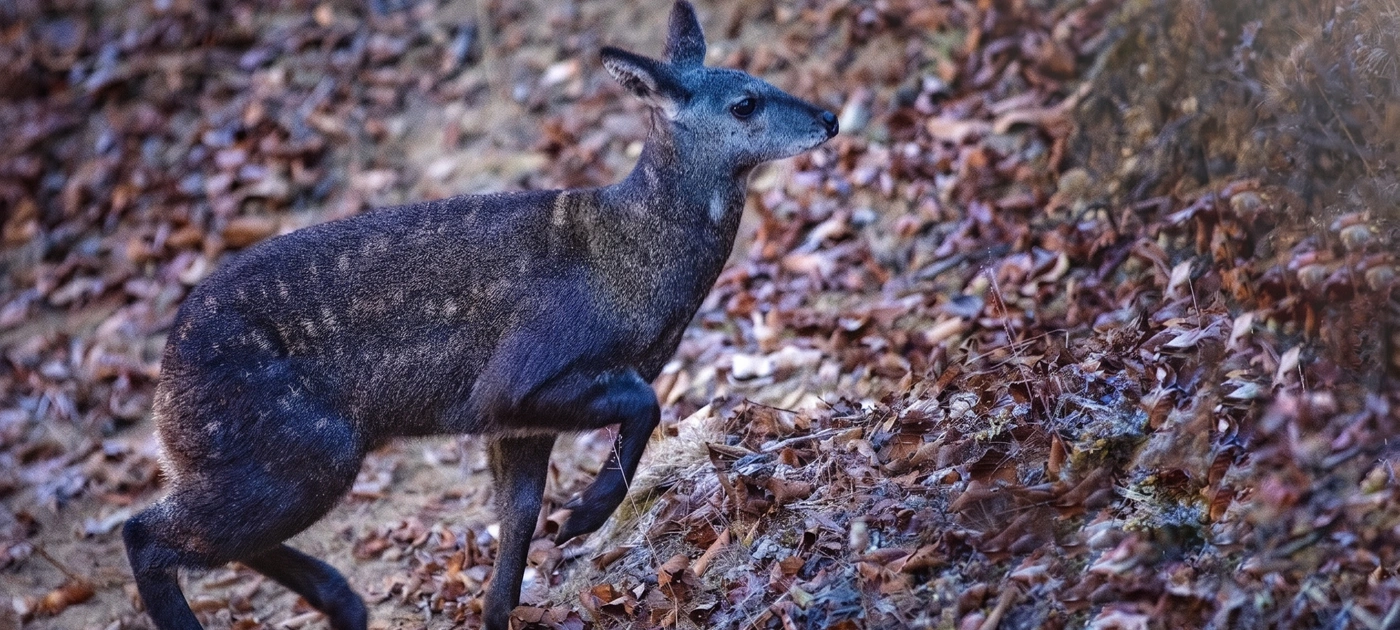
The species has no antlers — instead, males carry elongated, saber-like canine tusks that grow continuously and are used in territorial combat. The hind legs are dramatically longer than the forelegs, which produces a distinctive bounding gait better suited to scaling cliffs than to running across flat ground. The musk deer is closer in evolutionary lineage to antelopes than to the cervid deer family, which gives it its own taxonomic family and a peculiar place in Himalayan wildlife.
After years of running high-altitude wildlife departures, our team has watched the rhythm of musk deer tracking settle into a clear pattern. The species is most reliably seen in winter, in specific village-protected micro-regions where local Buddhist communities have maintained centuries-long mandates against hunting, in the dawn and dusk windows when the deer emerge to feed.
Phortse village in the Sagarmatha National Park is the global standard for this — the Sherpa community there practices a strict non-violent mandate that has produced the densest musk deer population in the Khumbu region, and animals are visibly more habituated to human presence than anywhere else in Nepal. Other regions (Langtang, Manaslu, Dolpo, Lapchi) each offer specific reasons to choose them over Phortse, but the headline answer for travelers seeking a realistic chance of sightings is the Khumbu in winter.
This guide covers the five regions where we run trips with realistic musk deer-sighting opportunities — Sagarmatha (Phortse specifically), Langtang National Park, the Manaslu and Tsum Valley region, Shey Phoksundo and Upper Dolpo, and the Lapchi Valley in the Gaurishankar conservation area.
We explain the winter timing that makes sightings most reliable, the conservation context that has made it ethical to operate, the permit and logistics realities for each region, and how our team operates these departures. It is written for travelers who want to add a serious wildlife dimension to their high-altitude trekking trip, or for the smaller category of dedicated wildlife travelers building a complete Nepal wildlife portfolio.
Important: Musk deer sightings cannot be guaranteed regardless of operator capability, regional choice, or season. The species is solitary, hyper-vigilant, predominantly crepuscular, and small enough to disappear into the rhododendron understory at the slightest sense of human presence.
Sighting probability in our recommended regions during winter is genuinely better than in any other Himalayan country, but no operator can guarantee a sighting on any given trip. We are honest about this at the time of booking. The reward for a musk deer expedition is the experience itself — the high winter Himalaya, the village culture, the broader wildlife of the alpine forest — with the sighting as the possible peak rather than the guaranteed outcome.
What the Himalayan Musk Deer Actually Is
Most travelers who book a musk deer trip do so without a clear picture of what the animal actually looks like or how it behaves. A short orientation matters because it shapes what to look for in the field.
Size and Shape
Smaller than most international travelers expect. The body length is roughly 86 to 100 centimeters, the shoulder height is about 50 centimeters, and the adult body weight is 10 to 18 kilograms — closer to a medium dog than to the larger deer species international travelers know from European or North American forests. The proportions are distinctive: the hind legs are significantly longer and more muscular than the front legs, which produce a hunched stance and the characteristic bounding gait that lets the animal scale near-vertical scree and rock faces.
No Antlers, But Tusks
The most photographed feature of the musk deer is the male's pair of elongated upper canine teeth, which grow continuously throughout the animal's life and can reach roughly 10 centimeters in mature males. Because the species evolved without antlers, the canines serve as the primary weapon during territorial combat between males in the breeding season. The tusks are visible only on adult males. Females and juveniles superficially resemble a small, dark, hornless deer.
Coat and Camouflage
Coarse dark brown to grey pelage with lighter underparts. The hair is structured with air-filled cells that provide unusual thermal insulation against extreme cold — the species can comfortably bed down in deep snow at minus 20 Celsius without significant caloric expenditure on thermoregulation. Newborn fawns are spotted, which fades as the animal matures. The adult coat is genuinely effective camouflage in dappled forest light, which is why a stationary musk deer in cover can be invisible at distances where a similarly-sized goat would be obvious.
Behavior and Activity Pattern
Predominantly crepuscular — most active at dawn and dusk, with a secondary minor activity peak at the darkest hours of the night. Solitary by default, with overlapping territories that intersect only during the November-to-mid-January breeding rut. Highly vigilant, with sensory perception that significantly exceeds human capability — particularly olfactory perception. The species relies on visual concealment in dense understory and on motionless freezing as the primary anti-predator response. When alarmed, the bounding flight is explosive and quickly takes the animal into terrain humans cannot easily follow.
Why Nepal Is Among the Strongest Countries for Musk Deer Sightings
The Himalayan musk deer occurs across Nepal, Bhutan, India, Pakistan, and parts of southwest China, but Nepal stands out among the range countries for three specific reasons that matter for travelers.
First, Nepal has dedicated more than 20% of its national land area to protected status — one of the highest rates in the world. The combination of national parks, conservation areas, and buffer zones creates a continuous protected envelope that supports musk deer populations at densities the species cannot reach in more fragmented habitats. Second, several specific micro-regions within the protected envelope are governed by indigenous Buddhist communities with strict centuries-old mandates against hunting wildlife.
Phortse village in Sagarmatha is the globally cited example — the Sherpa community there has not killed wildlife for generations, and the resulting musk deer population is dense enough that animals are routinely visible from the village periphery rather than only deep in cover.
Third, Nepal has invested in scientific monitoring and anti-poaching enforcement that, while imperfect, is more advanced than those in most other range countries. The combination yields the highest realistic probability of sighting for international travelers across the species' global range.
The Conservation Reality
Worth understanding clearly: the musk deer is endangered globally, and the primary threat is illegal poaching driven by black-market demand for the male's musk gland, which has historically been used in some traditional medicine and in high-end perfumery. The species is strictly protected under Nepal's National Parks and Wildlife Conservation Act and under international CITES regulations.
Strict community-led anti-poaching enforcement, combined with the village-level protection in places like Phortse, has held the population together. The income generated by responsible wildlife trekking helps fund enforcement. Travelers who book with us are part of the income stream that sustains the conservation infrastructure that keeps the species alive.
Seasonal Timing: Winter Is the Strongest Window
Musk deer tracking is fundamentally a winter activity, for ecological rather than logistical reasons. The species is most reliably seen during the cold months when its behavior, foraging requirements, and the surrounding human-livestock dynamics all align.
Winter (December to February) — The Strongest Window
Heavy snow at higher elevations forces the deer down into specific feeding zones in the upper temperate forest, between roughly 3,500 and 4,000 meters. The reduced understory cover from snow-flattened vegetation increases visibility in zones that are impenetrable in other seasons.
Local pastoralists and their livestock have moved to lower wintering grounds, removing daytime human-livestock disturbance that pushes musk deer into deeper cover during summer. The breeding rut runs from November to mid-January, meaning males are unusually active across territorial boundaries and highly visible as they scent-mark and patrol rather than hide. The combination — snow-driven feeding concentration, reduced understory cover, absence of livestock disturbance, and active rut behavior — produces the strongest single sighting window of the year.
The cost is the cold. Tracking-day temperatures at observation altitude range from minus 5 to minus 20 Celsius. Travelers must commit to early-morning departures, proper layering, broken-in cold-weather boots, and the patience to sit on cold ridges and observation points for extended periods of quiet. Lodge interiors at the higher altitudes are basic — heated dining rooms but unheated bedrooms, cold pipes, and frequent fog at the village level until the morning sun cuts through.
Spring (March to May) — Moderate
Spring offers the second-best probability with significantly more comfortable conditions. The deer remain at the lower wintering elevations through March before moving up as the snow recedes. New foliage growth produces fresh feeding zones at predictable locations. Rhododendron blooms across the lower temperate forest are genuinely spectacular and add a photographic dimension that winter does not. The trade-off is that the post-rut males are less active and the deer are more dispersed than in winter — sighting probability is meaningfully lower than the December-February peak.
Autumn (September to November) — Limited
Autumn offers beautiful weather and clear visibility, but limited opportunities to see musk deer. The deer are at higher elevations following monsoon vegetation regrowth, the understory is at maximum density, making concealment maximal, and most international trekkers are on the major commercial routes (Everest Base Camp, Annapurna Circuit) at this time, which produces high foot traffic that pushes wildlife away from the trekking corridors. Travelers visiting the relevant regions in autumn for general trekking will occasionally see musk deer, but autumn is not the best window for a dedicated tracking trip.
Monsoon (June to August) — Not Recommended
We do not run dedicated musk deer departures in the monsoon. The trails are unstable, leeches infest the lower forest zones, fog reduces visibility to close to zero on most days, and the deer are scattered across the higher meadows, where access is impractical. Travelers planning a musk deer trip should align with the dry-season schedule, with a strong preference for winter.
The Five Regions Where We Run Musk Deer Tracking
1. Sagarmatha National Park (Phortse Village) — The Global Standard
Phortse is our default first recommendation for any traveler serious about seeing a musk deer. The village sits at roughly 3,800 meters on a ridge above the Dudh Koshi river, off the main Everest Base Camp trail, accessible from Namche Bazaar via a four to five-hour off-route detour through rhododendron forest, yak pasture, and waterfall cliffs.
The location matters because Phortse is the global standard for community-based wildlife protection. The Sherpa community there practices a strict non-violent mandate rooted in Tibetan Buddhism — wildlife is regarded as a manifestation of the divine, and the killing of any wild animal has been refused for generations.
The result is the densest musk deer population in the Khumbu region, and animals that are visibly less afraid of human presence than anywhere else in Nepal. During winter, the resident musk deer feed openly on the village periphery in early morning and late afternoon, often within easy spotting-scope range of village viewpoints.
The same forests support unusually dense populations of Himalayan tahr, Himalayan monal pheasants, occasional snow leopard activity, and the broader Khumbu wildlife community. Phortse village itself is genuinely interesting beyond the wildlife — the houses are traditional hand-cut stone with carved wooden details, the village hosts the Khumbu Climbing Center that trains Sherpa mountaineers, and the surrounding views span Ama Dablam, Thamserku, and Cho Oyu.
Standard luxury Phortse-focused itineraries run 10-12 days and combine a helicopter-access leg from Kathmandu to Lukla with a 3-4-day approach to Phortse and a 2-3-day base at Phortse for tracking. The accommodation tier in the upper Khumbu is what it is — basic but heated village lodges with dining-room warmth and cold bedrooms. Travelers looking for five-star accommodation throughout should not choose Phortse. Travelers willing to trade lodge comfort for genuine wildlife and the highest probability of musk deer sightings in the country should.
2. Langtang National Park — The Accessible Combined Wildlife Option
Langtang is our recommendation for travelers who want to combine musk deer tracking with red panda observation in a single trip. The park sits within a long day's drive from Kathmandu — significantly more accessible than Sagarmatha or Manaslu — and supports both species in the same broad habitat zone of bamboo, rhododendron, and silver fir between 2,500 and 3,500 meters. Many of our Langtang trips are primarily focused on red panda tracking, with musk deer as the supporting species rather than the headline.
The Langtang ecological gradient runs from subtropical broadleaf forest at the bottom to alpine meadows near the Tibetan border, producing an unusual range of mammalian species within a single contiguous park. Beyond musk deer and red pandas, Langtang supports Himalayan black bears, several pheasant species, and the broader bird diversity of central Nepal's mid-hills.
The Tamang Heritage Trail extension adds genuine cultural depth — Tamang Buddhist communities increasingly stake their tourism economy on the wildlife of their own forests, which produces local stewardship at the village level that benefits the species. Standard luxury Langtang departures run 10-12 days.
3. Manaslu and Tsum Valley — Profound Isolation
The Manaslu Conservation Area, particularly when paired with the Tsum Valley side trip, offers the most isolated musk deer tracking environment we operate. The region was strictly restricted until 2008, meaning it has been open to organized tourism for less than two decades, and the ecosystems retain a quality of pristineness that the longer-trafficked routes have lost. Manaslu encircles the eighth-highest peak in the world (8,163 meters), and the trekking routes climb through six distinct climatic zones, from tropical lowland forest at 1,000 meters to the high Arctic above 4,500 meters.
The Tsum Valley side trip is genuinely unusual. The valley operates under strict Buddhist non-violence mandates similar to Phortse — the local population refuses to kill wildlife as a matter of religious principle, and the resulting wildlife densities reflect this. Musk deer sightings are realistic between 3,000 and 4,000 meters in the dense forests around Chhokangparo, Nile, and Mu Gompa during the acclimatization days at the upper end of the Tsum trail.
The trip is genuinely demanding — a long initial drive from Kathmandu to Machha Khola, followed by a 16-day trekking circuit with the Tsum extension. Standard luxury Manaslu and Tsum departures run 18-22 days end-to-end and require a high level of fitness. Travelers who choose Manaslu typically do so for the combined wildlife and cultural experience rather than the wildlife alone — the religious sites at Mu Gompa and the Milarepa caves are part of what makes the trip rewarding even on days when the wildlife stays hidden.
4. Shey Phoksundo and Upper Dolpo — The Trans-Himalayan Stronghold
Dolpo holds the strongest musk deer population in the western Himalaya. The trans-Himalayan terrain — arid, semi-desert at the lower end, transitioning into alpine meadows at the upper end, with the turquoise Phoksundo Lake at the center — supports the species at densities that the more accessible eastern parks have lost due to fragmentation. Field surveys in the Shey Phoksundo region have documented some of the highest encounter rates for musk deer signs anywhere in the country.
Dolpo is also the most demanding of the five regions. Access requires multi-flight logistics — Kathmandu to Nepalgunj on the southern plains, then a short STOL flight to the precarious Juphal airstrip, and several days of trekking through the river valleys to reach Phoksundo Lake.
There is no permanent tourist infrastructure beyond basic homestays in the larger villages, and serious tracking requires fully supported camping with a kitchen crew, mule trains, and dedicated tents at observation points. The cultural texture is unique — Dolpo is one of the last enclaves of the Bonpo religion that predates Tibetan Buddhism, and the religious sites along the Phoksundo shore reflect this. Standard luxury Dolpo expeditions run 18-22 days and represent the upper end of operational complexity in our wildlife portfolio.
5. Lapchi Valley (Gaurishankar Conservation Area) — The Spiritual Frontier
Lapchi is the least known of the five regions and the most rewarding for travelers who can manage the logistics. The valley lies within the Gaurishankar Conservation Area on the Nepal-Tibet border and is regarded in Tibetan Buddhist tradition as one of the three holiest mountains, alongside Mount Kailash and Mount Tsari, primarily because of its association with the eleventh-century Tibetan yogi Milarepa, whose meditation caves remain the spiritual anchor of the valley.
The peaks of Lapchi Kang are not high enough to attract commercial mountaineering, the valley lacks the teahouse infrastructure of the Annapurna or Everest regions, and the result is genuine wilderness with negligible foot traffic.
Camera trap research in the Lapchi Valley has documented robust musk deer populations alongside Himalayan black bears, snow leopards, and the broader high-altitude ecosystem. The local Sherpa communities practice semi-nomadic herding that empties the high valleys during winter, which leaves the wildlife genuinely undisturbed.
Tracking expeditions are entirely camping-supported — there is no lodge infrastructure of any kind. The standard 11-day fully supported camping itinerary departs from the settlement of Lamabagar and ascends along the Tama Koshi River through bamboo groves, cloud forests, and the ridge of Kookur Raja before reaching the high-alpine lakes at roughly 4,900 meters.
The combination of pristine wildlife habitat, profound cultural and spiritual heritage, and the complete absence of tourist infrastructure makes Lapchi the right choice for travelers who want the most uncompromised version of high-altitude wildlife travel we offer.
Five Regions Compared
|
Region
|
Best For
|
Duration
|
Sighting Probability
|
|
Phortse (Sagarmatha)
|
Highest sighting probability; community-protected village; combined Khumbu experience
|
10–12 days
|
Highest
|
|
Langtang
|
Combined musk deer and red panda; accessible from Kathmandu
|
10–12 days
|
Moderate
|
|
Manaslu and Tsum
|
Profound isolation, combined with wildlife and Buddhist cultural depth
|
18–22 days
|
Moderate
|
|
Shey Phoksundo (Dolpo)
|
Trans-Himalayan stronghold; deepest wilderness; highest density west
|
18–22 days
|
Moderate-High
|
|
Lapchi Valley
|
Pristine wilderness; spiritual heritage; fully camping-supported
|
11–14 days
|
Moderate-High
|
How Musk Deer Tracking Actually Works on the Ground
Musk deer tracking is closer in operational character to snow leopard tracking than to lowland safari work. It happens on foot, in cold pre-dawn and dusk windows, with experienced local guides reading subtle environmental cues across long quiet observation periods. The daily rhythm is shaped by the species' crepuscular activity pattern.
The Daily Rhythm in Winter
- 05:00 AM — Wake at the village lodge or camp. Sub-zero temperatures inside the bedroom. Quick hot tea, gear preparation
- 05:45 AM — Departure to the morning observation point in pre-dawn darkness with headlamps. Walking pace is deliberate to avoid disturbing the area
- 06:15–10:30 AM — Active scoping and slow walking through known feeding zones. Scouts read fresh tracks in snow, identify scrape sites, scan rhododendron understory for movement, and listen for the alarm calls that signal predator activity nearby
- 10:30 AM–02:00 PM — Return to the village or camp. The musk deer rest in dense cover during the warmer hours of the day, so directed tracking is unproductive. Birding, botanical observation, or photography of supporting species fill the time
- 02:00–04:00 PM — Late lunch and rest
- 04:00–06:00 PM — Afternoon scoping through the dusk activity window. Statistically, the strongest single window of the day for musk deer sightings
- 06:00 PM onward — Return to lodge or camp before darkness, hot dinner, briefing for the following day
What Trackers Look For
The signs of recent musk deer activity are subtle and accumulate across the eye of an experienced tracker. The species uses communal latrine sites repeatedly across multiple seasons, which makes those sites predictable observation anchors once they are known. Fresh feeding signs on lichens, fir and yew twigs, and the lower branches of taller shrubs, all accessed by the deer standing on snow piles, indicate recent activity.
Bedding sites in dense rhododendron understory leave compressed snow or vegetation patterns that experienced eyes can identify. Tracks in fresh snow show the distinctive splayed-toe hoofprint and the characteristic bounding pattern. The accumulated knowledge of which forest segments have active resident animals, which corridors particular males are patrolling during the rut, and which seasonal feeding zones are currently producing the right understory growth — this is what a senior local tracker brings that no published field guide can replicate.
Patience and Realistic Expectations
The honest reality of musk deer tracking is that most of the time is spent quietly walking through cold forest, watching nothing in particular happen. The pleasure of the trip is the alpine forest itself — the rhododendron and birch in winter light, the quietness of high villages without commercial trekking traffic, the slow accumulation of small wildlife observations across hours of patient movement. Travelers who do not enjoy that environment will struggle on a musk deer trip, even if a sighting occurs. Travelers who do enjoy it will have rewarding trips even on days when the deer stay hidden.
Ethical Tracking and Photography Protocols
Musk deer tracking, done badly, harms the species we are trying to protect. The musk deer is endangered, the populations are fragile, and excessive tourist disturbance can push the animals out of established feeding zones into less productive terrain. Our team operates to strict ethical standards on every trip, and we expect the same from every guest.
Distance
We maintain a minimum 20-meter observation distance from any sighted musk deer. Long-lens photography (300-400mm telephoto minimum) replaces close approaches. We do not pursue, we do not flush, and we do not push past the comfortable observation distance for the specific animal. The right photograph is the one taken at the right distance, not the closest possible distance.
Silence and Scent Discipline
The musk deer's olfactory perception significantly exceeds human capability. Strong perfume, deodorant, scented soap, or cologne will trigger a flight response from a substantial distance, even when the animal is not visible. Pre-departure briefings include scent guidance — guests use unscented hygiene products for the days at altitude. Group conversation in tracking zones is reduced to essential whispered communication. Phones are silenced. The forest is treated as the wildlife habitat that it functionally is.
No Flash Photography
Flash photography is prohibited on every musk deer trip. The sudden burst of light can blind, disorient, and traumatize an animal living in low-light conditions. The right photographic strategy is to use natural light at dawn and dusk, when the deer are most active anyway, and when the warm, angled light produces the best images.
Trail Discipline
Off-trail bushwhacking through musk deer habitat is prohibited on our trips. The fragile alpine understory recovers slowly from foot traffic, the deer's bedding sites are sometimes invisible until they are crushed, and the broader habitat degrades quickly when guests move freely. Our routes follow established tracks, and our observation points are positioned to minimize off-trail impact.
Group Size
We run musk deer trips for two to four guests. Larger groups generate noise and disturbance, resulting in a much lower per-person sighting probability. The right group size for serious musk deer tracking is small. We do not run mass-tourism wildlife trips.
Equipment Notes Specific to Musk Deer Tracking
The bulk of the high-altitude gear requirements for a musk deer trip overlap with our snow leopard and Khumbu trekking guidance — the same layering system, the same boot specifications, the same battery management at altitude. The musk deer-specific points worth flagging:
- Silent shutter mirrorless camera body. The mechanical shutter click of a DSLR is loud enough to flush a musk deer at the moment of capture. Modern mirrorless bodies (Sony A7 series, Canon R5/R6, Nikon Z8) with electronic silent shutters allow continuous capture without alerting the subject
- Telephoto zoom of at least 300mm focal length. The deer's flight distance and the dense forest cover both push photographic distance further than open landscape compositions require. A 100-400mm zoom is the standard recommendation. A 300mm prime with a 1.4x teleconverter is the alternative for travelers prioritizing sharpness
- Wide aperture for low-light forest understory. Dawn and dusk in a winter forest produce genuinely difficult lighting. Faster lenses (f/2.8 to f/5.6) help significantly. Modern sensors handle ISO 3200-6400 well, which extends the usable shooting envelope
- Exposure compensation discipline for snow backgrounds. Camera light meters underexpose snow scenes by default — manually overexposing by +1.3 to +2.0 stops produces correct snow whites and properly exposed deer in mixed snow-and-deer compositions
- Spotting scope for shared observation. Our trips include spotting scopes at observation points so multiple guests can confirm sightings at a distance without crowding the photographer's position
How Our Team Operates Musk Deer Trips
- After years of running high-altitude wildlife departures, our operating standards for musk deer tracking have settled into the practices below. We publish them so prospective travelers can compare across operators.
- Local tracker partnerships. Every musk deer trip is led by experienced local guides whose families have lived alongside the relevant forests for generations. Phortse trips run with sherpa naturalists from the village itself. Manaslu and Tsum trips run with Tibetan-Buddhist trackers from the upper valley communities. The trackers are long-term partners, not casual hires.
- Small group sizes (2-4 guests). Larger groups produce lower sighting probability and higher disturbance. We do not run group departures of more than four guests for musk deer trips.
- Honest sighting probability disclosure. We tell every guest at the time of booking that sightings cannot be guaranteed, and we are direct about which regions and seasons have the highest probability. Operators who promise guaranteed musk deer sightings are either misrepresenting the species or engaging in unethical bait practices.
- Conservation contribution is built into the trip cost. A portion of every musk deer trip cost is contributed directly to community-led anti-poaching programs, habitat restoration nurseries, and the village stewardship initiatives that maintain the populations. Travelers who book with us are part of the funding model that keeps the species alive.
- Strict ethical observation protocols. Distance maintained, scent discipline enforced, silence in the forest, no flash photography, no off-trail pursuit. Our guides enforce these standards on every trip regardless of guest pressure.
- Provided expedition gear. Spotting scopes, sub-zero sleeping bags for camping, expedition-grade down jackets, and waterproof duffels are provided on every winter musk deer trip. Travelers who are not regular winter mountaineers do not need to invest in a full kit for a single trip.
- Porter welfare to IPPG standards. All porters and support staff are paid above the local market rate, provided with comprehensive insurance, equipped with proper cold-weather gear, and accommodated in the same lodges or camps as the guest team. Maximum 25kg loads, age 18 minimum, full medical evacuation insurance, and equal accommodation.
Frequently Asked Questions
Are musk deer sightings guaranteed?
No. The Himalayan musk deer is endangered, hyper-vigilant, predominantly crepuscular, and small enough to disappear into the rhododendron understory at the slightest sense of human presence. Sighting probability in our recommended regions during winter is genuinely better than in any other Himalayan country, but no operator can guarantee a sighting on any given trip. We are honest about this at the time of booking. Travelers who require guaranteed wildlife encounters should consider the lowland Terai safari or African operations rather than Himalayan musk deer work.
Where in Nepal has the highest sighting probability?
Phortse village in Sagarmatha National Park. The community-protected village environment, the strict centuries-long non-violence mandate practiced by the resident Sherpa population, and the dense rhododendron and birch forests at 3,800-4,200 meters combine to produce the strongest realistic sighting probability anywhere in the species' global range. Our default recommendation for first-time musk deer travelers is a Phortse-anchored Khumbu trip in winter.
When is the best time of year for musk deer tracking?
Winter (December to February) is the strongest single window. The combination of snow-driven feeding concentration, reduced understory cover, absence of summer livestock disturbance, and active rut behavior produces the best probability of the year. Spring (March to May) is the second-best window with more comfortable conditions but lower probability. Autumn is limited, and we do not run dedicated musk deer trips during the monsoon.
How long does a musk deer trip take?
Ten to twenty-two days, depending on the region. Phortse-anchored Khumbu trips run 10-12 days. Langtang trips run 10-12 days. Manaslu and Tsum Valley trips run 18-22 days. Dolpo expeditions run 18-22 days. Lapchi camping treks run 11-14 days. The longer durations reflect the access logistics and the camping support requirements rather than longer dedicated tracking time — the actual tracking days at the observation altitudes are typically 4-6 days regardless of region.
How fit do I need to be?
Solid fitness essential. Musk deer tracking involves multi-hour observation in sub-zero temperatures plus daily walks of 4-6 hours at altitudes between 3,000 and 4,500 meters. The Phortse access route from Namche includes a steep detour. The Manaslu and Dolpo trips involve sustained multi-week trekking at altitude. Travelers who regularly hike with elevation gain and have comfortable cardio fitness manage Phortse and Langtang well. Manaslu, Dolpo, and Lapchi require higher fitness due to their longer durations. We send a pre-trek fitness assessment to every confirmed guest.
How cold does it get?
Tracking-day temperatures at observation altitude range from minus 5 to minus 20 Celsius during the December-February window, sometimes colder at the higher Dolpo and Lapchi sites. Lodge interior temperatures often run minus 5 to plus 5 Celsius — heated dining rooms, but unheated bedrooms. Camp temperatures at the higher altitudes can run colder. Proper cold-weather gear is essential, and the difference between productive tracking days and survival days is significant.
Can I combine musk deer tracking with other wildlife trips?
Yes, productively. Langtang trips often combine musk deer and red panda tracking in the same itinerary because the species overlap spatially. Khumbu trips can combine Phortse musk deer days with the standard EBC trek for travelers who want both wildlife and the headline mountain experience. Dolpo trips can incorporate snow leopard-tracking days, as the species shares the Western conservation landscape. Manaslu trips combine wildlife with one of Nepal's most powerful Buddhist cultural itineraries. We build combined trips on request.
What gear do I need to bring?
Full winter Himalayan layering — thermal base layers, heavy fleece or synthetic mid-layer, expedition-grade down jacket, wind-resistant pants, insulated boots, glove and mitten combination, warm hat, and neck gaiter. We provide spotting scopes, sub-zero sleeping bags for camping, expedition down jackets, and waterproof duffels for our musk deer trips. Travelers bring personal clothing, optical equipment, and any photography gear. Detailed gear lists are sent at the time of booking based on the specific region and season.
Why are musk deer endangered?
The primary threat is illegal poaching driven by black-market demand for the male's musk gland, which has historically been used in traditional medicine and in high-end perfumery. The species is strictly protected under Nepal's National Parks and Wildlife Conservation Act and under international CITES regulations, but enforcement in the remote alpine terrain is genuinely difficult. Habitat fragmentation from agricultural expansion, livestock grazing pressure, and climate-driven shifts in the alpine zone further add to the pressure. Community-led anti-poaching enforcement and the village-level protection in places like Phortse have held the population together. Travelers booking responsible musk deer trips are directly contributing to the conservation income that funds the enforcement.
Is musk deer tracking ethical?
With the right operator, yes. Our trips contribute directly to community-led anti-poaching programs, operate in small groups to minimize disturbance, follow strict observation protocols, and use locally employed trackers and porters. Travelers should ask any prospective operator directly about distance protocols, group size limits, scent and flash discipline, and specific conservation contributions before booking. Operators who promise close-approach photography or guaranteed sightings should be approached cautiously.
Can I see musk deer without a dedicated trip?
Yes, opportunistically. Travelers on standard Khumbu treks (Everest Base Camp, Three Passes) sometimes see musk deer in the forest sections between Namche and Tengboche, particularly in the early morning. Travelers on Langtang treks occasionally see them in the bamboo and rhododendron understory. Travelers on the Manaslu Circuit sometimes see them in the upper Tsum Valley. The probability is meaningfully lower than for dedicated tracking trips with experienced trackers in the right season, but opportunistic sightings still occur and are part of why we recommend incorporating wildlife awareness into all our high-altitude trekking departures.
How much should I budget?
Phortse-anchored Khumbu musk deer trips typically run USD 6,500-9,500 per person. Langtang departures run USD 5,500-8,000. Manaslu and Tsum trips run USD 8,500-13,500. Dolpo and Lapchi expeditions run USD 11,000-16,000 per person, depending on duration and camping requirements. International flights, travel insurance, gratuities, and any photography rental gear are additional. Lead time for booking is 5-9 months ahead — winter inventory tightens earliest because the strongest single window concentrates demand.
How early should I book?
Five to nine months ahead. Phortse-anchored winter trips and Manaslu winter trips both tighten up earliest because the strongest single-sighting window is December-February, and inventory at the village lodges and the Tsum Valley homestays is limited. Travelers contacting us in October for a January departure are usually too late for the strongest dates. The right lead time for winter is the previous spring or early summer.
Plan Your Musk Deer Expedition With Us
Tell us your preferred region, your dates, your prior altitude experience, and your photographic goals. Our team returns a written expedition proposal within 48 hours, covering the route, the local tracker team, the gear we provide, the conservation contribution included, and the realistic sighting probability for your dates. Musk deer tracking is one of the quietest, extraordinary wildlife trips in the country — and one of the most rewarding for travelers who choose it well.