Shinta Mani, Lo Manthang, and the Last Forbidden Kingdom
Why Upper Mustang
Three reasons that no other destination in Nepal can match.
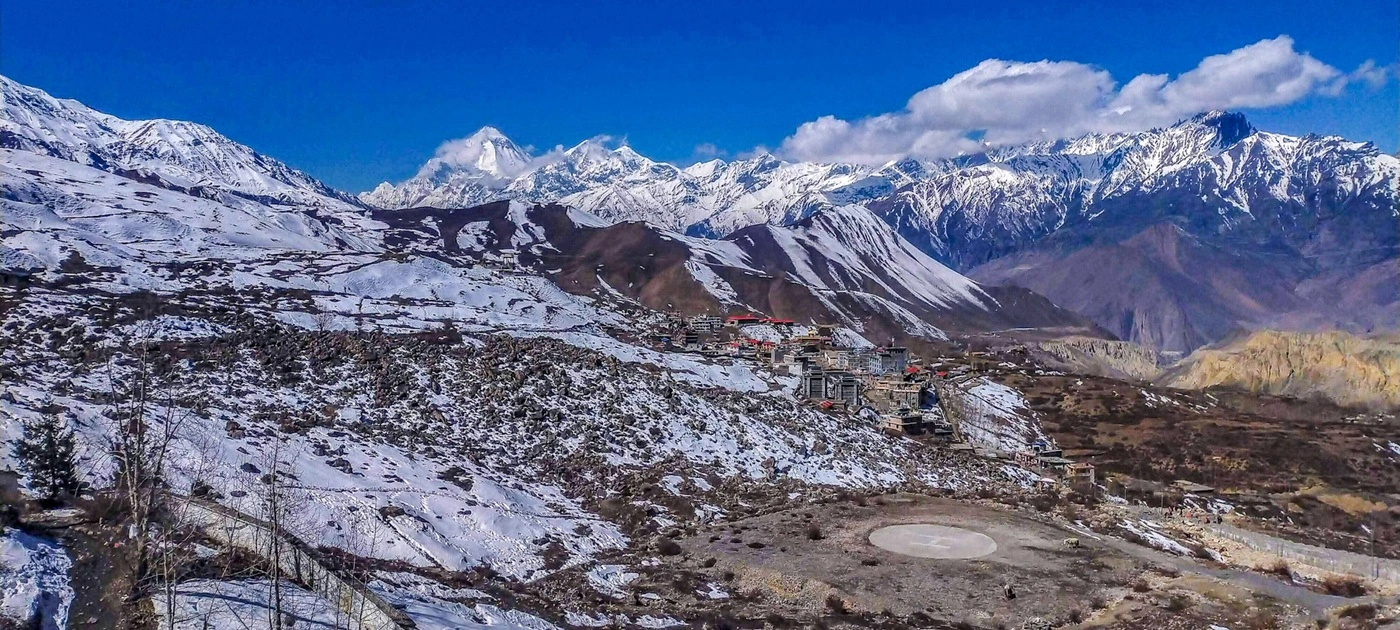
The desert. The Himalayas are associated with snow, forests, and green valleys. Upper Mustang is none of these. It is a trans-Himalayan rain shadow — the mountains block the monsoon, creating an arid landscape of eroded cliffs, wind-carved pinnacles, and ancient riverbeds.
The colors are red, ochre, grey, and bone-white. The sky is enormous. The vegetation is sparse. It looks like the American Southwest crossed with the Tibetan plateau. Photographers describe the light as the best in Nepal — warm, directional, and long-lasting because the valley runs north-south.
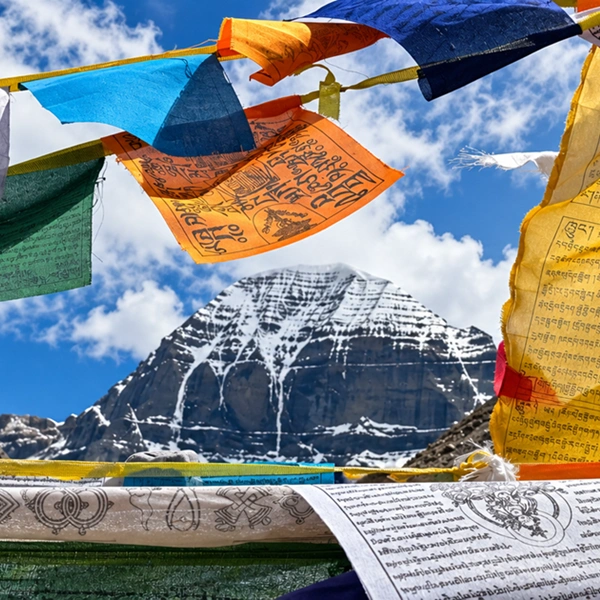
The culture. Upper Mustang is ethnically, linguistically, and culturally Tibetan. The people speak a Tibetan dialect. The religion is Vajrayana Buddhism, mixed with pre-Buddhist Bön practices, that survives nowhere else in the Himalayas in this form.
The medieval walled city of Lo Manthang — capital of the Kingdom of Lo — has been continuously inhabited for over 600 years. The king (the Raja or Gyelpo) still lives in the palace.
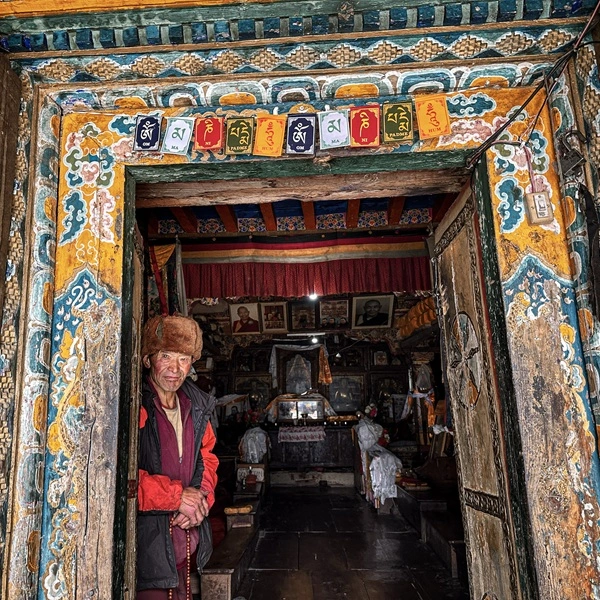
The monasteries contain 15th-century murals that rival those in Lhasa. The restricted-area permit ($500/person for the first 10 days) has kept mass tourism at bay since the region opened in 1992.
The isolation. Upper Mustang is accessible only by flight to Jomsom, followed by a drive or trek north, or by helicopter directly. There are no paved roads beyond Jomsom. The Kali Gandaki gorge — between the 8,000m peaks of Dhaulagiri and Annapurna — is the deepest gorge on earth. The daily wind starts at 10 AM, making afternoon travel difficult. The region receives fewer than 3,000 international visitors per year. In comparison, the Annapurna Circuit receives over 50,000.
Shinta Mani Mustang
$10,500 per couple. Six nights. All-inclusive. The most talked-about hotel opening in the Himalayas since Amankora.
Designed by Bill Bensley, the architect behind some of Asia’s most celebrated hotels (Capella Ubud, Shinta Mani Wild Cambodia, Bensley Collection Siem Reap). The lodge sits in the Kali Gandaki valley with floor-to-ceiling views of Nilgiri (7,061m).
The design integrates Mustang’s medieval Tibetan aesthetic with Bensley’s signature theatrical luxury: dark, carved woods, vibrant textiles, dramatic lighting, and spaces that feel like both a museum and a home.
|
Feature
|
What You Get
|
|
Pricing
|
$10,500/couple for 6 nights all-inclusive. Unlimited premium food and open bar. No hidden costs.
|
|
Adventure Butler
|
A personal Bensley Adventure Butler manages your entire itinerary. Not a guide. A curator of your daily experience.
|
|
Amchi Doctor
|
A traditional Mustang healer using a 1,000-year-old diagnostic system (pulse reading, urine analysis, herbal prescription).
Not a spa treatment. A medical consultation rooted in the same tradition that gave rise to Tibetan medicine.
|
|
Horseback
|
Mustang ponies — the indigenous breed adapted to the desert terrain. Ride through the Kali Gandaki gorge.
The horse is not a novelty. It is the kingdom's traditional mode of transport.
|
|
Chef Kamala
|
Thakali home cooking at Chef Kamala’s kitchen table in Marpha village. You eat where she cooks.
The meal is served on her family’s plates. Apple brandy from Marpha’s orchards.
|
|
Mountain picnics
|
Gourmet picnics on ridgelines with chilled rosé and sustainably foraged ingredients against the Nilgiri backdrop.
|
|
Hot tubs
|
Outdoor hot tubs with mountain views. The desert air drops below 0°C at night. You sit in hot water watching the stars above the deepest gorge on earth.
|
Amankora Bhutan ($1,500/night, 5-valley circuit). Six Senses Bhutan ($1,500/night, 5 lodges). Singita Kruger ($3,000/night, South Africa). At $1,750/night all-inclusive, Shinta Mani Mustang delivers more cultural depth per dollar than any of them — because the destination itself is the luxury. No other hotel on earth is located in a medieval Tibetan desert kingdom accessible only by air.
Lo Manthang: The Walled City
The capital of the Kingdom of Lo. A walled medieval city at 3,840 meters. Continuously inhabited for over 600 years. The Raja (king) still lives in the four-story royal palace. The city wall encloses approximately 150 houses, monasteries, and the palace within a compact footprint you can cross in 10 minutes. But the density of art and architecture within those walls is extraordinary.
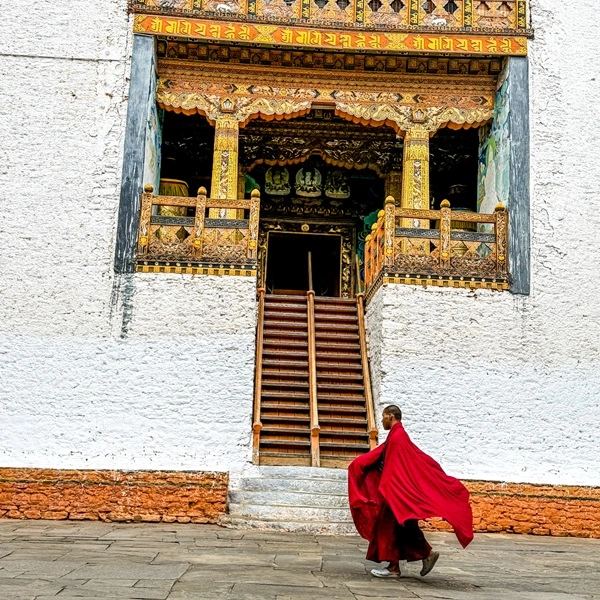
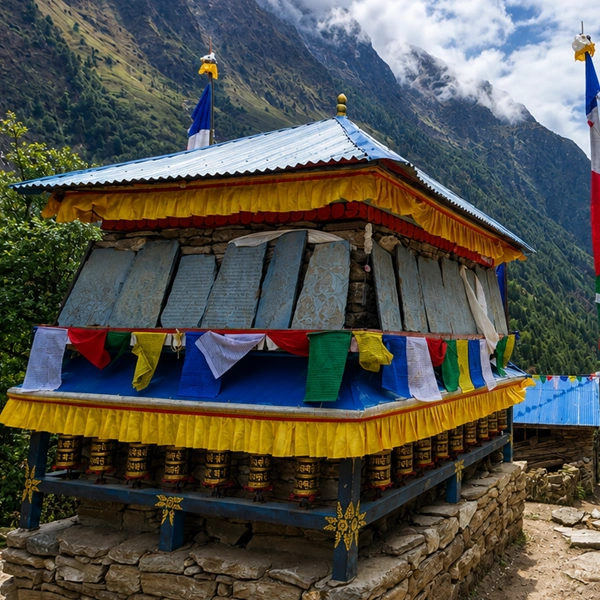
Thubchen Gompa: a 15th-century monastery with a massive assembly hall. The murals inside — restored by a joint Nepali-Italian conservation team — are among the finest examples of medieval Tibetan Buddhist art surviving anywhere, including Tibet itself (where the Cultural Revolution destroyed vast quantities). The painted mandalas, wrathful deities, and scenes from the life of the Buddha cover every wall and ceiling in colors that have survived 500 years of high-altitude desert climate.
Jampa Gompa: the oldest monastery in Lo Manthang. Houses a massive clay statue of Maitreya (the future Buddha) that fills the entire three-story interior. The monastery also contains a collection of ancient manuscripts and a series of carved wooden panels depicting the 84 Mahasiddhas (great accomplished ones) of Vajrayana Buddhism.
The Tiji Festival (May, dates vary by lunar calendar): a three-day masked dance festival in the courtyard of Lo Manthang. Monks wearing elaborate silk costumes and terrifying wooden masks perform Cham dances celebrating Dorje Jono’s victory over his demon father. The festival is attended by the entire population of Lo Manthang and the surrounding villages. We arrange VIP viewing positions and translated narration of each dance’s iconographic program.
The Route
|
Day
|
Route
|
Altitude
|
What Happens
|
|
1
|
KTM → Pokhara → Jomsom
|
2,720m
|
Fly KTM-Pokhara (25 min). Fly Pokhara-Jomsom (20 min through the Kali Gandaki gorge between Dhaulagiri and Annapurna). OR: helicopter KTM direct to Jomsom/Shinta Mani. Arrive at Jomsom. Transfer to the lodge.
|
|
2-3
|
Shinta Mani base
|
2,720m
|
Acclimatise. Chef Kamala’s kitchen table in Marpha (apple brandy village). Horseback through the Kali Gandaki. Amchi consultation. Mountain picnic. Hot tub. The Adventure Butler curates each day.
|
|
4
|
Jomsom → Ghami
|
3,520m
|
Drive north through the desert. The landscape transforms: green valleys give way to red and ochre cliffs.
Wind-carved pinnacles. Ancient cave dwellings visible in cliff faces. Overnight Ghami or Dhakmar (the red village).
|
|
5
|
Ghami → Lo Manthang
|
3,840m
|
Enter the walled city. The palace. Thubchen Gompa murals. Jampa Gompa Maitreya statue.
The king’s audience (arranged through our network). Walk the narrow alleys. The city feels medieval because it is.
|
|
6
|
Lo Manthang exploration
|
3,840m
|
Choser caves (ancient sky burial site). Ghar Gompa (the oldest monastery in Mustang, built into a cliff).
The Bön village of Lubra — where pre-Buddhist religious practices survive. Sunset from the city wall.
|
|
7
|
Return south
|
3,840m → 2,720m
|
Drive or ride south to Jomsom. Flight to Pokhara. Or helicopter extraction. Return KTM.
Or continue to Pokhara for 1-2 nights of lakeside decompression.
|
The Permits
|
Permit
|
Cost
|
Notes
|
|
Restricted Area Permit
|
$500/person (first 10 days)
|
Upper Mustang is a restricted area. Minimum 2 travelers. The $500 fee is per person for the first 10 days, then $50/day thereafter.
|
|
Annapurna Conservation Area Permit
|
$30/person
|
Standard ACAP permit for the broader region.
|
|
TIMS card
|
$20/person
|
Trekkers’ Information Management System.
|
We handle all permits. The $500 restricted area fee is the primary access barrier — it funds conservation and limits visitor numbers to approximately 3,000 per year. This is why Upper Mustang feels empty when the Annapurna Circuit feels crowded.
The Amchi: Medicine Older Than Anatomy
The Amchi is the traditional healer of Upper Mustang. The diagnostic system is rooted in Sowa Rigpa — the same 2,500-year-old Tibetan medical tradition referenced in our Tibet and Bhutan guides. Pulse reading. Urine analysis. Constitutional assessment based on the three humors (Wind, Bile, Phlegm).
Herbal prescription using plants foraged from the specific altitude and microclimate of the Kali Gandaki. The Amchi at Shinta Mani Mustang is not a spa therapist with a Tibetan title. The Amchi is a physician in a lineage that predates Western anatomy by centuries, practicing in the same landscape where the herbs grow.
The Bön Village of Lubra
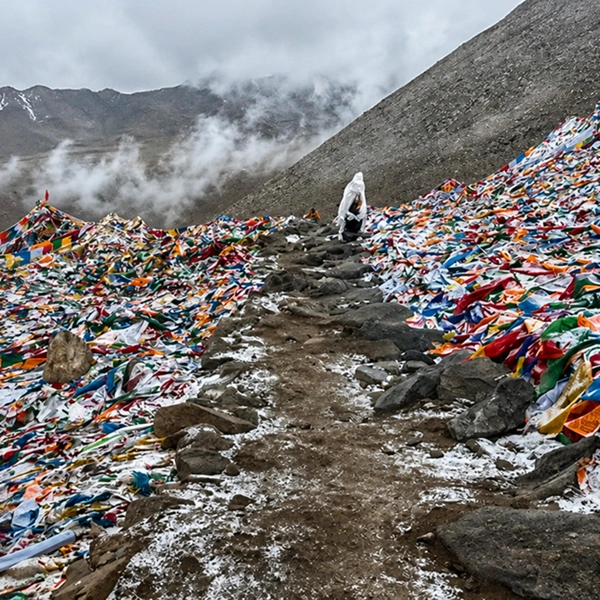
Twenty minutes from the main trail, hidden in a side valley. Lubra is the last functioning Bön village in Upper Mustang. Bön is the pre-Buddhist religion of Tibet — animist, shamanistic, and deeply tied to the natural landscape. When Buddhism arrived in the 8th century, Bön was absorbed rather than destroyed. In Lubra, the two traditions coexist: the Bön monastery sits beside Buddhist prayer flags.
The circumambulation is counter-clockwise (the opposite of Buddhist kora). The iconography includes symbols and deities that exist nowhere in mainstream Tibetan Buddhism. For travelers who have seen Buddhist monasteries across Nepal, Bhutan, and Tibet, Lubra offers something genuinely different — the religion that came before.
What It Costs
|
Option
|
Cost/Person
|
What It Includes
|
|
Shinta Mani 6 nights
|
$5,250 ($10,500/couple)
|
All-inclusive. Adventure Butler. Amchi. Horseback. Chef Kamala. Hot tubs. Open bar. Unlimited dining. Does not include flights or a restricted area permit.
|
|
Luxury guided trek (10-12 days)
|
$3,500-5,000
|
Private guide. Best available teahouses + enhanced camping. Cook team. Horseback segments. Permits. Flights Pokhara-Jomsom.
|
|
Helicopter-supported (7 days)
|
$6,000-9,000
|
Helicopter KTM-Jomsom + helicopter extraction. Drive/ride to Lo Manthang. Premium camping or Shinta Mani base. Maximum comfort, minimum transit.
|
Add: Restricted Area Permit $500/person. ACAP $30. TIMS $20. Flights KTM-Pokhara-Jomsom: $200- $ 350 per person. Helicopter KTM-Jomsom: $800-1,200/person (shared) or $3,500-5,000 (private charter).
Frequently Asked Questions
What is Upper Mustang?
A restricted trans-Himalayan desert region in northern Nepal. Ethnically and culturally Tibetan. The medieval walled city of Lo Manthang was the capital of the Kingdom of Lo. The king still lives there. Opened to foreigners in 1992. $500 restricted area permit. Fewer than 3,000 international visitors per year.
What is Shinta Mani Mustang?
$10,500/couple, 6 nights all-inclusive. Designed by Bill Bensley. Adventure Butler. Amchi doctor. Chef Kamala’s kitchen table. Horseback. Hot tubs. Mountain picnics with rosé. Floor-to-ceiling Nilgiri views. The most important hotel opening in the Himalayas in a decade.
How do I get to Upper Mustang?
Fly KTM-Pokhara (25 min) then Pokhara-Jomsom (20 min through the deepest gorge on earth). Or helicopter direct. Drive or ride north from Jomsom to Lo Manthang (2-3 days). No paved roads beyond Jomsom.
What is the Tiji Festival?
A three-day masked dance festival in the courtyard of Lo Manthang (May, dates vary by lunar calendar). Monks in silk costumes and wooden masks perform Cham dances celebrating Dorje Jono’s victory. The entire population attends. We arrange VIP viewing and translated narration. Book 6+ months in advance.
What is an Amchi?
The traditional healer of Mustang. Sowa Rigpa medicine. Pulse reading. Urine analysis. Herbal prescription from locally foraged plants. A medical lineage that predates Western anatomy. At Shinta Mani, the Amchi is not a spa feature. The Amchi is a physician.
What is Bön?
The pre-Buddhist religion of Tibet. Animist and shamanistic. The village of Lubra in Upper Mustang is the last functioning Bön settlement. Counter-clockwise circumambulation. Unique iconography. The religion that came before Buddhism. For travelers who have seen Buddhist monasteries everywhere, Lubra offers something genuinely different.
How hard is Upper Mustang?
The altitude is moderate (2,720m at Jomsom, 3,840m at Lo Manthang). The terrain is desert, not mountain. The challenges are the wind (daily from 10 AM) and the remoteness (no paved roads; basic teahouses outside Shinta Mani). Horseback and vehicle segments reduce physical demand. Suitable for fit adults 30-65.
What permits do I need?
Restricted Area Permit: $500/person (first 10 days). Minimum 2 travelers. ACAP: $30. TIMS: $20. We handle everything. The $500 fee is the reason Upper Mustang has 3,000 visitors while the Annapurna Circuit has 50,000.
When is the best time?
March-June and September-November. The Tiji Festival (May) is the cultural peak. October offers the clearest skies. Winter (December-February): very cold, some passes may close. Monsoon (July-August): the rain shadow means Upper Mustang receives less rain than the rest of Nepal, but the access roads and flights can be disrupted.
Can I combine Upper Mustang with the rest of Nepal?
Yes. The standard luxury routing: Kathmandu (2-3 nights) → Pokhara (1 night) → Upper Mustang / Shinta Mani (5-6 nights) → Pokhara (1-2 nights lakeside decompression) → Chitwan (2 nights safari) → return KTM. 12-14 days total. Or as the centerpiece of the 14-day Trans-Himalayan itinerary in our Nepal Itineraries by Trip Length guide.
The Final Word
A&K calls Mustang “the ultimate goal.” Black Tomato does not have a Mustang page. Jacada mentions it in passing. No competitor publishes a standalone Upper Mustang guide with the Shinta Mani pricing architecture, the Amchi medical tradition, the Bön village of Lubra, the Tiji Festival iconography, or the 15th-century Thubchen Gompa murals that rival anything in Lhasa. This is the gap. And you are standing in it.
Upper Mustang is not a trek with a nice view. It is a journey into a civilization that sealed itself from the world for centuries and is now accessible — barely, expensively, and with a $500 permit that ensures it stays this way. The king still lives in the palace. The Amchi still reads your pulse. The Bön priest still walks counter-clockwise. And the wind in the deepest gorge on earth still starts at 10 AM, every single day, whether anyone is there to feel it or not. Tell us your dates.