The Black-Necked Crane Festival in Bhutan is the only celebration on the national calendar dedicated to birds rather than the moon.
Every November, the flagstone courtyard of Gangtey Goenpa fills with masked dancers, schoolchildren in black-and-white crane costumes, and farmers from every settlement in the Phobjikha Valley.
All of it is timed to the return of the black-necked cranes from their breeding grounds on the Tibetan Plateau.
We've organized this guide around the two questions our guests actually ask. What happens on the day, and how early do you need to book? The short answers: a morning unlike any tshechu, and earlier than you think.
What Is the Black-Necked Crane Festival in Bhutan?
The Black-Necked Crane Festival is a one-day community celebration held at Gangtey Goenpa, the hilltop monastery overlooking the Phobjikha Valley in Wangdue Phodrang district.
It began in the late 1990s as a joint effort between the Royal Society for the Protection of Nature (RSPN) and the valley's villages, and it carries a double purpose: welcoming the cranes home and renewing the community's promise to protect them.
Bhutanese call the birds thrung thrung karmo and treat them as heralds of good fortune. Local belief holds that arriving cranes circle Gangtey Goenpa three times before dropping into the marsh, and circle it again before flying north in spring.
Whatever an ornithologist makes of that, the reverence is real — this valley reorganized its own electricity supply for the birds, which we'll come to.
Unlike a tshechu, which honors Guru Rinpoche, the crane festival is a conservation festival that includes monastic dances. That mix of sacred and civic is what makes it feel different from anything else in Bhutan.
When the Festival Happens — and Why the Date Never Moves
The festival falls on 11 November every year — the birth anniversary of Bhutan's Fourth King — making it a rare Bhutanese festival fixed to the Gregorian calendar rather than the lunar one.
Tshechu dates drift by weeks each year and are only confirmed once the lunar calendar is set. The crane festival doesn't.
You can plan flights and leave from work around it long before most festival dates are even published.
The timing is no accident. The first cranes arrive in Phobjikha in late October, so by festival week the flock is settled in the marsh and visible along the valley trails. Morning frost is already hard; midday sun is generous.
We still confirm the year's program at the time of booking, since the running order and community events around the main day can shift. The date itself has stayed put.
What Happens on Festival Day
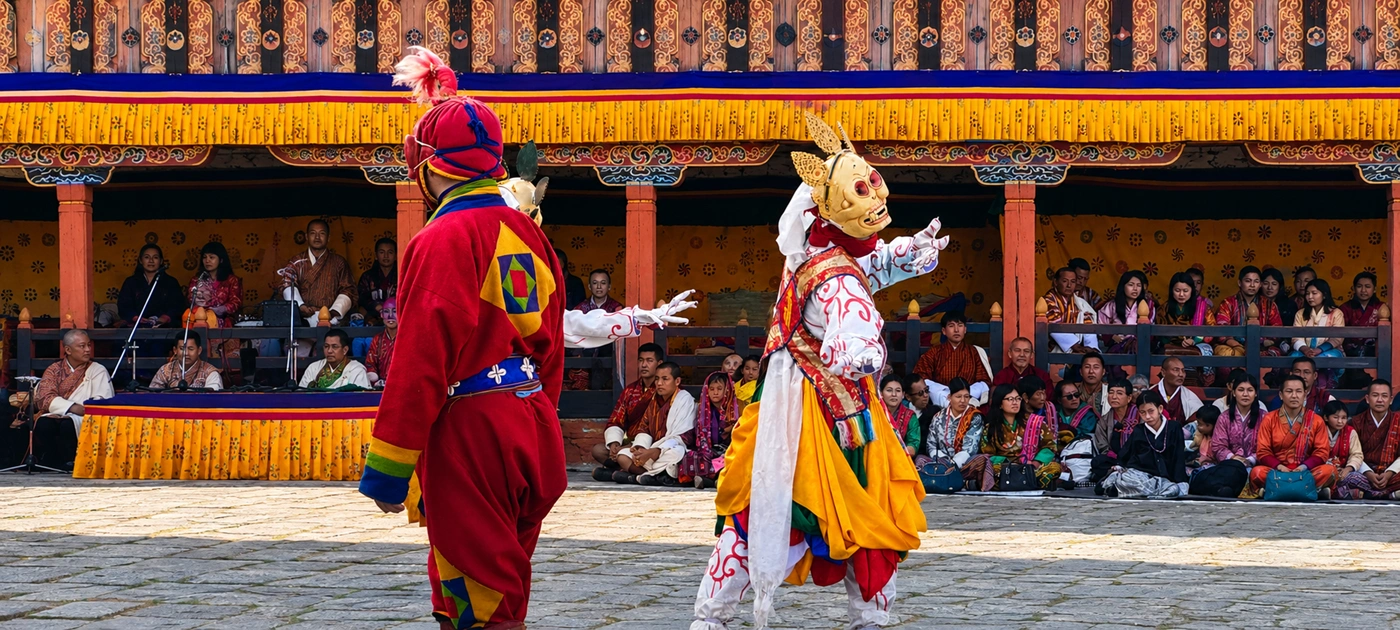
Festival day runs from mid-morning into early afternoon, and the whole valley shows up. Monks and lay dancers perform cham — masked dances usually reserved for tshechus — on the monastery flagstones.
Between them come folk songs, short environmental dramas staged by valley schools, and the piece everyone waits for: the crane dance, performed by local children in full-body crane costumes, necks bobbing in imitation of the birds below.
Atsara clowns work the crowd for donations. Stalls sell woven goods and valley produce — Phobjikha potatoes are famous across Bhutan, and farmers are not shy about saying so. It's as fair as it is a right.
Our standing practice is to walk guests up to the courtyard before the opening dance and settle them with cushions and flasks of ngaja, the sweet milk tea. The stone underfoot is cold by any measure. Arrive early, sit warm, and you'll see everything.
The Cranes: When They Arrive and Where to Watch Them
Black-necked cranes winter in the Phobjikha Valley from late October to the middle of February, and the valley shelters Bhutan's largest wintering flock — several hundred birds in recent counts.
The species is listed as Vulnerable on the IUCN Red List, which is why this valley matters far beyond Bhutan.
The best viewing is at dawn and dusk, when the flock gathers at the roosting marsh in the valley center.
The Black-necked Crane Visitor Center, run by RSPN on the valley rim, keeps spotting scopes trained on the roost and asks visitors to hold a respectful distance from the birds — a rule our guides follow without exception.
Here's the detail we always share on the drive in: when electricity finally reached Phobjikha, the power lines were buried underground so the cranes would never strike a cable.
Few places on Earth have rewired themselves for a bird. Walk the Gangtey Nature Trail — an easy hour and a half through pine forest and open pasture — and you'll understand why they did.
Getting to Phobjikha for the Festival
Phobjikha is reached by road, and for the festival, we route guests through Punakha the day before. From Punakha, it's roughly two and a half to three hours of climbing, cresting the Lawala Pass at about 3,300 meters before the road drops into the glacial bowl of the valley at around 2,900 meters. From Thimphu, allow closer to five hours.
Your journey starts at Paro International Airport, Bhutan's only international gateway. We build in a night or two en route — Thimphu or Punakha — so the festival morning never follows a long drive.
Our preferred rhythm: arrive in Phobjikha the afternoon before, stretch your legs on the nature trail, watch the cranes come in to roost at dusk, then wake for the festival rested. November road conditions are reliably good; the cold is the only thing that needs planning.
Where You Stay and When to Book
Book six to nine months ahead. That's the honest answer, and it's the single most common regret we hear from travelers who tried to plan the Black-Necked Crane Festival late.
The Phobjikha Valley holds only a small cluster of lodges and family farmhouses, and festival week falls before almost any other date on the Bhutan calendar.
Rooms in the valley are heated by Bukhari wood stoves, and the better farmhouses will draw you a hot-stone bath after the festival — river stones fired until they crack, then dropped hissing into a wooden tub strewn with artemisia.
It is the correct way to end a November day at 2,900 meters.
We match each booking to the style of stay that suits the traveler, from the valley's most comfortable lodge rooms to a farmhouse supper of ema datshi beside the stove. We confirm the exact property in your booking proposal.
Weather, What to Wear, and Courtyard Manners
Expect hard frost at dawn, bright sun by midday, and temperatures back below freezing after dark.
A down jacket, warm hat, gloves, and a base layer handle the courtyard hours; midday, you'll shed half of it. The festival is outdoors on stone, so insulated footwear earns its place in your bag.
The courtyard is monastery ground. Dress modestly, keep shoulders covered, and follow your guide's lead during blessings.
Ask before photographing dancers or monks at close range, and leave the drone at home — flight permissions near the roost are not given, for obvious reasons.
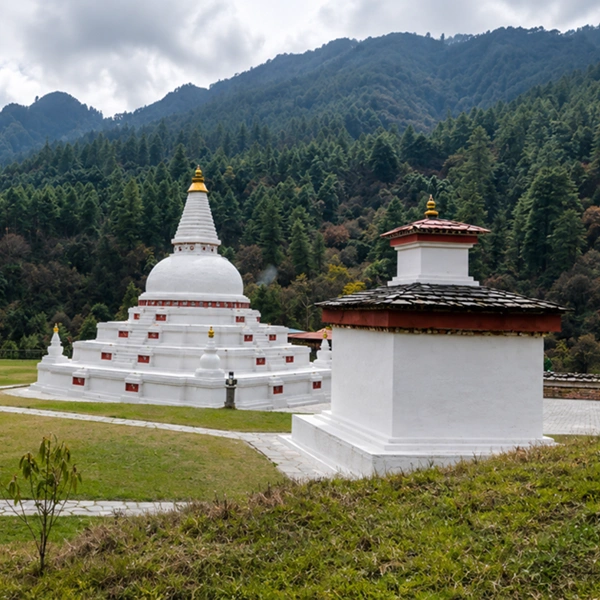
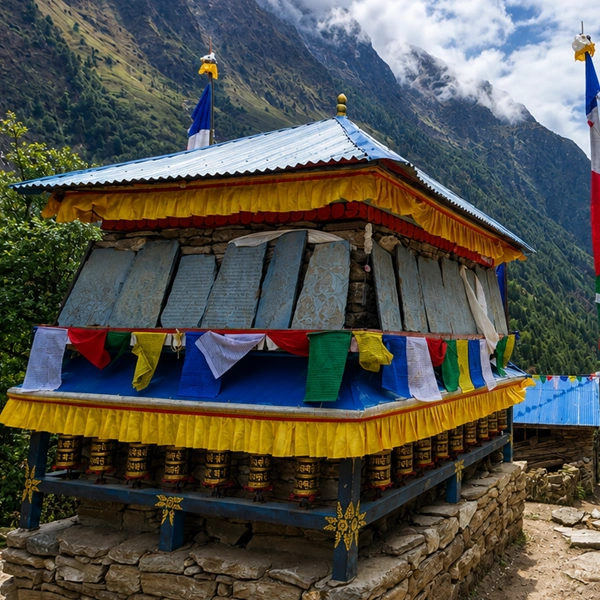
Pass chortens and mani walls clockwise on the valley trails. Small courtesies, noticed everywhere.
Building the Festival into a Longer Bhutan Journey
The festival sits naturally at the center of a seven-to-ten-day arc through western Bhutan. Most of our guests fly into Paro, spend a day in Thimphu, drop into subtropical Punakha for the dzong at the river confluence, then climb to Phobjikha for the festival — finishing back in Paro with the hike to Tiger's Nest once their legs are valley-tuned.
November suits every stop on that route: clear Himalayan views, quiet trails, and towns without the spring crowds. Bhutan's Sustainable Development Fee and visa are arranged before you fly; the process is simpler than its reputation.
If the cranes have been circling your imagination for a while, our private Black-Necked Crane Festival journey puts you in the valley the evening before, at the courtyard for the opening dance, and at the marsh at first light — held, not handled, from Paro to the pass and back.
FAQs — Black-Necked Crane Festival, Bhutan
Does the Black-Necked Crane Festival date change from year to year?
No. The festival is held annually on 11 November, coinciding with the birth anniversary of Bhutan's Fourth King. This makes it one of the few Bhutanese festivals fixed to the Gregorian calendar — tshechu dates shift with the lunar calendar, but the crane festival does not, which makes long-range planning unusually easy.
Is the Black-Necked Crane Festival a tshechu?
No. It's a community conservation festival organized with the Royal Society for the Protection of Nature, not a religious tshechu honoring Guru Rinpoche. That said, monks perform cham masked dances in the Gangtey Goenpa courtyard alongside the schoolchildren's crane dance and folk performances, so it carries much of a tshechu's atmosphere in a single morning.
Can you watch black-necked cranes on the same day as the festival?
Yes, easily. The flock roosts in the marsh at the center of the Phobjikha Valley, minutes from Gangtey Goenpa. We take guests to the roost at first light, watch the cranes lift off to feed, then walk up to the courtyard before the opening dance. Dusk viewing after the festival works just as well.
How many black-necked cranes winter in the Phobjikha Valley?
Several hundred birds in recent counts — the largest wintering flock in Bhutan. Numbers vary year to year, and the Black-necked Crane Visitor Center keeps a running tally each season. The cranes arrive from the Tibetan Plateau in late October and stay until mid-February.
How cold is it at the Black-Necked Crane Festival in November?
Cold at the edges, kind in the middle. Dawn at the roost is below freezing; the courtyard warms to low double digits by midday sun, and nights drop below zero again. A down jacket, hat, gloves, and insulated footwear cover it. The festival is entirely outdoors on stone, so dress for sitting, not walking.
Do you need a separate permit to attend the Black-Necked Crane Festival?
No separate festival permit exists. Your Bhutan visa and Sustainable Development Fee cover attendance, and route permits for Wangdue Phodrang are part of standard trip paperwork. We arrange all of it before you fly — you carry nothing but your passport and a warm hat.
Why are black-necked cranes sacred in Bhutan?
Bhutanese know them as thrung thrung karmo and regard them as bringers of good fortune whose arrival blesses the coming harvest. Local belief holds that the cranes circle Gangtey Goenpa three times on arrival and again before departing north. The valley buried its power lines to protect them — reverence made practical.
How far in advance should you book lodging for the Black-Necked Crane Festival?
Six to nine months ahead. The Phobjikha Valley has only a small number of lodges and farmhouse stays, and festival week is the most demanded time of year in the valley. Booking early also secures better-heated rooms and a hot-stone bath after the festival — worth every week of foresight.