Mount Kailash mysteries begin with a simple fact: the 6,638-meter peak sacred to four religions has never been climbed, by law and by choice. Add a pyramid theory, twin lakes of opposite character, and trails where compasses wander, and you have the Himalaya's strangest mountain. Here is each legend, and what the evidence says.
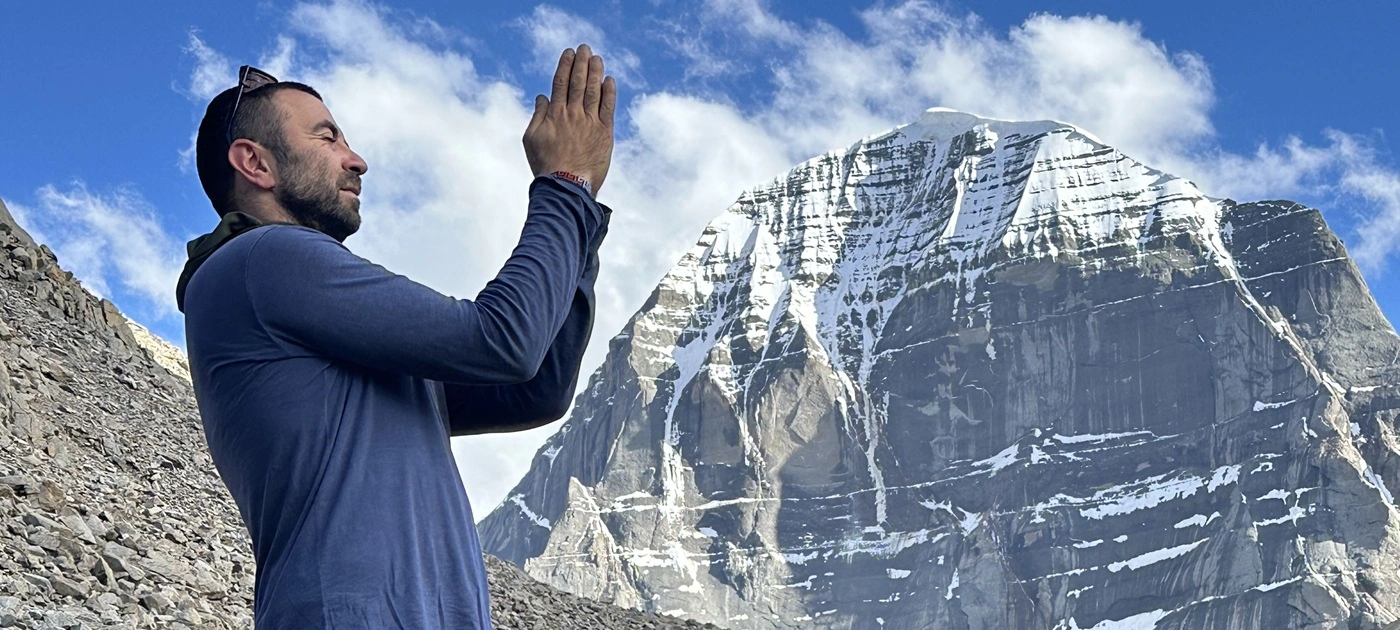
Mount Kailash Mysteries: 10 Legends and What the Evidence Says

Mount Kailash mysteries have outlasted every attempt to explain them away, and our guides hear the same questions on every kora: is the mountain really unclimbed, is it hollow, does time move differently here?
At 6,638 meters in Tibet's far-western Ngari prefecture, Gang Rinpoche is sacred to a fifth of humanity and off-limits to every climber on Earth.
We run private journeys to Kailash and Lake Mansarovar, so we hold two obligations at once. We owe you the stories because they are magnificent, and it is because of them that pilgrims have walked here for a thousand years.
And we owe you the evidence, because a luxury operator that repeats internet lore as fact is not one you should trust at 5,600 meters.
So here are the ten great mysteries, each told straight: the legend first, then what geology, physiology, and the historical record actually support.
1. The Summit No Human Has Ever Stood On
Mount Kailash remains unclimbed not because it cannot be climbed, but because the world agreed it should not be. Colonial-era surveyors sketched feasible routes and left them on paper. In 1985, Reinhold Messner, then the greatest mountaineer alive, turned down a Chinese permit, saying that to conquer this peak would be to conquer something in the human soul.
When a Spanish team received a permit in 2001, protests from Buddhist, Hindu, and Jain organizations, joined by mountaineers themselves, moved Chinese authorities to ban climbing outright. The ban stands today, absolute and uncontested.
That restraint is the rarest thing in mountaineering history. Everest has recorded thousands of summits; Kailash has recorded none, and our guides consider that zero the mountain's true wonder. Pilgrims do not climb Kailash. They circle it, keeping the summit always on their right, always above them.
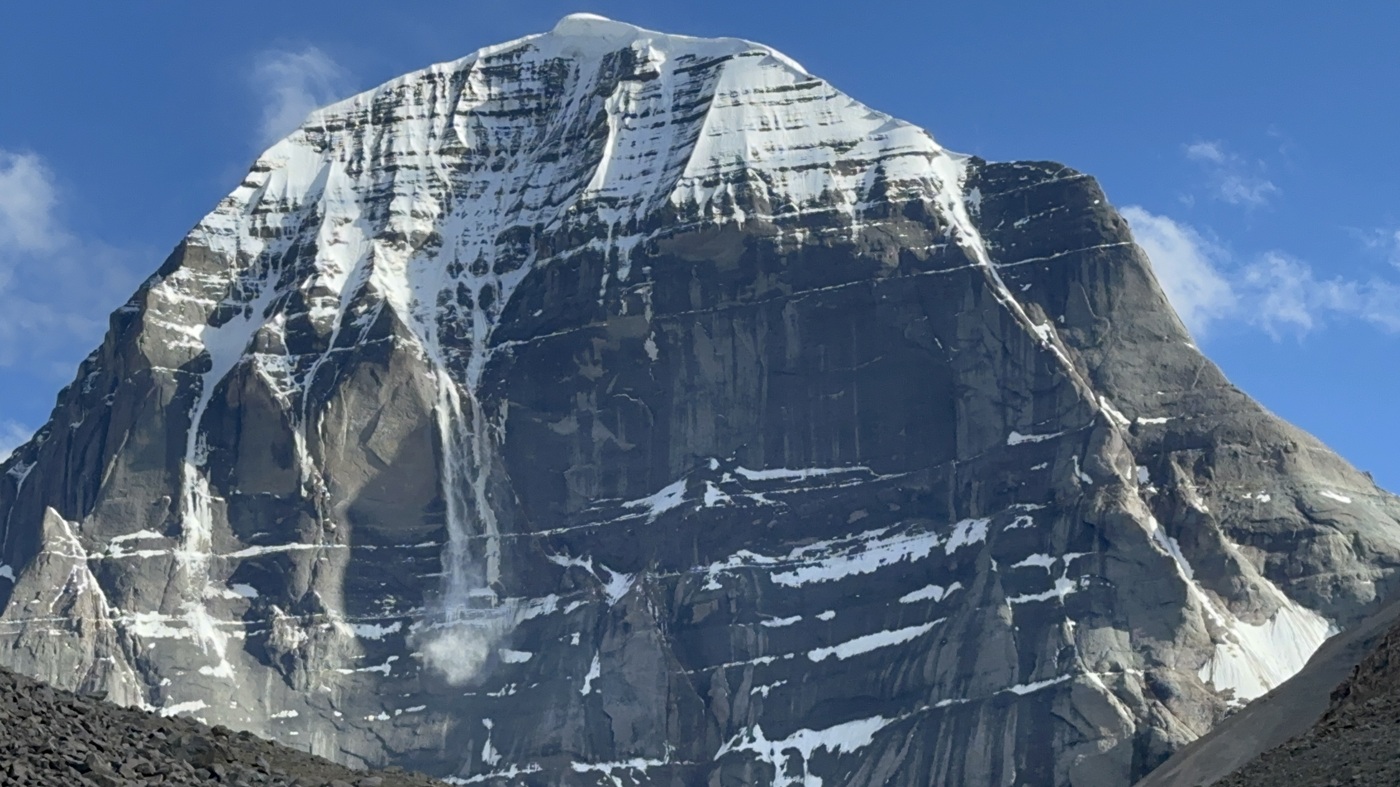
2. One Mountain, Four Religions, One Center of the Universe
No other single peak anchors the cosmology of four faiths at once. Hindus know it as Kailasa, from a Sanskrit root meaning crystal, the eternal home of Shiva and Parvati. Tibetan Buddhists honor it as Gang Rinpoche, the Precious Jewel of Snows, the earthly form of Mount Meru at the center of the universe, seat of the deity Demchok.
Jains revere it as Ashtapada, where Rishabhadeva, the first Tirthankara, attained liberation. The Bon tradition, older than Buddhism in Tibet, calls it the Nine-Story Swastika Mountain, the soul of the ancient Zhang Zhung kingdom, and its followers walk the kora counterclockwise while everyone else walks clockwise.
The result on the trail is something our guests notice within an hour: Indian sadhus, Tibetan nomad families, Bonpo practitioners, all sharing one path across four cosmologies. The Hindu epic adds the oldest layer, telling how the Pandavas and Draupadi walked these slopes on their final journey toward heaven itself.
3. The Climbers Who Turned Back, and the Ones Who Didn't
Tibetan lore preserves a mid-twentieth-century story our guides still tell at Dirapuk. A foreign expedition arrived intent on the summit. A senior lama warned them off. Most listened; a few pushed past the kora's traditional boundary. The story holds that those few returned visibly aged, and that four died within a year or two of unexplained failures of the heart and organs.
No expedition record verifies the tale, and we present it as what it is: a cautionary legend. But the physiology underneath it is real and worth respecting. Above 6,000 meters, without fixed lines, camps, or acclimatization structure, the human body meets acute mountain sickness, HAPE, and HACE — conditions that can kill a fit climber in days.
The mountain does not need a curse. Altitude is enough. It is why our own Kailash itineraries build gradual ascent and daily oximeter checks into the schedule, the same discipline we apply on every high route.
4. The Pyramid Theory: Is Kailash Man-Made?
The internet's favorite Kailash claim comes from a 1999 Russian expedition led by ophthalmologist Ernst Muldashev, who concluded that the mountain is a colossal hollow pyramid built by a lost civilization, the hub of a complex of more than 100 lesser pyramids.
His team cited the peak's near-symmetrical faces, cathedral-like vertical walls, and strange nighttime hums as evidence. Set beside the 146-meter Great Pyramid of Giza, a 6,638-meter artificial structure would rewrite human history.
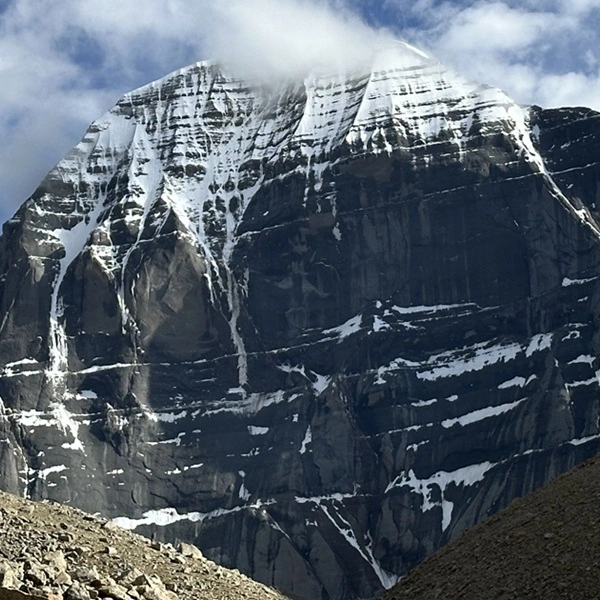
Geology declines to cooperate. The mountain is layered sedimentary conglomerate and granite, its striking symmetry carved by Quaternary glaciation working on horizontal strata from four directions over roughly 2.5 million years — an erosion pattern documented in high mountains worldwide. The famous horizontal grooves are bedding planes, not masonry.
What the theory gets right is the astonishment. Kailash genuinely looks designed, a four-faced monument roughly aligned with the cardinal directions. Standing below the south face, our guests routinely say the same thing Muldashev did. The difference is that ice, not architects, did the work.
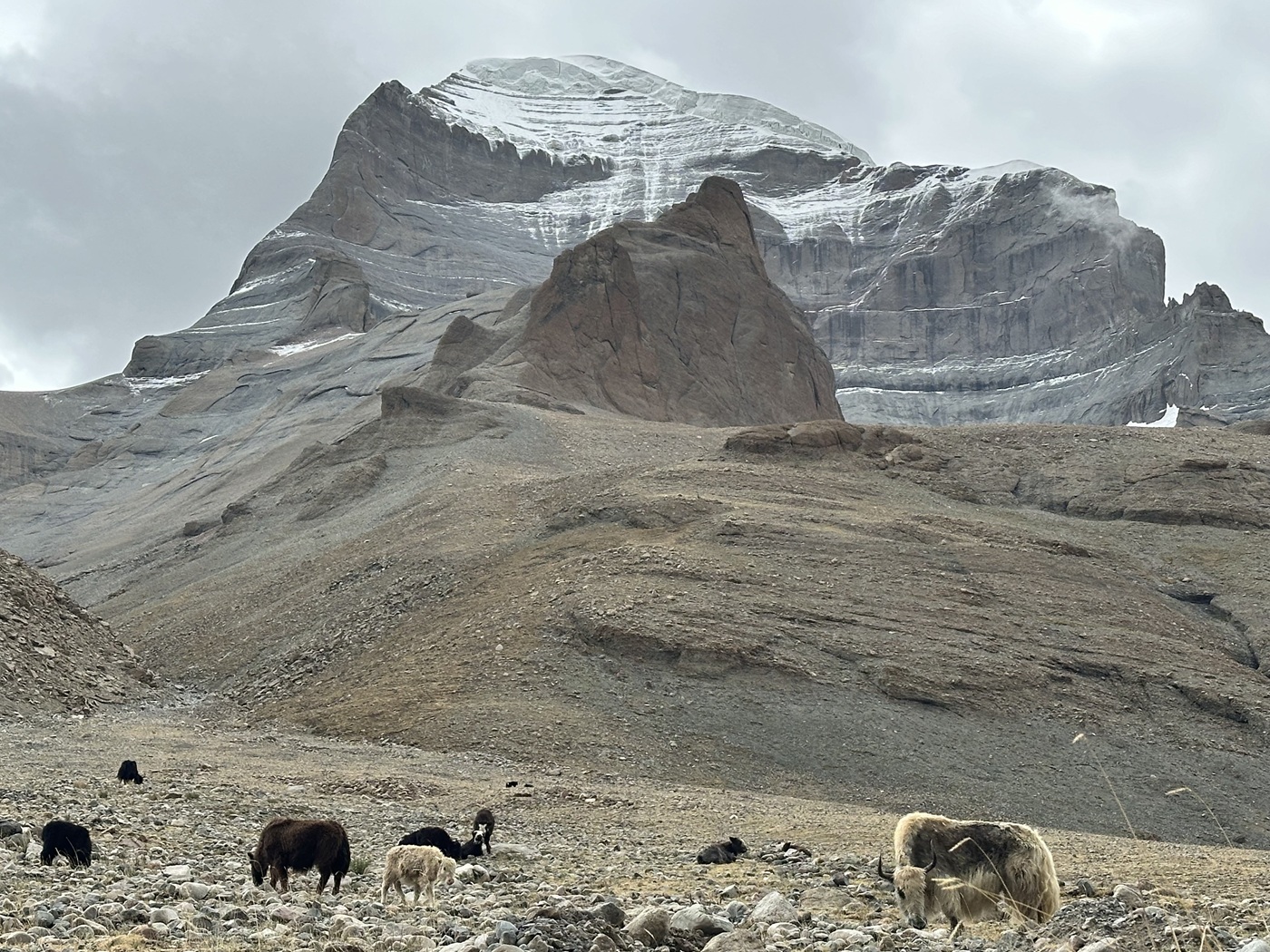
5. Spinning Compasses and the Empty Sky
Kora walkers report electronics behaving badly: compasses wandering, GPS units freezing, batteries draining far faster than expected, and no aircraft ever crossing overhead. The spiritual reading calls Kailash an energy center that shields itself. The practical reading is nearly as interesting.
The region sits on a tectonic suture zone laced with iron-rich rock, capable of producing genuine local magnetic quirks. Cold is the battery killer: lithium cells at minus fifteen on a 5,600-meter pass quickly surrender their charge, as every Himalayan photographer learns.
And the empty sky is aviation logic rather than official decree — no commercial route has reason to overfly a remote 6,600-meter peak with violent weather, so none does.
Our operational advice absorbs all of it. We carry paper maps alongside devices, keep spare batteries against our bodies, and treat the silence overhead as part of the landscape's spell rather than as evidence of it.
6. Does Time Run Faster at Kailash?
The most repeated pilgrim claim of all: hair and nails grow at a startling speed near the mountain, with some accounts insisting twelve hours at Kailash produces two weeks of growth. Believers call it a temporal vortex. It would be a shame to let the phrase die, but biology explains the sensation without bending spacetime.
Intense high-altitude ultraviolet exposure genuinely stimulates keratinocyte turnover. Severe dryness contracts skin and cuticles, exposing more of each existing nail and hair shaft, which reads to the eye as sudden growth. Hypoxia pushes circulation and cellular repair into overdrive.
Add the psychological intensity of the place — thin air, hard walking, a landscape saturated with meaning — and the body's ordinary adaptations feel extraordinary. Our guides neither mock the claim nor endorse it. They hand guests moisturizer and let the mountain do its thing.
7. The Twin Lakes: One Holy, One Haunted
South of the peak lie two lakes, a ten-kilometer channel apart, and a world opposed. Mansarovar, at 4,590 meters among the highest freshwater lakes on Earth, is round as the sun, drinkably fresh, alive with fish and waterfowl, and in Hindu tradition born from the mind of Brahma. Rakshastal, fifteen meters lower, curves like a crescent moon, its saline, alkaline water nearly lifeless — in legend, the lake where the demon king Ravana performed his penance.
The channel between them, the Ganga Chhu, carries its own quiet drama. When Mansarovar runs high, fresh water spills toward the dark lake, read by pilgrims as grace flowing into shadow. Reports since 2010 describe the direct outflow as largely dry as lake levels fall, with geothermal springs near Chiu Gompa still feeding warm water down the lower channel.
Standing on the isthmus with holy water on one side and poison on the other is, for many of our guests, the emotional summit of the journey.
8. The Lake Where the Buddha's Story Begins
Buddhist scripture identifies Mansarovar with Anavatapta, the cool, undefiled lake at the center of the world. In the tradition's telling, Queen Maya was carried here in a dream and bathed by the gods in its waters; purified, she received the Buddha-to-be, who approached from the direction of Kailash riding a white elephant, and the final human life of Siddhartha Gautama began.
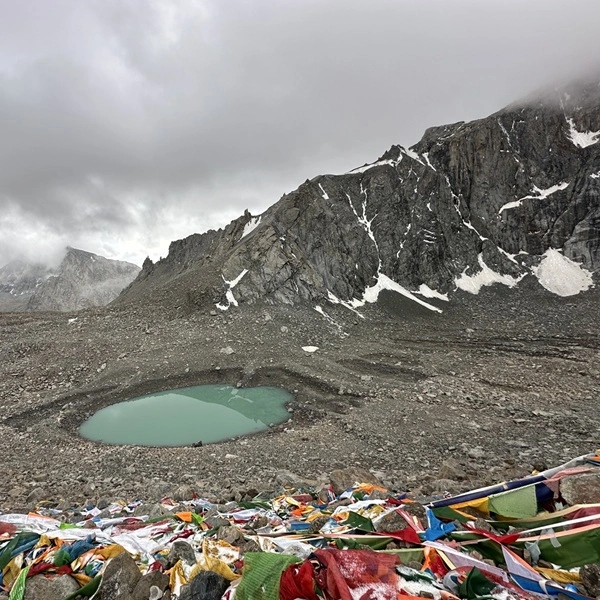
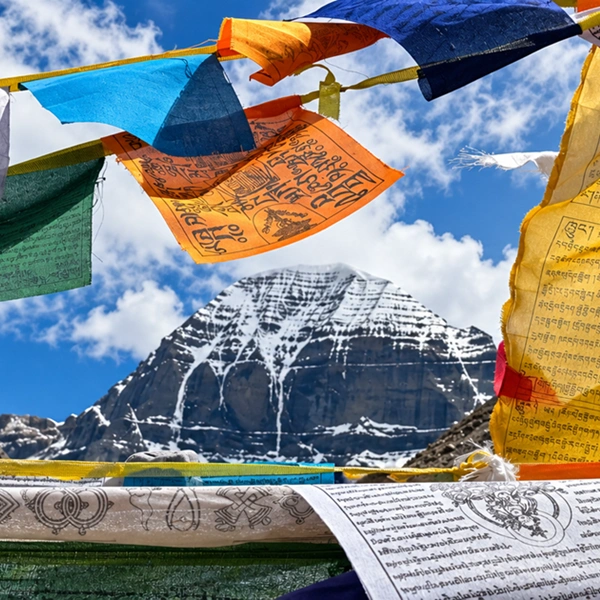
Eight monasteries historically ringed the lake in the shape of the Dharmachakra, the Wheel of Life, so that circling Mansarovar and visiting each gompa turns the wheel itself. Chiu Gompa, on its hill above the northwest shore, remains the pilgrim favorite, its prayer flags snapping above the hot springs.
A quiet dawn at the lake edge, mountain reflected, is the image our returning guests describe most often — and the reason we always place a full unhurried day at Mansarovar before the kora begins.
9. Ashtapada and the Crystal Palace No One May Visit
Jain tradition holds that after Rishabhadeva attained moksha on Kailash, his son, the emperor Bharata, raised a memorial palace of crystal and gemstone at Ashtapada, on the mountain's inner approaches, at an altitude of 4,900 meters.
Over centuries, the palace vanished from human sight, swallowed, the faithful say, by glaciers or hidden by the gods from mortal greed.
The modern chapter is stranger still. The inner kora path toward Ashtapada, always a serious undertaking on steep, unstable scree, was closed by local authorities following a fatal trekking accident reported in 2013, and access remains prohibited.
The holiest site of a major world religion can today be venerated only from a distance.
Whatever stands or does not stand beneath that ice, the closure makes the mystery permanent by decree. We are often asked about the inner kora; we neither run it nor recommend attempting it.
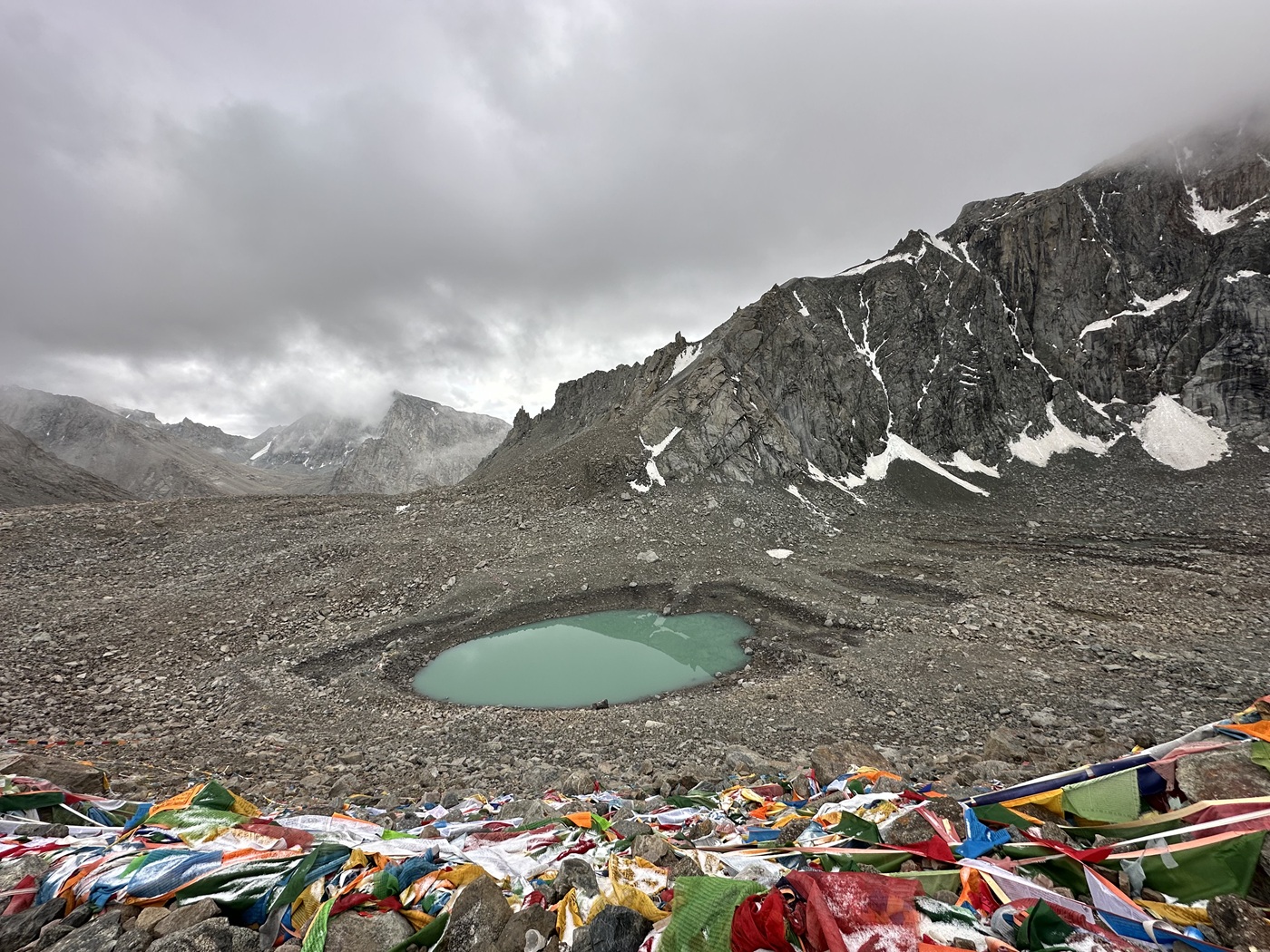
10. The Mountain That Plays Music
For a millennium, travelers have described sounds at Kailash with no visible source: deep hums, flute tones, metallic rhythms, and the ringing of bells where no monastery stands for miles.
The most famous account belongs to Atisha, the great Bengali sage who came to Tibet in the eleventh century and stopped at the mountain's southern base, transfixed by what he heard as ceremonial bells and drums from the summit — a blessing, he judged, on his mission.
Acoustics offers its own composition. Extreme day-night temperature swings drive pressure waves across the lakes that can resonate like wind instruments.
High winds through the peak's deep vertical fissures produce genuine tones, the mountain behaving as a colossal organ pipe. Glacial cracking and micro-seismic activity along the suture zone add to the percussion.
Whether you hear physics or blessing is, in the end, the whole question of Kailash in miniature. Most of our guests, standing in that silence between gusts, stop choosing.
Walking the Kora: How We Do It
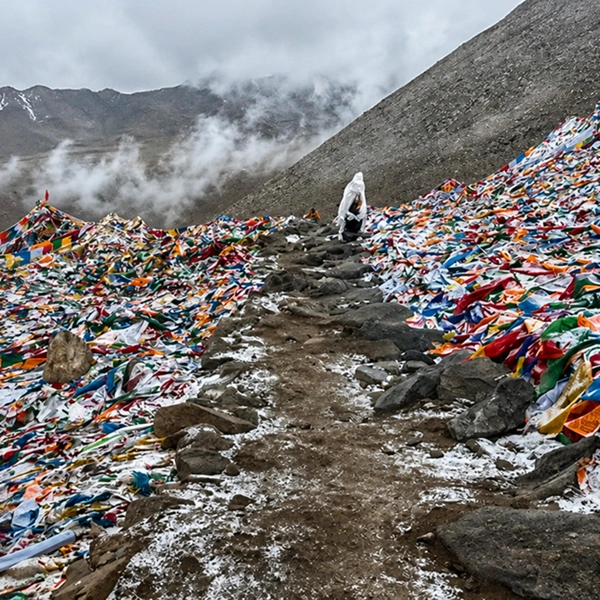
The 52-kilometer kora around Kailash is the point of the journey, and it is a serious high-altitude walk: three days from Darchen, crossing the Dolma La pass at about 5,630 meters on the second day.
Devout Tibetans complete it in a single day; some pilgrims complete it in full-body prostrations over weeks. Our guests take the three days well.
Comfort at Kailash means preparation more than furnishing, and we are honest that Ngari is not Bhutan: nights on the kora are in the best available guesthouses at Dirapuk and Zutulpuk, upgraded with our own bedding, dining, and support crew.
The luxury lies in the acclimatization design — gradual gains via the Lhasa or Kerung route from Kathmandu, rest days at Mansarovar, daily oximeter checks, oxygen and evacuation protocols carried throughout, and yaks and porters so you walk with a daypack only.
Timing follows the plateau's weather: May, June, September, and early October give the most stable windows, while the Saga Dawa festival transforms Darchen with the raising of the great Tarboche flagpole.
Its date follows the lunar calendar, and we confirm exact timing at booking. Permits for Ngari take the longest lead time in Tibet; we arrange the full set, and ninety days' notice keeps every option open.
The mysteries read well at home. They read differently at 5,600 meters with prayer flags roaring on the pass. If Kailash has been calling, our private Kailash Mansarovar journey is where we turn the reading into the walk — built on the same pacing standards as all our luxury travel in the Himalayas.
FAQs — Mount Kailash & Kailash Mansarovar
Why has Mount Kailash never been climbed?
Because climbing is banned, and because mountaineering's own greats declined it first. Reinhold Messner refused a Chinese permit in 1985 on spiritual grounds, and after international protest over a permitted Spanish attempt in 2001, Chinese authorities imposed a permanent climbing ban. The mountain's sanctity to Hindus, Buddhists, Jains, and Bonpos, not technical difficulty, keeps the summit untouched.
Is the Mount Kailash pyramid theory true?
No. The 1999 Russian claim that Kailash is a hollow man-made pyramid is contradicted by its geology: layered conglomerate and granite carved into near-symmetry by glacial erosion over roughly 2.5 million years. The horizontal "masonry" lines are natural bedding planes. The mountain's uncanny, monument-like appearance is real; the lost civilization lacks any physical evidence.
Do people really age faster near Mount Kailash?
Bodies change at Kailash, but time does not. Intense UV exposure speeds keratinocyte turnover, extreme dryness contracts skin and cuticles to expose more of the nail and hair shaft, and hypoxia accelerates circulation and repair. Together, these create the genuine sensation behind the famous "two weeks of growth in twelve hours" claim, without any bending of spacetime.
Why do compasses and GPS misbehave on the Kailash kora?
Iron-rich rock along the region's tectonic suture zone can produce real local magnetic interference, and severe cold drains lithium batteries far faster than travelers expect. Device glitches at 5,600 meters usually trace to temperature, not the supernatural. Our teams carry paper maps and body-warmed spare batteries on every kora as standard practice.
Is Mount Kailash a no-fly zone?
Not officially, but effectively. No commercial routes cross this remote corner of western Tibet, and no scenic or charter flights operate over the peak, so the sky above Kailash stays empty. The absence reflects aviation economics and hazardous mountain weather rather than a published restriction, though pilgrims understandably read the silence overhead differently.
What is the difference between Lake Mansarovar and Rakshastal?
Mansarovar is round, freshwater, full of life, and sacred as a lake of light at 4,590 meters; Rakshastal, just west and fifteen meters lower, is crescent-shaped, saline, nearly lifeless, and tied in legend to the demon king Ravana. A ten-kilometer channel, the Ganga Chhu, links them, and its flow from the holy lake toward the dark one is read as grace itself.
How hard is the kora around Mount Kailash?
It is a demanding three-day walk of 52 kilometers, crossing the Dolma La at about 5,630 meters, entirely above 4,600 meters. No technical climbing is involved, but altitude makes fitness and acclimatization decisive. With gradual ascent, rest at Mansarovar, daily oximeter checks, and yak support carrying everything but your daypack, most healthy walkers complete it well.
When is the best time for a Kailash Mansarovar journey?
May, June, September, and early October offer the most stable weather on the Ngari plateau, with clear views and passable trails over the Dolma La. The Saga Dawa festival at Tarboche is the most powerful time to be at the mountain; its date follows the lunar calendar, so we confirm exact timing at booking. Ngari permits need the longest lead time in Tibet — plan ninety days ahead.
Need Help? Call Us+977 9851013196orChat with us on WhatsApp
Need Help? Call Us+977 9851013196