Which One Should You Visit?
The Master Comparison
|
Dimension
|
Nepal
|
Bhutan
|
|
Daily government fee
|
None. No SDF. No daily tariff. Visa on arrival: $30 (15 days) or $50 (30 days).
|
$100/night SDF (through Aug 2027). $40 visa. Your $100 funds free healthcare, Education, carbon-negative status.
|
|
7-night luxury cost (couple)
|
$6,000-13,000 (Golden Triangle + trek or wellness). No SDF component.
|
$8,900-23,700 (COMO to Amankora circuit). Includes $1,400 SDF.
|
|
Getting there
|
Direct flights from Doha, Dubai, Delhi, Bangkok, Kuala Lumpur to Kathmandu. Multiple carriers. Easy connections.
|
Drukair or Bhutan Airlines only. From KTM (45 min), Bangkok, Delhi, Singapore. One airport (Paro). Specialized pilots.
|
|
Independent travel
|
Yes. Move freely. Hire guides as you choose. Licensed guide required for treks since March 2023.
|
No. A licensed guide is mandatory for all travel outside Paro/Thimphu city. Cannot travel independently.
|
|
Luxury lodges
|
Dwarika’s, Meghauli Serai (Taj), Tiger Mountain, Pavilions, Kavya Himalayas, MLN Everest lodges, Shinta Mani Mustang ($10,500). No multi-valley circuit model.
|
Amankora (5 lodges, 72 suites), Six Senses (5 lodges, 82 suites), COMO Uma (2 properties). Multi-valley circuits: you stay within one brand across 5 valleys.
|
|
Trekking
|
The global capital. EBC, ABC, Poon Hill, Gokyo, Langtang, Manaslu, Mardi Himal. Teahouse trekking (lodge-to-lodge). 1-14 days. All difficulty levels.
|
Limited but exclusive. Druk Path (5 days), Jomolhari (8 days), Snowman Trek (25 days, world’s hardest). Camping required on most routes. Far fewer trekkers.
|
|
Wildlife
|
Chitwan and Bardia: one-horned rhino, Bengal tiger, gharial crocodile, 500+ bird species. Jeep safari, canoe, walking safari. Meghauli Serai plunge-pool rhino viewing.
|
Black-necked cranes (Phobjikha Valley, Nov-Mar). Takin (national animal, Thimphu preserve). No safari infrastructure comparable to Nepal.
|
|
Cultural depth
|
Hindu + Buddhist. Kathmandu Valley (7 UNESCO sites). Bhaktapur Newari architecture. Patan metalwork. Pashupatinath cremation ghat. Boudhanath kora. Living Goddess (Kumari).
|
Vajrayana Buddhist. Dzong fortress-monasteries. Tshechu masked dance festivals. Archery (national sport, 460 ft targets). Mandatory traditional dress for citizens. No traffic lights in the capital.
|
|
Food
|
Krishnarpan 22 courses. Le Sherpa courtyard. Newari feasts. Bhaktapur food trail. BARC speakeasy. Altitude dining at 3,880m. Cooking classes (momos, dal bhat).
|
Ema datshi (chili cheese, the national dish). Bukhari at COMO (Royal Family dining). Ruins Regale at Six Senses (candlelit 12th-century ruins). Potato Shed Dinner. Farm-to-table from yak herders.
|
|
Spiritual access
|
Boudhanath Rinpoche's audience. Monastery meditations. Pashupatinath aarti. Tiger’s Nest blessing (via Bhutan). Gosainkunda pilgrimage. Lumbini (Buddha’s birthplace).
|
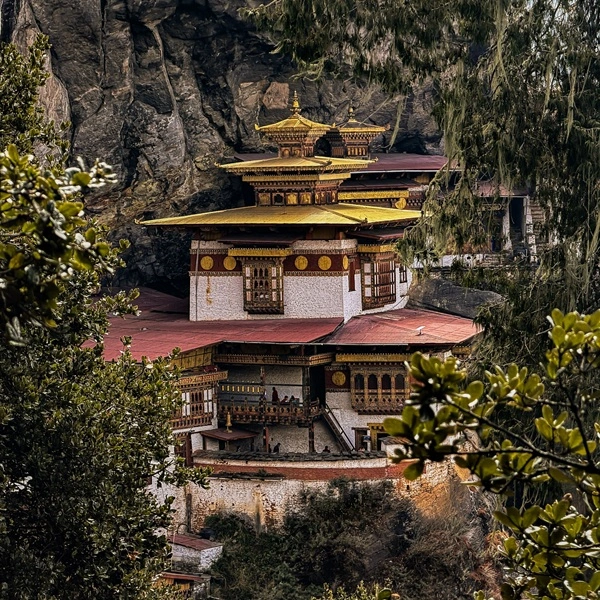
Private Tshewang blessing (108 butter lamps). Rinpoche audiences (Mynak Tulku, 12th reincarnation). After-hours dzong access. Astrologer date selection for ceremonies. Tiger’s Nest (no phones inside).
|
|
Best season
|
Mid-March to mid-June. Mid-October to mid-December.
|
March-May. September-November. Same windows, easy to combine.
|
|
Crowds
|
1.5 million visitors/year. The EBC trail is busy in peak season. Kathmandu is intense. Mustang and Bardia are empty.
|
~300,000 visitors/year. The SDF filters volume. Lodges are small (11-72 rooms). You will rarely share a monastery with a tour bus.
|
The Honest Assessment: Where Each One Wins
Nepal Wins On
- Trekking range and infrastructure. If you want to walk in the Himalayas, Nepal has more routes, more lodges, more altitude options, and more difficulty levels than any country on earth. EBC and ABC are the world’s most famous treks. Poon Hill is the best short luxury trek. Mardi Himal is the hidden ridgeline. Langtang is the closest mountain to Kathmandu. Nepal’s trekking ecosystem is unmatched.
- Wildlife safari. Chitwan and Bardia offer genuine big-game safari experiences: rhino, tiger, crocodile, and 500+ bird species. Meghauli Serai and Tiger Tops Karnali are world-class safari lodges. Bhutan has no equivalent.
- Cost flexibility. Nepal has no daily government fee. You can build a luxury trip at $300/day or $2,000/day. The floor is lower. The ceiling is the same. Bhutan’s $100/night SDF creates a higher minimum before you spend a rupee on accommodation.
- Accessibility. Multiple international carriers fly to Kathmandu. Visa on arrival. No mandatory guide for city exploration. You can move freely. Bhutan requires a licensed guide, a pre-arranged itinerary, and a visa processed through an operator.
Bhutan Wins On
- Exclusivity. The SDF is not a bug. It is the feature. $100/night buys you a country with 300,000 visitors instead of 1.5 million. Small lodges (11-72 rooms). Empty trails. Monasteries without tour buses. The SDF is the reason Bhutan feels different from everywhere else.
- The lodge circuit model. Amankora: 5 lodges, 5 valleys, one brand, seamless transitions. Six Senses: 5 lodges, each designed as an emotional response to its valley. You move from alpine to subtropical to glacial without ever dropping below five-star standards. Nepal has no equivalent multi-valley circuit.
- Spiritual depth and access. Private Tshewang is blessed with 108 butter lamps. Rinpoche audiences. Astrologer-selected ceremony dates. After-hours dzong access. The monastic body winters in Punakha — you can witness living Buddhist institutional life. Nepal has deep spirituality. Bhutan has deeper access.
- Environmental integrity. The world’s only carbon-negative country. 72% forest cover is mandated by the constitution. No building may be taller than a temple. The SDF funds free healthcare and education. When you pay the fee, you are investing in the country. Nepal is working toward sustainability. Bhutan has achieved it.
Who Should Go Where
|
If You Want…
|
Go To
|
Why
|
|
The world’s best treks
|
Nepal
|
EBC, ABC, Gokyo, Langtang, Manaslu, Mardi Himal. Unmatched.
|
|
Wildlife safari
|
Nepal
|
Chitwan and Bardia. Rhino, tiger, crocodile. Meghauli Serai.
|
|
Budget luxury ($6,000-8,000/couple)
|
Nepal
|
No SDF. Golden Triangle + trek in 10 days.
|
|
Ultra-luxury lodge circuit
|
Bhutan
|
Amankora or Six Senses: 5 valleys, one brand, seamless.
|
|
Total exclusivity and privacy
|
Bhutan
|
SDF filters crowds. 11-72 room lodges. Empty trails.
|
|
A honeymoon
|
Bhutan (or both)
|
Chimi Lhakhang fertility temple. Tshewang blessing. Dotsho hot stone bath. Potato Shed Dinner. Star baths.
|
|
Private spiritual encounters
|
Bhutan
|
Rinpoche's audience. 108 butter lamps. Astrologer date selection.
|
|
Family with children
|
Nepal (or both)
|
More variety of activities (safari, helicopter, short treks). No SDF for under-5s in Bhutan either. Nepal has more age-appropriate options.
|
|
First Himalayan trip
|
Nepal first
|
Easier access. No SDF. More flexibility. Then Bhutan is second.
|
|
Return visitor who has been to Nepal
|
Bhutan
|
The country that rewards the second Himalayan trip.
|
|
14+ days available
|
Both
|
Nepal (7-10 days) + Bhutan (5-7 days). KTM to Paro: 45-min flight.
|
The Combined Trip: Nepal + Bhutan
Kathmandu to Paro: 45 minutes by air on Drukair or Bhutan Airlines. The most popular combined itinerary we build: 7-10 days Nepal (Kathmandu cultural program, helicopter to Everest, Pokhara, Chitwan safari) + 5-7 days Bhutan (Paro Tiger’s Nest, Thimphu, Punakha). Total: 12-17 days.
We manage all internal flights, visa processing, SDF payment, and ground logistics as a single booking. You do not need to choose between Nepal and Bhutan. You need to decide how many days you have.
The combined trip works because the best seasons overlap perfectly. Spring (March-May) and autumn (September-November) are the peaks for both countries. You fly from Kathmandu to Paro mid-trip.
The climate shifts. The architecture changes. The food changes. The pace changes. Nepal is intense, dense, and varied. Bhutan is quiet, slow, and deep. The contrast is the experience.
The Cost Comparison
|
Component (7 nights, couple)
|
Nepal
|
Bhutan
|
|
Government fee
|
$60-100 total (visa on arrival)
|
$1,480 ($100/night SDF x 7 x 2 + $80 visa)
|
|
Standard ground (3-star)
|
$2,280
|
$2,280
|
|
COMO-level ground
|
$3,500-5,000 (Dwarika’s, Pavilions)
|
$5,600 (COMO uma circuit)
|
|
Ultra-luxury ground
|
$7,000-10,000 (Shinta Mani Mustang, Meghauli)
|
$15,000-21,000 (Amankora Stay 7 Pay 5)
|
|
Flights (international excluded)
|
$200-600 (domestic flights)
|
$1,200 (KTM-Paro return)
|
|
TOTAL standard couple
|
$2,540-2,980
|
$4,960-5,360
|
|
TOTAL ultra-luxury couple
|
$7,260-10,700
|
$17,680-23,680
|
Nepal is 40-60% cheaper at every tier. The difference is almost entirely the SDF ($1,400/couple for 7 nights) and the Paro flights ($1,200). The lodge quality at the top tier is comparable — Amankora and Six Senses in Bhutan compete with Shinta Mani Mustang and Dwarika’s in Nepal. The difference is not quality. It is the operating model: Bhutan’s SDF funds the exclusivity that Nepal’s open-access model cannot replicate.
Frequently Asked Questions
Which is better, Nepal or Bhutan?
Neither is better. They are different. Nepal for trekking, wildlife, cost flexibility, and variety. Bhutan for exclusivity, lodge circuits, spiritual depth, and environmental integrity. If you have 14+ days, do both. If you must choose one, Nepal is the best choice for first-time Himalayan travelers. Bhutan is for return visitors or those who prioritize privacy.
Which is cheaper?
Nepal. No daily government fee. A 7-night luxury couple’s trip: $7,000-11,000. Bhutan: $9,000-24,000. The difference is the $100/night SDF ($1,400/couple for 7 nights) and the Paro flights. Lodge quality at the top tier is comparable.
Can I combine Nepal and Bhutan?
Yes. Kathmandu to Paro: 45 minutes. We build combined trips as a single booking. 7-10 days Nepal + 5-7 days Bhutan = 12-17 days total. The seasons overlap perfectly (spring and autumn). We manage all flights, SDF, visas, and logistics.
Which has better trekking?
Nepal. By a wide margin. EBC, ABC, Gokyo, Langtang, Manaslu, Mardi Himal, Poon Hill. Teahouse trekking infrastructure. 1-14-day options at all difficulty levels. Bhutan has the Snowman Trek (the world’s hardest) and the Druk Path (5 days), but far fewer routes, and camping is required on most of them.
Which is better for a honeymoon?
Bhutan. The SDF ensures privacy. Chimi Lhakhang (fertility temple). Tshewang blessing (108 butter lamps). Dotsho hot stone bath for two. Potato Shed Dinner. &Beyond star baths. Nepal is romantic too (Pokhara, Pavilions Himalayas, Phewa Lake sunset), but Bhutan’s structural privacy gives it the edge for couples.
Which has better hotels?
Both are exceptional but different. Nepal: Dwarika’s (heritage), Meghauli Serai (safari), Shinta Mani Mustang ($10,500 all-inclusive), Kavya Himalayas (wellness). Bhutan: Amankora (5-valley circuit), Six Senses (5-valley circuit), COMO Uma, Pemako (Bensley tented villas). Bhutan’s circuit model is unique globally.
Which has better wildlife?
Nepal. Chitwan and Bardia: rhino, tiger, crocodile, 500+ birds. Meghauli Serai and Tiger Tops Karnali are world-class safari lodges. Bhutan has the endangered black-necked crane (Phobjikha, Nov-Mar) and the takin, but no safari infrastructure.
Which is easier to get to?
Nepal. Multiple international carriers fly direct to Kathmandu from Doha, Dubai, Delhi, Bangkok, and Kuala Lumpur. Visa on arrival. Bhutan: Drukair (Bhutan Airlines) only, from limited hubs. Visa requires pre-processing through an operator. One airport (Paro).
Do I need a guide in both countries?
Nepal: guide required for treks (since March 2023) and for monasteries/dzongs. Free to explore cities independently. Bhutan: a licensed guide is required for ALL travel outside the Paro and Thimphu city centers. Independent travel beyond those cities is illegal.
Which should I visit first?
Nepal. Easier to access. No SDF. More flexibility. More variety. It gives you the Himalayan foundation: the mountains, the culture, the altitude, the food. Then Bhutan is second when you want depth, privacy, and lodge circuits that Nepal’s open-access model cannot deliver.
The Final Word
Nepal is the country that lets everyone in. The mountains are open. The trails are marked. The visa is on arrival. You can build a luxury trip for $6,000 or $25,000. You can trek to Everest Base Camp, fly over it in a helicopter, eat a 22-course meal in a 14th-century dining hall, and watch a rhino drink from a river while you sit in a plunge pool. Nepal is generous. Nepal is varied. Nepal is the Himalayan experience that 1.5 million people choose every year.
Bhutan is the country that keeps almost everyone out. The $100/night fee. The mandatory guide. The two airlines. The one airport between 18,000-foot peaks. The 300,000 visitors. The 72-suite lodge circuit that moves you from valley to valley in a bubble of five-star silence.
The potato shed with 100 candles. The monk who selects your ceremony date based on your birth year and the position of the stars. Bhutan is rare. Bhutan is deep. Bhutan is the Himalayan experience that money alone cannot buy — it requires patience, respect, and the willingness to enter a country on its own terms.
If you have 7 days, choose one. If you have 14, do both. The flight between them is 45 minutes. The difference between them is everything else. Tell us your days, and we will build the trip that fits.