Pokhara vs Kathmandu comes down to one question: do your extra nights need culture or recovery? Kathmandu holds seven UNESCO World Heritage Site zones and Nepal's deepest dining scene; Pokhara sits nearly 600 meters lower beside Phewa Lake with the Annapurna range on the horizon. We place trekkers in Pokhara after the trail and culture-first travelers in Kathmandu.
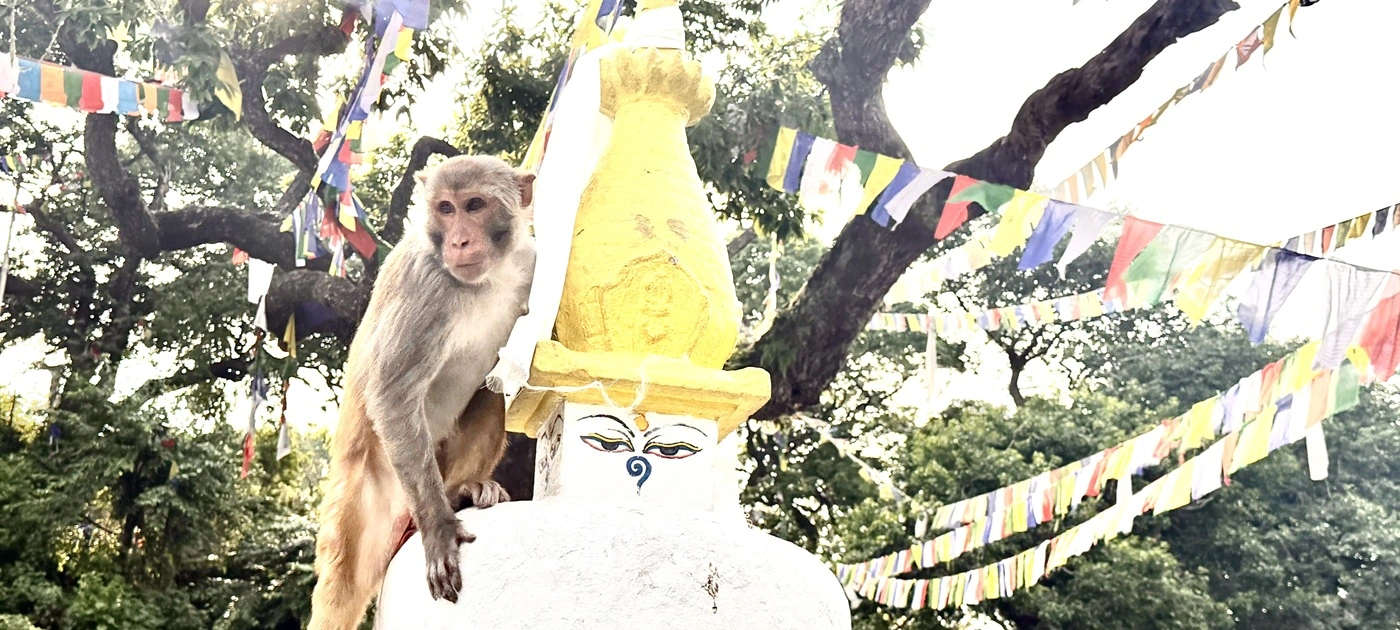
Pokhara or Kathmandu: Where the Extra Nights Belong

Pokhara vs Kathmandu is the decision nearly every Nepal itinerary comes down to once the trek, the safari, or the international flights are fixed. Two or three nights are left over, and they have to land somewhere.
The honest answer is that these are not rival versions of the same city. Kathmandu is a working capital layered with temples; Pokhara is a lake town built for slowing down.
We plan both every week from our office in Thamel, and the pattern is consistent. Get the sequencing right and the spare nights lift the whole trip. Get it wrong, and you spend your recovery days in traffic.
Pokhara vs Kathmandu: two cities with two different jobs
The short answer: Kathmandu is for culture, Pokhara is for recovery, and the extra nights belong wherever your trip is thinnest. A journey heavy on trekking needs Pokhara's stillness at the end.
A journey with no trek at all usually needs more of Kathmandu than first-time planners give it.
Kathmandu sits at roughly 1,400 meters in a bowl-shaped valley that has been continuously urban for over a thousand years. Within about a 20-kilometer radius, you have seven UNESCO World Heritage monument zones.
Boudhanath at dawn, Pashupatinath's ghats, the carved courtyards of Patan — no other Himalayan capital packs this in.
Pokhara sits at 822 meters, six hours west by road or 25 minutes by air. Its center of gravity is Phewa Lake, with Machhapuchhre's fishtail summit reflected in the water on clear mornings. The town's rhythm is a lakeside walk, a long breakfast, a boat, a nap.
Culture and sightseeing: Kathmandu takes the mornings
Kathmandu wins any comparison built on things to see. Bhaktapur's pottery squares, the Kumari's window at Kathmandu Durbar Square, Swayambhunath above the western ridge — a private guide can thread three monument zones into a single unhurried day and still have you back for dinner.
The valley rewards early starts. We schedule Boudhanath for first light, when the kora circuit belongs to local devotees and the butter-lamp sellers, not the tour buses that arrive after nine. That one scheduling decision changes how the whole city feels.
The valley also feeds you better. A Newari feast in a Patan courtyard — bara lentil patties, choila, rice beer poured from a clay jug — is a cultural sight in its own right, and it doesn't exist in Pokhara in any real form.
Pokhara's sightseeing list is real but short. The World Peace Pagoda across the lake, Davis Falls, Gupteshwor Cave, and the International Mountain Museum fill one relaxed day.
Sarangkot at sunrise — the Annapurna range turning pink from Dhaulagiri to Manaslu — is the single sight that justifies the trip on its own.
Rest and recovery: Pokhara takes the afternoons
Pokhara is the better city for doing very little, and after a Himalayan trek that is exactly the point. The altitude drop matters more than most planners realize. Coming off high trails, that lower, warmer, oxygen-rich air is a physical relief you feel in the first hour.
Lakeside's best addresses face the water or sit on the quiet ridges above it, built around gardens, pools, and spa wings rather than lobbies. Massages actually get booked here. In Kathmandu, guests plan spa time and then trade it for one more monument.
Activity in Pokhara stays optional, and that is its charm. Tandem paragliders launch off Sarangkot most clear mornings and land beside the lake 30 minutes later. Quieter still is Begnas Lake, 20 minutes east, where the boatmen outnumber the visitors and the rice terraces run to the waterline.
There's a version of this in Kathmandu too — heritage courtyards in Patan, resort ridges at the valley rim — but the city asks something of you. Pokhara asks nothing.
Getting between them, and why it shapes the answer
The flight between Kathmandu and Pokhara takes about 25 minutes; the drive along the Prithvi Highway takes six to eight hours. That gap decides more itineraries than any hotel ever will. Fly, and the two cities combine easily.
Drive, and you lose a day each way to a winding two-lane road above the Trishuli River.
Here is a piece of standing practice from our operations desk: we book only the first morning departures on the Kathmandu–Pokhara sector, in either direction. Afternoon haze and wind build over the middle hills, and the late flights carry most of the sector's delays and cancellations. An early seat is the difference between a schedule and a hope.
The drive is not without a case. Broken with a proper riverside lunch stop, it shows you the terraced mid-hills that no flight window does. We suggest it one-way only, and never on the day of an international connection.
Where the extra nights belong, by trip shape
After an Annapurna trek: Pokhara, without hesitation. The trailheads sit under an hour from Lakeside, so you can walk out of the hills and be beside the lake by mid-afternoon.
Two nights lets the body land before the flight back east. When our guests come off the Annapurna trail, we hold a lake-view room and a same-evening spa slot as a standard, not an upgrade.
After a Khumbu trek: Kathmandu. Everest routes return you to the capital anyway, and adding a Pokhara detour after two weeks at altitude usually means one flight too many. Spend the spare nights on the valley's monuments instead — you'll finally have the legs for Bhaktapur's stone staircases.
No trek at all: split them, weighted to Kathmandu. Three nights in the valley and two by the lake is the balance we plan most for culture-led journeys. Kathmandu carries the substance; Pokhara supplies the exhale before the flight home.
Before any trek: keep it lean. One acclimatization-and-briefing day in Kathmandu after you land is part of how we build every itinerary. Save the indulgence for afterward, when you've earned it and can feel it.
When to go affects the choice less than you'd think
Both cities share Nepal's classic windows: mid-March to mid-June (spring) and mid-October to mid-December (autumn). Autumn gives Pokhara its sharpest Machhapuchhre reflections and Sarangkot its most reliable sunrises.
Spring hazes the distant ridgelines slightly but fills the valley rim with rhododendron.
Kathmandu is the stronger monsoon city. Its courtyards, museums, and covered markets work in the rain; Pokhara without its mountain backdrop loses its main argument. If your dates fall between June and September, weigh the nights east.
FAQs
Is Pokhara better than Kathmandu for recovering after an Annapurna trek?
Yes — Pokhara is the natural recovery stop after any Annapurna-region trek. The trailheads sit under an hour from Lakeside, the town lies at a gentle 822 meters, and the lakefront is built around rest rather than sightseeing. Two nights by Phewa Lake lets tired legs and lungs reset before the short flight back to Kathmandu for your international departure.
How long is the flight between Kathmandu and Pokhara?
About 25 minutes gate to gate, on small turboprops flown by Nepal's domestic carriers. Sit on the right side flying west for Himalayan views. We book the first morning departures in either direction, because haze and wind over the middle hills make afternoon flights on this sector far more prone to delay.
How many nights do you need in Pokhara if you aren't trekking?
Two nights is right for most non-trekking visits to Pokhara. That covers a Sarangkot sunrise, a boat on Phewa Lake, the World Peace Pagoda, and an unhurried lakeside evening. A third night suits travelers adding paragliding or a day walk toward the Annapurna foothills; beyond that, the town's short sightseeing list starts to repeat.
Can you see the Annapurna range from Pokhara without hiking?
Yes — Pokhara offers Nepal's easiest close-range Himalayan views. Machhapuchhre and the Annapurna massif stand roughly 30 kilometers north of town and are visible from the lakefront on clear days. For the full panorama, Sarangkot's ridge is a 40-minute private drive, no walking required beyond the viewpoint steps.
Which city has better dining, Pokhara or Kathmandu?
Kathmandu, by a wide margin. The capital holds Nepal's deepest food scene — Newari feasts in Patan's courtyards, refined thakali khana, and the country's most ambitious tasting menus. Pokhara does relaxed lakefront dining well, especially fresh fish and long breakfasts, but travelers who care about food should bank their evenings in Kathmandu.
Is the drive from Kathmandu to Pokhara worth doing instead of flying?
Once, in one direction, if your schedule has slack. The Prithvi Highway takes six to eight hours and traces the Trishuli River through terraced mid-hills the flight never shows you. We pair a driven outbound with a flown return, and we never place the drive on the same day as an international connection.
Ready to put the pieces in order? Our private city and valley journeys pair both cities at your pace, and the Nepal Golden Triangle private tour links Kathmandu, Pokhara, and Chitwan in one unhurried arc. The Himalaya, Privately Yours.
Need Help? Call Us+977 9851013196orChat with us on WhatsApp
Need Help? Call Us+977 9851013196