Why Bhutan for a Honeymoon
Bhutan is designed for two people. The entire tourism model — limited visitor numbers, mandatory guided travel, the SDF financial filter — ensures that you will never queue behind a tour bus at a monastery or share a restaurant with 200 other diners. The valleys are quiet.
The lodges are small (Gangtey Lodge has 12 suites; COMO Uma Punakha has 11 rooms). The experiences are private by default: a riverside picnic for two on the Mo Chhu, a butter lamp ceremony at dawn before the monastery opens, a hot stone bath in a candlelit bathhouse overlooking a frost-covered valley.
Beyond the structural privacy, Bhutan offers something no beach destination can: shared physical achievement. The Tiger’s Nest hike — 6.4 km, 500 meters of elevation gain, 5-7 hours — is a metaphor for partnership and endurance. You climb together.
You reach the monastery together. You surrender your phones together. And when the monk lights 108 butter lamps and chants a blessing for your marriage, you receive it together in a temple that has been hanging on a cliff face since the 8th century. No resort spa can replicate that.
When to Go
|
Season
|
Months
|
Why for a Honeymoon
|
|
Autumn
|
Sep–Nov
|
THE BEST. Crystal-clear air after the monsoon. Unobstructed Himalayan views. 10-25°C. Red and gold forest canopy. Minimal flight cancellations.
Paro Tshechu (2026: dates TBC). Black-necked cranes arrive in Phobjikha in November.
|
|
Spring
|
Mar–May
|
Rhododendron and magnolia bloom. Clear blue skies. Paro Tshechu 2026: March 29–April 2. Rhododendron Festival at Lamperi Botanical Park. Warm. Excellent for Tiger’s Nest.
|
|
Winter
|
Dec–Feb
|
Austere romance. Roaring bukhari stoves. Hot stone baths in frost-covered valleys. Sharpest mountain views.
Total seclusion. Cranes in Phobjikha. Lower rates. High passes may close — Punakha stays warm.
|
|
Monsoon
|
Jun–Aug
|
Heavy rain. Peaks obscured. Trails muddy. Not recommended. But: no crowds whatsoever.
Budget advantage. The central valleys receive less rain than the south.
|
The Romantic Valley Progression
A Bhutan honeymoon is not a stay — it is a journey. You move from valley to valley, west to east, from the intensity of arrival to the silence of the hinterland. Each valley changes the temperature, altitude, vegetation, and emotional register of the trip.
Paro: The Shared Achievement
Your entry point. A wide agricultural valley preserving deep traditional aesthetics. The Tiger’s Nest hike on Day 2 or 3 is the physical and emotional anchor of the honeymoon: you climb the cliff together, surrender your phones together, and receive a blessing together in a temple where a saint flew in on a tigress. Beyond Taktsang, the hidden Dodedrak Monastery offers immense tranquillity with almost no other visitors.
Thimphu: The Modern Evening
An hour east. The world’s only capital without traffic lights. Buddha Dordenma at sunset — a massive gilded statue housing 125,000 smaller Buddhas, with the valley spread below. The Royal Textile Academy for a private weaving demonstration. Evening cocktails at the lodge, watching traditional masked dance performances.
Punakha: The Romantic Heart
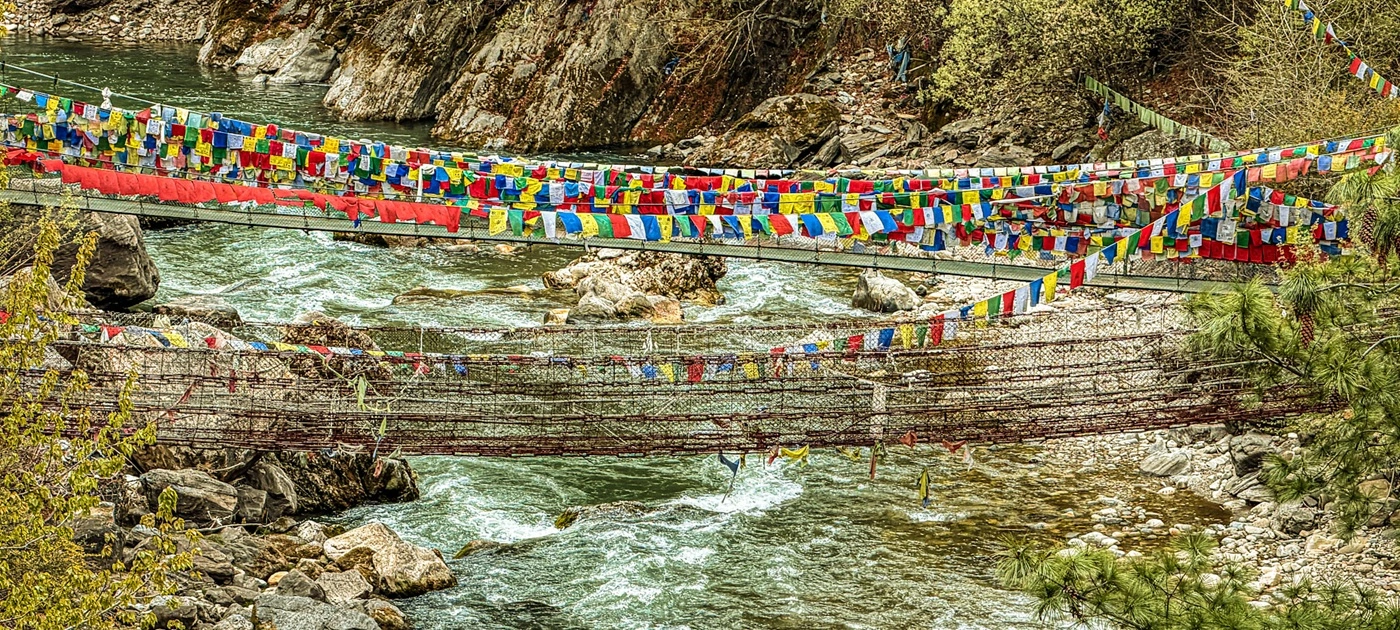
Cross the Dochula Pass (3,140m, 108 memorial chortens, 360° Himalayan panorama). Descend into subtropical warmth. The Mo Chhu (Mother) and Pho Chhu (Father) rivers converge at the Punakha Dzong — the most beautiful fortress-monastery in Bhutan. Walk hand-in-hand across the 600-foot suspension bridge draped in prayer flags.
Then walk 20 minutes through rice paddies to Chimi Lhakhang — the Temple of Fertility, founded by the legendary “Divine Madman” Drukpa Kunley. Couples from around the world come here to seek blessings for their future children. It is culturally fascinating whether or not you want children.
Punakha is where the romantic dining happens: riverside picnics on the Mo Chhu. White-water rafting (seasonal, gentle Class II-III). The Amankora Punakha, reached via its own private suspension bridge, has a subtropical infinity pool in the rice paddies. The Pemako Punakha: Bill Bensley’s tented villas with private plunge pools and a lama who chants at your arrival.
Gangtey/Phobjikha: The Silence
A glacial valley. RAMSAR-protected wetland. No aggressive infrastructure. The wintering ground of the endangered black-necked crane (November-March). Gangtey Lodge: 12 suites, roll-top bathtubs against vast windows, Woodshed Dining by candlelight under a star-studded sky, and a 30-minute Tshewang blessing at the 17th-century Gangtey Goenpa followed by a private breakfast within the monastery walls.
Bumthang: The Spiritual Heartland
Four interconnected valleys. Ancient temples steeped in myths. Kurjey Lhakhang: the bodily imprint of Guru Rinpoche preserved in a cave. Mebar Tsho (the Burning Lake): a sacred gorge that is a portal to Bhutan’s deepest mysticism. Apple orchards. Swiss cheese-making traditions. The Ura Valley: a time-capsule village. For couples who want 10+ days and the deepest possible Bhutan.
The Lodges: Where Couples Stay
|
Lodge
|
From/Night
|
Why for a Honeymoon
|
|
Amankora circuit
|
~$1,500
|
5 lodges, 72 suites. Stay 7 Pay 5 offer. Punakha: private suspension bridge, rice-paddy infinity pool. Gangtey: Potato Shed Dinner (moonlit walk, 100 candles, yak meatballs, drumming). Farm-to-table throughout. Hot stone baths.
|
|
Six Senses circuit
|
~$1,500
|
5 lodges, 82 suites. Dedicated honeymoon packages with private BBQ dinners, advanced spa therapies, and surprise departure blessings by monks. Punakha Flying Farmhouse cantilevered over rice terraces. Riverside Pomegranate Martinis.
|
|
COMO Uma
|
~$400
|
Paro: Villa 15 (most secluded). Rooms 30/40 (best panoramas). COMO Shambhala Retreat. “Jewels of Bhutan” 7-night couples itinerary.
“Anniversary Blessings” package: Gho/Kira attire, private temple blessing, 60-min massage, hot stone bath for two, four-course firelight dinner in the woods.
|
|
Pemako Punakha
|
~$1,200
|
Bill Bensley design. 19 tented villas with private plunge pools and a personal butler. Arrival: narrow wooden bridge, chanting lama welcome.
Dark carved woods, kasaya orange accents. 3+ nights: complimentary 60-min massage per person. The most theatrical honeymoon lodge in Bhutan.
|
|
Gangtey Lodge
|
~$800
|
12 suites. Roll-top bathtubs against valley windows. Woodshed Dining: candlelit private dinner in a historic stone setting.
Tshewang prayer + monastery breakfast. Gangtey 360 Hike to a meditation cliff with a butler-serviced picnic. Black-necked cranes Nov-Mar.
|
The Dotsho: The Honeymoon Ritual
The traditional Bhutanese hot stone bath. Not a modern spa invention — a 7th-century healing practice rooted in gSo-ba Rig-pa (traditional Tibetan-Bhutanese medicine).
River boulders, chosen for their mineral density, are roasted over an open fire until they glow red, then submerged in a wooden tub filled with mountain water infused with wild Artemisia (mugwort). The stones crack and hiss.
They release calcium, magnesium, and iron. The heat induces deep muscular relaxation. The Artemisia acts as an anti-inflammatory and circulation booster. After the Tiger’s Nest hike, this is the ritual that puts your body back together.
Every luxury lodge offers the Dotsho. Gangtey Lodge and Six Senses serve it in private, candlelit bathhouses overlooking the valley. COMO Uma provides COMO Shambhala Retreat. Amankora uses khempa-herb infusions and cedarwood incense.
You sit in the wooden tub together, watching stones glow and hiss, while the valley fills with evening mist. This is the honeymoon moment that no beach resort on earth can replicate.
The Blessing: Consecrating Your Marriage
Bhutanese monasteries offer authentic blessing ceremonies performed by practicing monastics. These are not staged tourist events. They connect you to centuries of unbroken Himalayan Buddhist tradition.
The ceremony: you dress in traditional Bhutanese attire — the Gho for one partner, the Kira for the other (provided by the lodge or operator). You enter a historic sanctuary — Kurjey Lhakhang in Bumthang, Gangtey Goenpa in Phobjikha, or a private chapel arranged through our network. Monks burn incense.
They chant sacred mantras. They light butter lamps to honor all Buddhas and dispel darkness. You exchange Khadhar — white silk scarves symbolizing purity, unity, and lifelong commitment. A high lama may conduct a Thrusel and Monlam blessing for purification and protection against future obstacles, followed by a Tshewang prayer for personal empowerment.
One detail that elevates this beyond any other destination: a high lama often selects the auspicious ceremony date based on the specific birth years and astrological signs of both partners before any itinerary is finalized. Your ceremony date is not chosen by availability. It is chosen by the stars.
What It Costs
|
Component
|
Per Couple / 7 Nights
|
Notes
|
|
SDF
|
$1,400
|
$100/person/night x 7 nights x 2 people. Non-negotiable.
|
|
Visa
|
$80
|
$40/person. One-time.
|
|
Flights (KTM-Paro return)
|
$1,200-1,600
|
$300- $ 400 per person each way. Drukair or Bhutan Airlines.
|
|
Standard ground (3-star)
|
$2,280
|
~$190/night avg. Hotels, guide, vehicle, meals.
|
|
TOTAL standard
|
$4,960-5,360
|
The minimum threshold for a meaningful honeymoon.
|
|
COMO Uma ground
|
$5,600-7,000
|
~$400-500/night. Includes Shambhala spa, Bukhari dining.
|
|
TOTAL COMO
|
$8,280-9,680
|
The best luxury value in Bhutan.
|
|
Amankora/Six Senses ground
|
$15,000-21,000
|
$1,500/night. Multi-valley circuit. All-inclusive options. Amankora: Stay 7 Pay 5.
|
|
TOTAL ultra-luxury
|
$17,680-23,680
|
The complete five-valley honeymoon at the highest level.
|
SDF: INR 1,200/night/person (~$15). No visa fee. A 7-night mid-range honeymoon: INR 56,000-70,000 per couple ($670-840) for the ground package. Flights from Delhi or Kolkata add INR 25,000-40,000 per couple. Total: approximately INR 80,000-110,000 ($960-1,320). The same lodges. The same Bhutan. A fraction of the international cost.
The Festivals: Timing Your Honeymoon to a Tshechu
Tshechus are multi-day religious festivals featuring Cham masked dances, giant Thongdrel unveilings (said to cleanse sins on sight), and communities dressed in their finest silks. Aligning your honeymoon to a tshechu adds vibrancy and cultural theatre to the romantic isolation.
Key 2026 dates: Paro Tshechu: March 29–April 2 (at Rinpung Dzong — the marquee festival). Thimphu Tshechu: September 21-23. Gangtey Tshechu: September 24-26. Jambay Lhakhang Drup (Bumthang): October 18-21. Jhomolhari Mountain Festival: October 14-15. Book lodges 6+ months in advance for festival periods.
Frequently Asked Questions
Is Bhutan a good honeymoon destination?
Exceptional. The SDF-enforced exclusivity means you will never share a monastery with a tour bus. Lodges are intimate (11-72 rooms). Experiences are private by default. The Tiger’s Nest hike is a shared achievement. The Chimi Lhakhang fertility blessing is an unforgettable cultural experience. The hot stone bath after the hike is the most romantic wellness ritual in the Himalayas.
How much does a Bhutan honeymoon cost?
Standard (3-star, 7 nights): $5,000-5,400/couple including SDF, visa, flights, and ground package. COMO Uma: $8,300-9,700/couple. Amankora or Six Senses circuit: $17,700-23,700/couple. Indian nationals: INR 80,000-110,000/couple for mid-range. SDF is $100/night/person through August 2027.
What is the Chimi Lhakhang?
The Temple of Fertility in Punakha. Founded by Drukpa Kunley, the “Divine Madman.” Couples from around the world come for fertility blessings. A 20-minute walk through rice paddies from the Punakha suspension bridge. Culturally fascinating, whether or not you want children.
What is a Dotsho hot stone bath?
A 7th-century Bhutanese healing ritual. River boulders heated in fire until glowing red, submerged in a wooden tub of mountain water infused with wild Artemisia (mugwort). Releases calcium, magnesium, and iron. Deep muscular relaxation. Anti-inflammatory. Every luxury lodge offers it in private candlelit bathhouses. The perfect ritual after the Tiger’s Nest hike.
Can we have a blessing ceremony?
Yes. An authentic Buddhist blessing performed by practicing monastics. You dress in Gho and Kira (traditional attire). Monks chant mantras, burn incense, and light butter lamps. You exchange Khadhar (white silk scarves) symbolizing purity and commitment. A high lama may select the ceremony date based on your astrological signs. We arrange everything.
What is the best lodge for a honeymoon?
Pemako Punakha: the most theatrical (Bensley tented villas, plunge pools, lama welcome). Gangtey Lodge: the most intimate (12 suites, Woodshed Dining, monastery breakfast). COMO Uma: the best value with the Anniversary Blessings package. Amankora: the most complete circuit (5 valleys, Potato Shed Dinner). Six Senses: the deepest wellness.
How many days should a Bhutan honeymoon be?
7 nights is the most popular: Paro + Thimphu + Punakha. Tiger’s Nest, Punakha Dzong, Chimi Lhakhang, hot stone bath, blessing ceremony. 10+ nights adds Gangtey (cranes, silence, Woodshed Dinner) and Bumthang (spiritual depth). 5 nights is the minimum: Paro + Thimphu only.
When is the best time for a Bhutan honeymoon?
Autumn (September-November): the zenith. Crystal air. Himalayan views. Comfortable temperatures. Cranes arrive in November. Spring (March-May): rhododendron bloom. Paro Tshechu March 29–April 2, 2026. Winter (December-February): austere romance, hot stone baths, seclusion, lower rates.
Do we need a guide?
Yes, for all travel beyond Paro and Thimphu city centers. Yes for all dzongs, monasteries, and museums. Yes for the Tiger’s Nest. The guide is not a restriction — the guide is a cultural translator who arranges private monastery access, navigates mountain passes, and secures the experiences that make Bhutan worth the SDF.
Can we combine Bhutan with Nepal?
Yes. Fly Kathmandu to Paro (45 min). We build Nepal + Bhutan as a single booking. The most popular combination: 7-10 days Nepal (Kathmandu, helicopter to Everest, Pokhara, Chitwan) + 5-7 days Bhutan (Paro, Thimphu, Punakha). 12-17 days total. We manage all internal flights and border logistics.
The Final Word
A Bhutan honeymoon is not a beach. It is not a buffet. It is not a resort with a swim-up bar. It is a monastery on a cliff face where a monk lights 108 butter lamps while chanting a blessing for your marriage. It is a hot stone bath where river boulders glow red and hiss in Artemisia-infused water while the valley fills with mist.
It is a walk across a prayer-flag bridge to a fertility temple founded by a saint who called himself the Divine Madman. It is a candlelit dinner in a potato shed at 3,000 meters where the yak meatballs are served by flashlight and the drums play outside the door.
The SDF ensures you will have it to yourselves. The constitution ensures the forest will still be there when you return. And the monk who chants the blessing does not know your names, but he knows the mantra has been chanted for 1,200 years, and he means every syllable. Tell us your dates.