The great monasteries in Lhasa are three, and every Tibetan knows them as a set: Ganden, Drepung, and Sera — the densa sum, the "three seats" of the Gelug school.
Founded within a single decade, between 1409 and 1419, by Je Tsongkhapa and his closest disciples, they turned Lhasa into the intellectual capital of Tibetan Buddhism.
Most visitors see the Potala and the Jokhang and call the city done. The monasteries are where Lhasa keeps thinking. One holds the tomb of a philosopher who reshaped a religion.
One was, for centuries, the largest monastery on earth. One argues out loud every afternoon. This guide covers all three — and the order in which we visit them, which matters more than most itineraries admit.
What Are Lhasa's "Three Seats"?
The three great monasteries in Lhasa are Gelug school institutions—the Yellow Hat tradition that later produced the Dalai Lamas—and they served as universities as much as temples.
Monks came from across the plateau, and beyond it, to study logic, philosophy, and debate in colleges that ran on strict curricula for decades per degree.
Je Tsongkhapa, the reformer whose teachings founded the school, established Ganden himself. Two of his disciples followed within ten years: Jamyang Choje founded Drepung, and Sakya Yeshe founded Sera.
That founding burst is why the three feel like siblings — same lineage, same scholastic purpose, three very different personalities.
They anchor three directions around the city: Ganden to the east along the Kyichu Valley, Drepung on the western hillside, and Sera to the north against the hills.
Seeing all three stitches of the geography of Lhasa together in a way no single site can.
Ganden Monastery: Where the Gelug School Began
Ganden Monastery is the mother house — founded by Tsongkhapa in 1409 and still led, in title, by the Ganden Tripa, the throne-holder of the school he created.
His gold-and-silver memorial stupa remains the heart of the complex, and pilgrims treat a visit here as more of a pilgrimage than sightseeing.
It's also the commitment of the three. Ganden sits on the Wangbur ridge at roughly 4,300 meters, about an hour and a half's drive east of Lhasa, the road climbing in long switchbacks with the Kyichu Valley unrolling below.
The buildings, heavily damaged in the twentieth century and rebuilt over recent decades, wrap the ridge like an amphitheater.
The reward is the Ganden kora: a high walking circuit behind the monastery, forty-five minutes to an hour at a gentle pace, with valley views that outclass anything else near the city.
On our departures, we bring a flask of sweet tea and take lunch on the ridge — standing practice, because nobody wants to hurry back down from that view.
Drepung Monastery: The Rice Heap on the Hillside
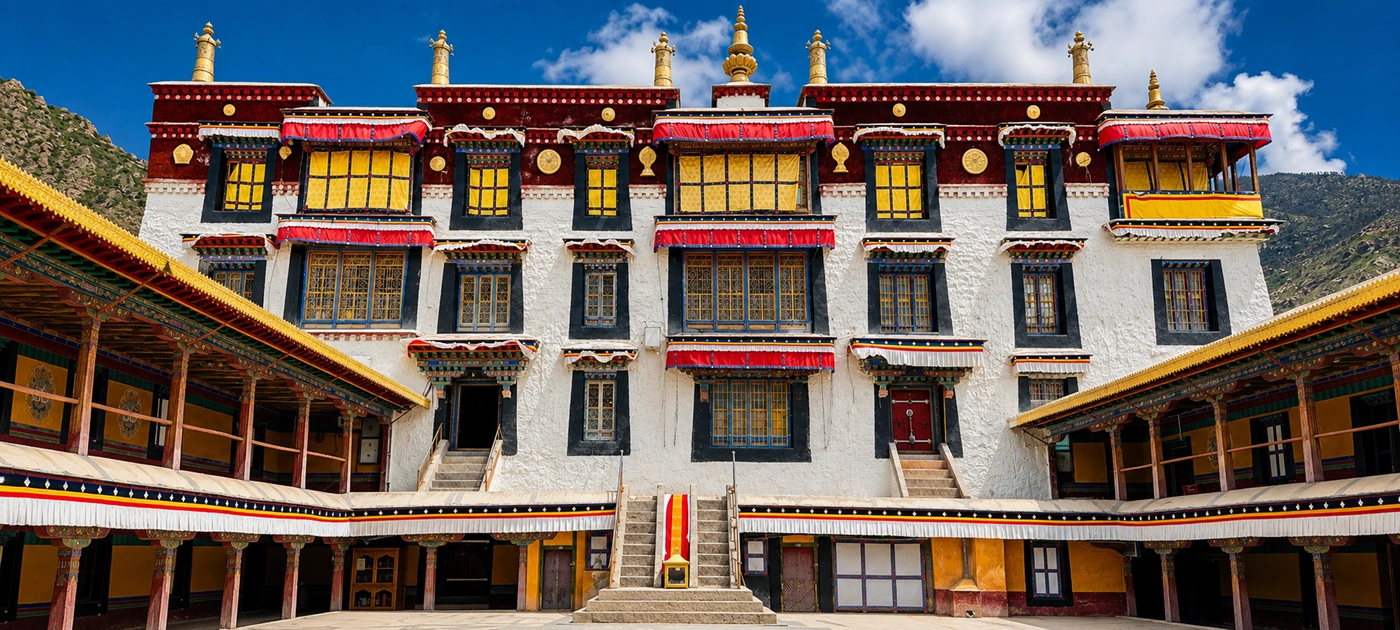
Drepung Monastery was once the largest monastery on earth, home to several thousand monks at its height — by some counts approaching ten thousand.
The name means "rice heap," for the way its whitewashed buildings spill down the Gambo Utse hillside five kilometers west of Lhasa, and from the valley floor the resemblance is exact.
Before the Potala existed, power lived here. The Ganden Podrang, the palace within Drepung, was the seat of the early Dalai Lamas, and the walk up through its lanes — past kitchens with cauldrons big enough to stand in, past colleges that each ran like a faculty — still feels like moving through a small city rather than a single temple.
Drepung also opens the Shoton Festival: at dawn on the opening day, a giant appliqué thangka is unfurled down the hillside while tens of thousands watch from the slopes.
The festival follows the lunar calendar, so timing shifts year to year — we confirm exact dates at booking for guests who want to build a trip around it.
Sera Monastery: The Courtyard That Argues
Sera Monastery is famous for one thing above all: the debates.
Most weekday afternoons, monks fill the walled debate courtyard under old trees and test each other on philosophy — the standing questioner winding up and delivering each point with a lunge and a sharp clap, the seated defender parrying. It's loud, fast, physical, and entirely genuine: this is how the curriculum has been examined for six centuries.
The monastery sits at the base of the hills, a short drive north of the old town, founded in 1419 and named, tradition says, for the wild roses that hedged the site.
Its colleges, printing house, and assembly halls reward a slow ninety minutes even before the courtyard fills.
Debate sessions follow the monastic calendar and pause on certain days, so we never promise them flatly — your guide confirms the schedule that morning and builds the afternoon around it.
When the courtyard is on, it's the single most alive thing you'll watch in Lhasa.
How We Sequence the Monasteries in Lhasa
The right order for visiting the monasteries in Lhasa is governed by two constraints: altitude and the clock. Drepung and Sera pair naturally into one day — Drepung's hillside in the cool of the morning, then Sera timed for the afternoon debates.
Both sit near the city at Lhasa's own elevation, so they work early in your stay.
Ganden waits. At 4,300 meters, with a kora walk attached, it belongs in the second half of a Lhasa program, after your body has settled — the same acclimatization logic that shapes every itinerary we run in Tibet, and the drive east doubles as your first proper look at rural valley life.
Our guide to the best time to visit Tibet overs the seasonal layer; April to October is prime, while winter trades some warmth for pilgrim-filled halls.
Paperwork is the easy part: the same Chinese visa, Tibet Travel Permit, and licensed guide that cover your whole journey cover all three monasteries — we arrange everything before you fly, and entry tickets are handled on the day.
Conduct in the Assembly Halls
Monastery etiquette in Lhasa follows the same grammar everywhere: move clockwise through halls and around buildings, remove hats indoors, keep shoulders and knees covered, and never step over cushions, texts, or a monk's seat. Butter-lamp offerings are welcome; your guide will show you how they're made.
Photography varies chapel by chapel and changes without notice — some halls allow it for a small fee, many prohibit it outright. The debate courtyard at Sera generally tolerates quiet photography from the edges, but the moment belongs to the monks; watch more than you shoot.
The monasteries around Lhasa sit at the center of how we build luxury travel across the Himalaya: unhurried access to living culture, paced by people who know when the courtyard fills and when the ridge is quiet.
They pair naturally with the Jokhang Temple and the Barkhor in the old town, and our luxury Tibet travel guide sets the whole plateau in context.
Ready to hear the debate courtyard for yourself? Our private Lhasa tour gives the three seats the time they deserve — or start with the 4-day Lhasa private tour, which sequences Drepung, Sera, and the old town at a proper acclimatization pace.
Frequently Asked Questions
Why are Ganden, Drepung, and Sera called the "three seats"?
Because they are the three founding university monasteries of the Gelug school — the densa sum — established between 1409 and 1419 by Je Tsongkhapa and two of his disciples. For centuries, they trained the school's scholars and supplied its leadership, giving them an institutional weight no other monasteries around Lhasa carry. Visiting them as a set is visiting the school's intellectual spine.
What time are the debates at Sera Monastery?
Mid-afternoon on most weekdays, in the walled debate courtyard — though sessions follow the monastic calendar and pause on certain days, so no fixed promise survives contact with the schedule. We have our guides confirm on the morning of your visit and arrange the day around the answer, which is why our Sera visits are scheduled for the afternoon slot rather than the morning.
Is Ganden Monastery worth the drive from Lhasa?
Yes, if you give it the half day it needs. The ninety-minute drive east climbs to the Wangbur ridge at roughly 4,300 meters, where Tsongkhapa's memorial stupa and the high kora circuit wait — the finest valley views near the city. We schedule Ganden late in a Lhasa stay, after acclimatization, and treat the kora as the point rather than an add-on.
How big was Drepung Monastery at its peak?
Several thousand monks — by some historical counts approaching ten thousand — made Drepung the largest monastery on earth for a long stretch of its history. The scale still reads on the ground: whole lanes of colleges, kitchens with room-sized cauldrons, and the Ganden Podrang palace where the early Dalai Lamas governed before the Potala was built.
What is the giant thangka at Drepung?
A building-sized appliqué image of the Buddha, unfurled down the Drepung hillside at dawn on the opening day of the Shoton Festival while crowds watch from the slopes. It hangs for hours before being rolled away for the year. Shoton follows the lunar calendar, so the date moves annually — we confirm the exact timing at booking for guests planning around it.
Do the Lhasa monasteries need a separate permit?
No. The Chinese visa and Tibet Travel Permit that cover your whole Tibet journey also cover Ganden, Drepung, and Sera, and your licensed guide accompanies every visit — a standing requirement across the region. We arrange all documents before you fly and handle entry tickets on the day, so the only thing you queue for is the view.
Which of the three monasteries should you visit first?
Drepung, paired with Sera the same day. Both sit near the city at Lhasa's own altitude, so they suit the early days of a stay — Drepung's hillside in the morning cool, Sera timed for the afternoon debates. Ganden comes later: it stands roughly 650 meters higher than the city, and the kora walk rewards a body that has already settled in.