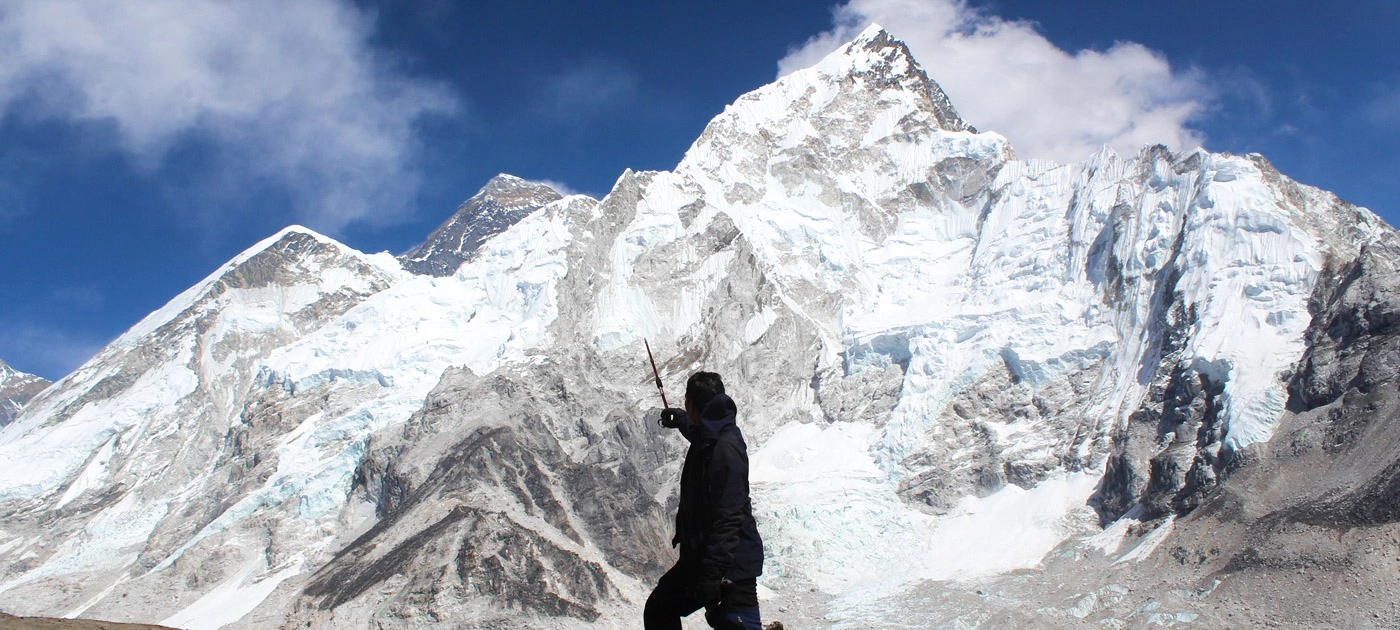
An Everest helicopter wedding lands you at Kala Patthar (5,545m), the highest commercial landing point in the Khumbu, for a vow exchange with a 360-degree view of Everest. We handle aviation, Nepal marriage paperwork, cold-weather planning, and safety protocols. You stay present. We hold everything else.
An Everest Helicopter Wedding at Kala Patthar

Where You Actually Get Married on Everest
You marry at Kala Patthar, not at Everest Base Camp. This distinction matters, and most people planning a Himalayan wedding get it wrong.
Base Camp sits at 5,364 meters on the moving Khumbu Glacier. Commercial helicopters are generally not permitted to land there for tourism—the glacier is unstable, the environmental rules are strict, and the summit of Everest isn't even visible from Base Camp itself. Kala Patthar is the answer. At 5,545 meters, it's higher; it's the highest landing point helicopters can legally reach in the region, and it gives you a clear, unobstructed view of the Everest summit alongside Lhotse and Nuptse.
So when you picture the moment—the two of you, the rings, the summit behind you—that's Kala Patthar. We land there. We say the vows there. And we've timed the whole morning around the fact that you only get a short window on that ridge.
Why the Ceremony Is Deliberately Brief
Your ceremony at Kala Patthar lasts 10 to 15 minutes on the ground, and that limit is a safety feature, not a compromise.
The human body cannot adjust to 5,545 meters in a few hours. Push past that window without prior acclimatization, and you're inviting altitude sickness in its serious forms—the kind that ends trips and endangers people. Nepal's aviation authority and standard safety practice cap helicopter ground time at Kala Patthar at roughly 10 to 15 minutes for exactly this reason. We carry supplemental oxygen onboard throughout.
Here's how we think about it. That brevity is what makes the moment hit the way it does. There's no long, drifting ceremony where attention wanders. There are the two of you, the rings, the vows, the summit, and a photographer working fast and well. Then you're back in the aircraft descending toward warmth and breakfast. Our crew rehearses the choreography so nothing feels rushed inside those minutes—the pacing is ours to manage, and it's the part of the day we obsess over most.
The Aerodynamics That Shape Your Wedding Day
Thin air governs everything about how the flight works, and understanding it explains why the day runs the way it does.
At 5,545 meters, atmospheric pressure is roughly half of that at sea level. That sharply reduces a helicopter's lift and engine power. A standard high-altitude aircraft that carries five people comfortably in the lower valleys can safely lift only 220 to 250 kilograms once it climbs above 4,200 meters. Physics, not preference, sets that number.
For a party of just the two of you, this is simple—you fly together the whole way. But add an officiant and a photographer, and the group exceeds the payload limit at altitude. When that happens, we run what pilots call shuttle splits: the aircraft lands at a lower point, divides the group, and ferries people up to Kala Patthar in quick succession. It adds flight time, and we build it into the plan from the start. We'd rather explain the mechanics honestly than have you wonder mid-morning why the helicopter is making a second run.
This is the layer that generic operators hide. We lead with it because the couples who choose this trip tend to be people who respect competence and want to see the reasoning.
The Weather Window Is Narrow, and We Protect It
All safe flights into the Everest region occur between roughly 6:00 AM and 10:00 AM, and we plan your entire day around that.
Khumbu weather runs on a predictable daily cycle. Cold, stable air sits over the mountains at dawn. By midday, rising warm air collides with cold ridge air and quickly builds clouds, wind, and strong turbulence. Fly late, and you're flying into instability. So we don't. Departures are early—you'll leave your Kathmandu hotel between 5:30 and 6:00 AM—and the ceremony happens while the air is still calm.
The refueling stop is at Lukla, and the approach there is its own piece of precision flying: a 527-meter runway carved into a mountainside on an 11.7-degree upward slope, one of the most demanding airstrips in the world. Our pilots fly it constantly. It's routine for them, and it should stay invisible to you.
We always build buffer days into a Himalayan wedding itinerary. Mountain weather doesn't negotiate, and we will never fly you into conditions that aren't safe to hold a schedule. If a storm sits over the range on your chosen morning, we move the flight—not the safety line.
Getting Legally Married in Nepal as a Foreign Couple
A marriage in Nepal is only internationally valid if it's registered through the district court system, and we handle that entire process for you.
A ceremony performed only at a local ward office, or an informal destination ceremony with no court registration, is not legally enforceable abroad. That's the trap couples fall into. So the legal marriage and the Kala Patthar celebration are two connected pieces: the court registration makes it real on paper, and the mountain makes it real in memory.
The core requirements for foreign nationals include being of legal marrying age, being single, divorced, or widowed, and holding a No-Objection Letter (also called a Single Status Certificate) from your embassy or consulate in Nepal confirming that you're free to marry. You'll also need a notarized copy of your home country's marriage laws, translated into Nepali by a licensed translator, plus notarized passports and two physical witnesses.
Note for the team: Nepal's foreign-marriage requirements, court fees, and the residency rule below must be confirmed against the current Muluki Civil Code procedure and the relevant embassy before this is published. Flagged for verification.
The 15-Day Rule, Reframed
Foreign couples generally must reside in Nepal for a set period before applying for a court marriage, and we turn that requirement into the best part of the trip.
Rather than treating the residency window as dead time in a Kathmandu hotel lobby, we make it a private Himalayan journey. Your first days can be spent in the capital, completing paperwork, attending fittings, and planning the celebration.
From there, we fly you to the lowland jungle for a private wildlife safari, then to the lakeside below the Annapurna range for spa days and quiet mornings with the mountains on the water. By the time you return to Kathmandu for the court appearance and your certificate, the waiting period has become the honeymoon that happens before the wedding.
We describe these stays by their feel—a heritage courtyard hotel in the old city, a tented safari lodge, a ridge lodge above a lake—and confirm the exact properties in your booking proposal. The point is that the legal clock runs while you're somewhere extraordinary, not somewhere waiting.
Dressing for -15°C Without Ruining the Photographs
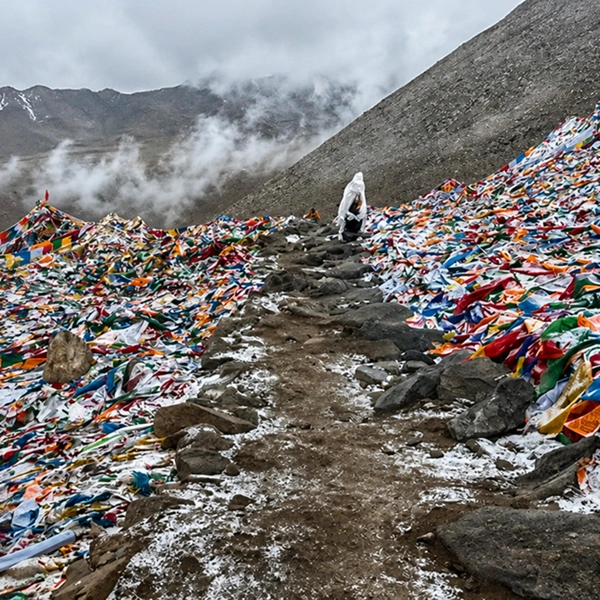
At Kala Patthar, even in the best flying seasons, the temperature sits around -10°C to -15°C with a steady wind chill, and your outfit has to solve for both hypothermia and the camera.
The rule that keeps mountaineers alive is layering, and it hides beautifully under wedding attire. A moisture-wicking merino or synthetic base layer goes first—never cotton, which holds sweat and pulls heat straight out of you in the cold. For a bride, skin-toned thermal tights and warm nude undergarments provide real warmth without altering the dress's line on camera.
The outer layer is where couples get caught out. A satin wrap or a thin faux-fur shrug does nothing against Himalayan wind. What works is a genuine heavy wool coat, a thick tailored cape, or a proper down jacket worn over the dress and opened only for the few choreographed shots. Grooms do well in wool or tweed with an insulated overcoat.
Footwear is a safety matter, not a style one. The ground at Kala Patthar is rocky, uneven, and often icy. Heels and smooth-soled dress shoes are genuinely dangerous up there. We advise insulated, gripping boots—winter boots or good leather trekking boots—tucked under a long hemline. Stable footing and warm feet keep the whole day comfortable and safe.
Filming It: The Permit Wall We Handle for You
Cinematic drone footage of your Kala Patthar landing is one of the reasons couples choose this, and the permitting process behind it is genuinely complex—which is why we handle it all.
Flying a drone inside Sagarmatha National Park means clearing three separate authorities: the civil aviation authority for registration, a unique identification number, and flight-path approval; the home affairs ministry for security clearance, which alone can add one to two working weeks for foreign nationals; and the national parks department for environmental clearance in this protected ecosystem. Independent applicants face a high rejection rate and long timelines.
Note for the team: drone permit categories, commercial filming fees, and insurance minimums have changed; confirm the current figures with the relevant authorities before quoting any of this to a client. Flagged for verification.
There's a physical reality beyond the paperwork: drone batteries lose a large share of their performance in the cold, which is one more reason we use experienced local operators who understand high-altitude battery management. You get the footage. You never touch a form.
What It Costs, Honestly
An Everest helicopter wedding is a layered investment, and the aviation charter is only one part of it.
The main cost centers are the private helicopter charter itself; additional shuttle flights if your group exceeds the altitude payload limit; government and national park fees; the celebration afterward at the world's highest hotel; the legal marriage facilitation, including translation and residency paperwork; the media and drone permits; and the pre-wedding stays across Kathmandu and beyond. Each of these scales with how you want the day built.
Note for the team: every figure in the source cost table—charter ranges, shuttle costs, park fees, legal and permit fees—is bespoke and time-sensitive. Do not publish hard-dollar figures without a fresh quote and a current fee confirmation. Present the cost as a structured conversation, not a fixed price list. Flagged for verification.
What we can say plainly: the charter price you see quoted elsewhere is rarely the whole picture, and we'd rather walk you through the full architecture than surprise you later. Transparency is part of what you're paying for.
The Celebration After the Summit
After the vows, we descend for breakfast at Hotel Everest View, a landmark that holds the Guinness World Records title for the highest-placed hotel in the world at 3,880 meters.
This is the exhale. You've stood at 5,545 meters in the wind for ten intense minutes, and now you're on a stone terrace at a gentler altitude with a champagne breakfast and Everest, Ama Dablam, and Lhotse laid out in front of you. The kitchen can run from continental to more ambitious plates. The building keeps oxygen in the rooms, so you can celebrate in the thin air without worry.
For couples who want more than a single flying day, we also build multi-day versions that gradually take you up through the lower Khumbu, staying in comfortable lodges spaced a short day's walk apart so your body can acclimatize properly. That version trades the speed of the helicopter day for depth—more time in the mountains, a slower arrival at the celebration. We shape it around which one you actually want.
FAQs: Everest Helicopter Wedding at Kala Patthar
Do you get married at Everest Base Camp or Kala Patthar?
- Kala Patthar, at 5,545 meters. Helicopters generally can't land at Base Camp for tourism due to the moving Khumbu Glacier and environmental regulations, and the Everest summit isn't even visible from Base Camp. Kala Patthar is higher, is the highest legal commercial landing point, and gives a clear 360-degree summit view. It's the correct answer for a Himalayan wedding.
Is it safe to hold a wedding at 5,545 meters?
- Yes, within strict limits. The body can't acclimatize to that altitude within hours, so ground time is capped at roughly 10 to 15 minutes, and we carry supplemental oxygen on board. The brevity is a deliberate safety measure. We choreograph the ceremony to fit comfortably within the window, then descend to a gentler altitude for the celebration.
How do foreign couples legally marry in Nepal?
- Through the district court system—only court registration is internationally valid. You'll need a No-Objection Letter from your embassy, a notarized translation of your home country's marriage laws into Nepali, notarized passports, and two witnesses. There is also a residency requirement before you can apply. We manage the entire process so you don't have to navigate it alone.
What is the 15-day residency requirement, and does it waste time?
- Foreign couples generally must reside in Nepal for a set period before applying for a court marriage. We turn that window into the journey itself—days in Kathmandu, a lowland safari, and time by the lake below the Annapurnas—so the legal clock runs while you're somewhere remarkable. The waiting period becomes the pre-wedding honeymoon.
How cold is it at Kala Patthar, and what should we wear?
- Expect -10°C to -15°C with wind chill even in peak season. Layer underneath: a merino or synthetic base layer, never cotton. Over the wedding attire, wear a heavy wool coat, cape, or down jacket that opens only for photos. Wear insulated gripping boots under a long hemline. Stable footing and warmth keep the day safe and comfortable.
Can we get drone footage of the Kala Patthar landing?
- Yes. Aerial filming inside Sagarmatha National Park requires clearances from three separate authorities and long lead times, with a high rejection rate for independent applicants. We handle every permit and work with local operators who understand high-altitude battery performance in cold conditions. You receive the cinematic footage without touching a single form.
What time does the wedding day start, and why so early?
- You'll leave your Kathmandu hotel between 5:30 and 6:00 AM. Safe flying into the Everest region happens only between roughly 6:00 AM and 10:00 AM, before midday air builds cloud, wind, and turbulence over the range. The early start isn't an inconvenience—it's the only window that's genuinely safe and stable for the flight.
What happens if the weather is bad on our chosen day?
- We move the flight. We build buffer days into every Himalayan wedding itinerary precisely so weather can't force a bad decision. Mountain conditions don't negotiate, and we will never fly you into unsafe air to protect a schedule. The buffer days exist to keep your plans intact when the weather doesn't cooperate.
The Trip We Actually Built
An Everest helicopter wedding isn't a flight you buy. It's a morning we choreograph around physics, weather, and law so that all you have to do is stand on the ridge and mean the words.
We manage the aviation payload math, the narrow weather window, the Nepal marriage paperwork, the cold-weather planning, the permits, and the oxygen. You get the summit, the rings, and a breakfast at the top of the world afterward. That's the trade we make with every couple who comes to us: we hold the logistics so completely that they disappear.
If this is the milestone you've been imagining, our team will build it around you from the first conversation. Explore our Luxury Everest experiences or write to us directly, and we'll start shaping your Himalayan wedding.
Need Help? Call Us+977 9851013196orChat with us on WhatsApp
Need Help? Call Us+977 9851013196