Haa Valley, Bhutan, is the valley most itineraries drive past. It lies on the far side of Chele La from Paro, about 65 kilometers of climbing and descending road, and it holds two of the oldest temples in the country.
Almost nobody stops there. That is the whole appeal, and it is why we build a Haa day into most of our western Bhutan journeys.
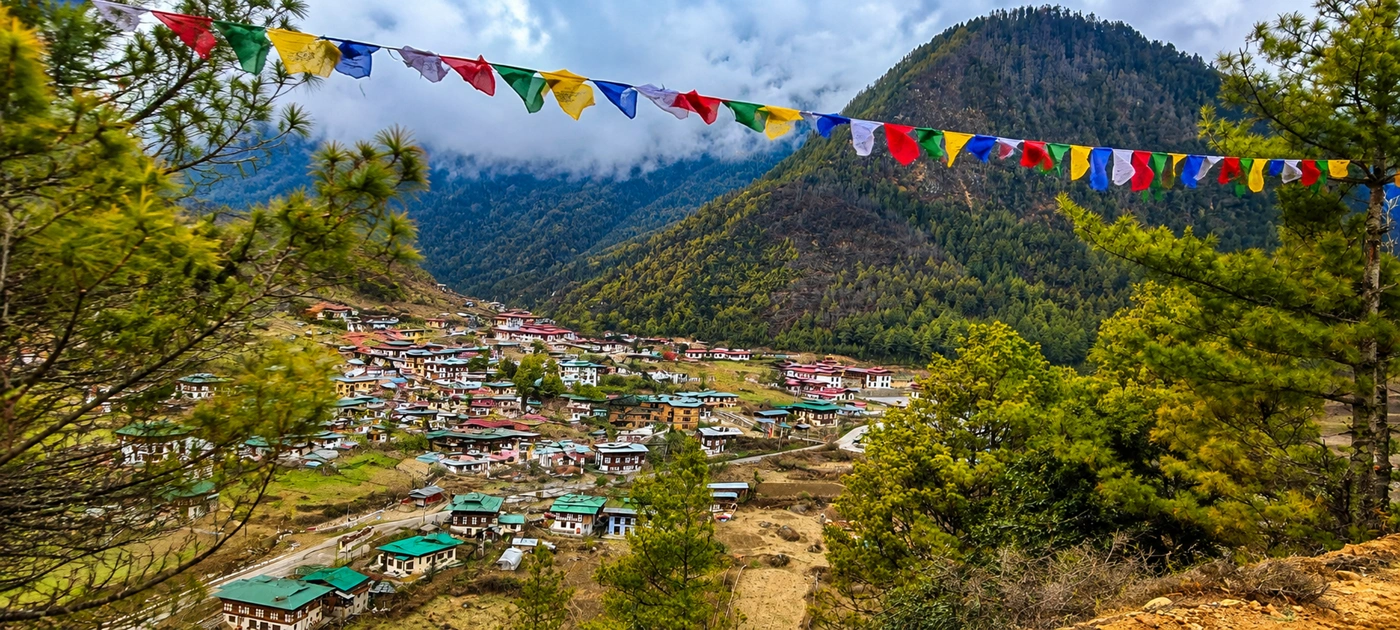
The valley floor runs narrow and green along the Haa Chhu. Three hills stand over the town. Buckwheat grows where rice will not, and the food changes because of it.
Where Haa Valley sits, and how you reach it
Haa is Bhutan's westernmost district, bordering Tibet to the north-west and Sikkim to the south-west. The town sits at roughly 2,670 meters, lower than Thimphu, with peaks on the district's northern rim rising past 5,000 meters.
The valley stayed closed to foreign travelers until 2002, which is the single fact that explains its atmosphere.
Over Chele La from Paro
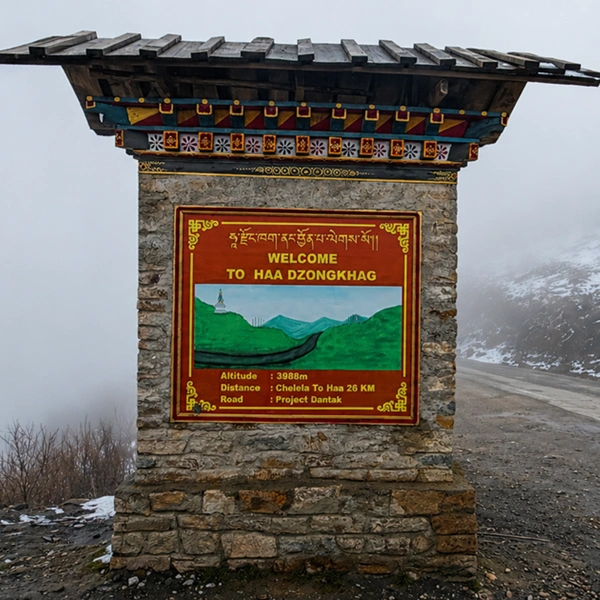
The direct route climbs from Paro to Chele La at about 3,988 meters, then drops into Haa on the far side. Expect around two and a half hours of driving each way, with stops, on a paved but narrow road that switchbacks through blue pine, then hemlock, and then fir.
Bhutan drives on the left, and the road is single-lane in places.
We put the pass first thing in the morning. Cloud builds up the Haa side by late morning through much of the year, and the mountain view is a morning event, not an afternoon one.
The southern road via Chhuzom
The second road leaves Haa southward and follows the river down to Chhuzom, where the Paro Chhu meets the Wang Chhu, and three chortens stand together in Bhutanese, Nepali, and Tibetan styles.
From Chhuzom, you turn back up to Paro or on to Thimphu.
We drive in on one road and out on the other. You see two entirely different valleys in a day instead of the same road twice, and the Chhuzom leg gives us a fallback when snow closes the pass.
What Chele La gives you on the way over
Chele La is the highest road pass in Bhutan, and on a clear morning, it offers views of Jomolhari at 7,326 meters and Jichu Drake at 6,989 meters above the Haa side.
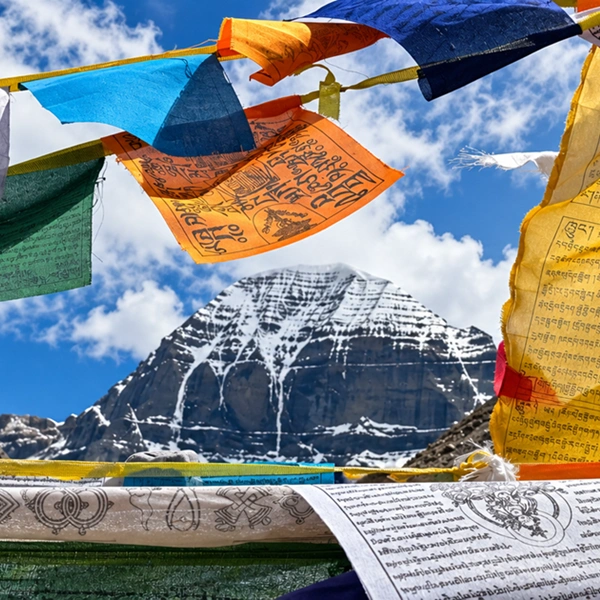
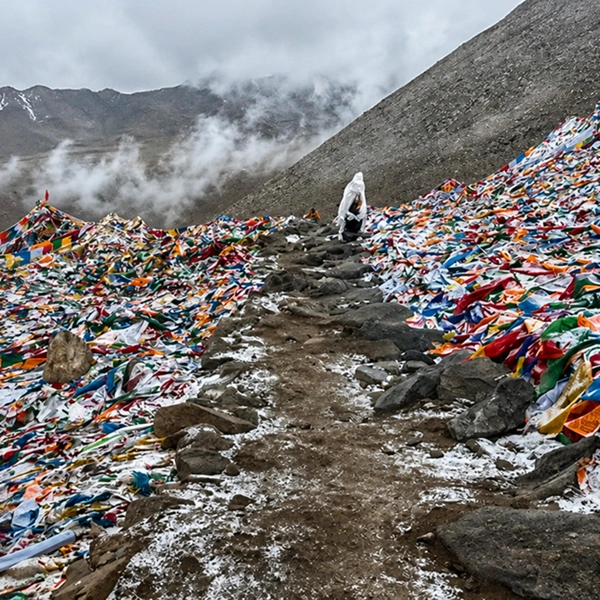
Thousands of prayer flags cover the saddle. The tall white ones are manidhar, raised for the dead, and there are always new ones.
Below the pass on the Paro side sits Kila Goenpa, generally held to be Bhutan's oldest nunnery — a line of small white dwellings tucked under a cliff band. The walk down to it from the pass takes around an hour and a half through fir forest and moss.
We can drop you at the pass, walk down with a guide, and pick you up on the road below. It turns the drive into an actual day rather than a series of viewpoints seen through glass.
What to do in Haa Valley
Haa rewards slow looking rather than a checklist. The valley's two founding temples sit within a few minutes of each other on the floor; the three sacred hills stand over them, and the villages between are working farm villages with buckwheat drying on the roofs in autumn.
Lhakhang Karpo and Lhakhang Nagpo
The White Temple and the Black Temple are the reason people come. Legend holds that the Tibetan king Songtsen Gampo released a white pigeon and a black pigeon to choose sacred ground in the seventh century, and the birds settled where the two temples now stand.
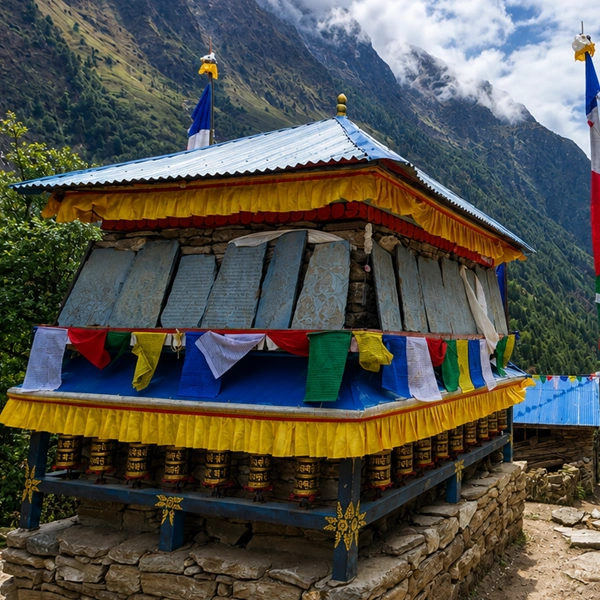
Lhakhang Karpo sits at the foot of the hills with a courtyard and a long mani wall. Lhakhang Nagpo, a short drive away, is smaller and darker, built around a lake said to be the home of a protective spirit.
Walk clockwise around both and around every chorten and mani wall on the valley floor.
Meri Puensum, the three hills
Three conical hills rise directly behind Haa town, and Bhutanese call them Meri Puensum — the three brother mountains. They stand for Jampelyang, Chana Dorji, and Chenrezig, the same triad you meet across the Himalayas.
Ask your guide to point them out from the road below the town rather than from the town itself. The alignment only reads properly from a distance.
The villages and the valley floor
Katsho and Yangthang lie a short drive from the town, and both are ordinary working villages rather than display pieces. Farmhouses here are built in the western Bhutanese style, with rammed-earth walls, timber upper floors, and painted window frames.
Wangchuklo Dzong, built in 1915, stands in the valley but sits inside a long-established Indian Army training area. It is not generally open, and this is the one part of Haa where cameras stay in the bag. Your guide will tell you where the line is.
Eating in Haa: hoentay, buckwheat and ara
Haa's food is buckwheat food, because the valley sits too high and is too cold for reliable rice. The dish to ask for is hoentay — buckwheat dumplings folded around turnip greens, spinach, cheese, and spring onion, then steamed.
They are a Haa specialty, eaten in quantity at Lomba, the local New Year fixed by the lunar calendar in winter.
You will also meet ara, the home-distilled grain spirit, sometimes served warm with a fried egg dropped in it. Try a small glass. It is stronger than it looks at 2,670 meters.
Haa town has very few places to sit down for a proper lunch. We carry the meal with us and set it up in the valley — beside the river in warm months, indoors in a farmhouse when it is cold.
Best time to visit Haa Valley, Bhutan
Spring and autumn are the two clear windows. From late March into May, the rhododendron on the Chele La approach comes into flower, and the pass is one of the better places in Bhutan to see it from a road.
Autumn, from late September into November, brings the cleanest air and the most reliable mountain views from the saddle.
Summer means the monsoon and clouds on the pass, but it also means the Haa Summer Festival and a green, running-water landscape. Winter is cold and quiet, with real snow on Chele La.
The pass closes intermittently after heavy snowfall, which is exactly when the southern Chhuzom road earns its keep.
If the mountain view from Chele La matters to you, come in autumn and go up early. If flowers matter more, come in spring.
Haa's festivals
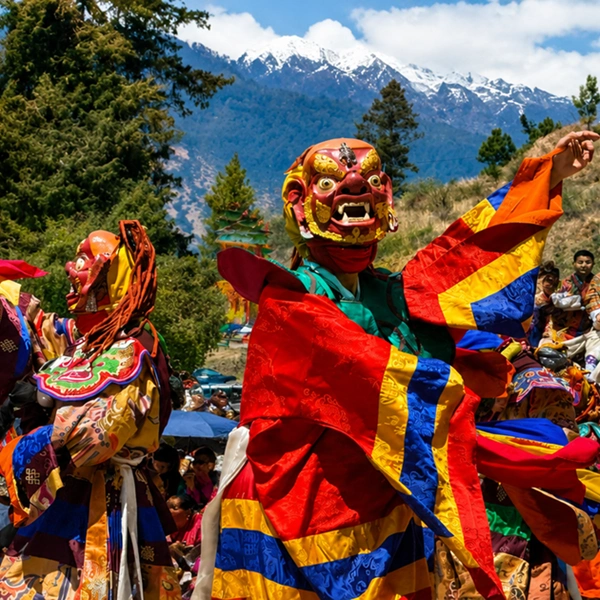
Haa runs two gatherings worth planning around, and neither is a standard monastic tshechu. The Haa Summer Festival takes place over two days at midsummer on the festival ground near the town, and it is built around nomadic and yak-herding culture — traditional sports, local food stalls, yak products, and songs from the highland communities rather than masked cham dance.
The other is the ritual to Ap Chundu, the valley's protector deity, held in autumn and fixed by the lunar calendar. It is a local observance rather than a tourist event, and attendance depends on the year's calendar and on local sensibilities.
The exact dates for both shifts change annually according to the Bhutanese calendar. We confirm them at booking.
Day trip or overnight?
Most travelers should treat Haa as a full day from Paro, and that is how we usually build it. The valley's accommodation is limited to small guesthouses and farmstays — comfortable, warm, and genuinely local, but not on par with the lodges we place guests in around Paro and Thimphu.
An overnight makes sense for two kinds of travelers. If you want the Haa Summer Festival without a pre-dawn drive, stay. If you are walking the two-day Sagala trek from Haa over to Drukgyel in Paro, or heading further into the Nub Tshonapata lakes, you are staying anyway.
For everyone else, the maths favors the day trip: drive up over the pass, spend the middle of the day in the valley, return south through Chhuzom, and sleep in Paro.
Permits, driving times and practical notes
Haa needs no separate permit beyond the standard Bhutan visa and Sustainable Development Fee that apply to every visitor, which we arrange as part of your booking. All travel to Bhutan runs through a licensed operator, and the paperwork is our job, not yours.
Paro International Airport is the only international airport in the country, so every Haa trip begins with an arrival in Paro. Allow a full day for the valley: roughly two and a half hours out over Chele La, three to four hours in Haa itself, and around three hours back via Chhuzom.
Carry a warm layer even in summer. The pass runs 1,300 meters higher than the valley floor, and the wind on the saddle is constant.
Frequently asked questions
How long does it take to drive from Paro to Haa Valley?
Around two and a half hours each way over Chele La, covering roughly 65 kilometers of climbing and descending road with photo stops at the pass. The southern route via Chhuzom takes a little over three hours. We normally drive one road out and the other back so the day covers two valleys rather than one road twice.
Is Haa Valley worth visiting on a short Bhutan itinerary?
Yes, if you have five days or more in the West and you want a day away from the main circuit. Haa gives you Bhutan's highest road pass, two seventh-century temple sites, and working farm villages in a single day. On a three-day trip to Bhutan, Paro and Thimphu should be the priority.
Do you need a separate permit to visit Haa Valley in Bhutan?
No separate permit is required for Haa town and the main valley. Your standard Bhutan visa and Sustainable Development Fee cover it, and we handle the paperwork before you arrive. The one restriction is the army training area around Wangchuklo Dzong, which is closed to visitors and to photography.
Can you drive to Haa Valley over Chele La in winter?
Usually yes, but not always. Chele La sits at about 3,988 meters and closes intermittently after heavy snowfall, sometimes for a day or two. The southern road through Chhuzom stays open year-round, so a winter Haa day is still possible — it simply becomes a there-and-back drive on the lower route.
What is hoentay, and where do you eat it in Haa?
Hoentay is a buckwheat dumpling filled with turnip greens, spinach, cheese, and spring onion, steamed and eaten as a Haa specialty. It is traditionally the food of Lomba, the local New Year. You will find it in Haa's small eateries and in farmhouse kitchens, and we arrange it in advance when guests want to eat it properly.
When is the Haa Summer Festival held?
Midsummer, over two days on the festival ground near Haa town. It celebrates nomadic and yak-herding culture rather than monastic mask dance, with highland songs, traditional sports, and local food. Exact dates shift each year with the Bhutanese calendar, and we confirm them at the time of booking.
Can you stay overnight in Haa Valley, or is it a day trip?
Both work, but most guests do it as a day trip from Paro. Haa's accommodation is limited to small guesthouses and farmstays rather than the lodges available in Paro and Thimphu. An overnight makes sense for the summer festival or if you are walking the Sagala route across to Drukgyel.
We build Haa into our western Bhutan journeys as a full day out of Paro, with the pass in the morning and the valley in the afternoon. If that is the kind of day you want, our Best of Bhutan tour is the best fit, and we can shape the rest of the route around it.