A luxury Bhutan itinerary succeeds or fails on two decisions: the order you travel the valleys and how many hours you give the roads between them. We plan private journeys across Paro, Thimphu, Punakha, Phobjikha and Bumthang every season, and this is the sequencing logic we use, including where the Taktsang climb belongs.
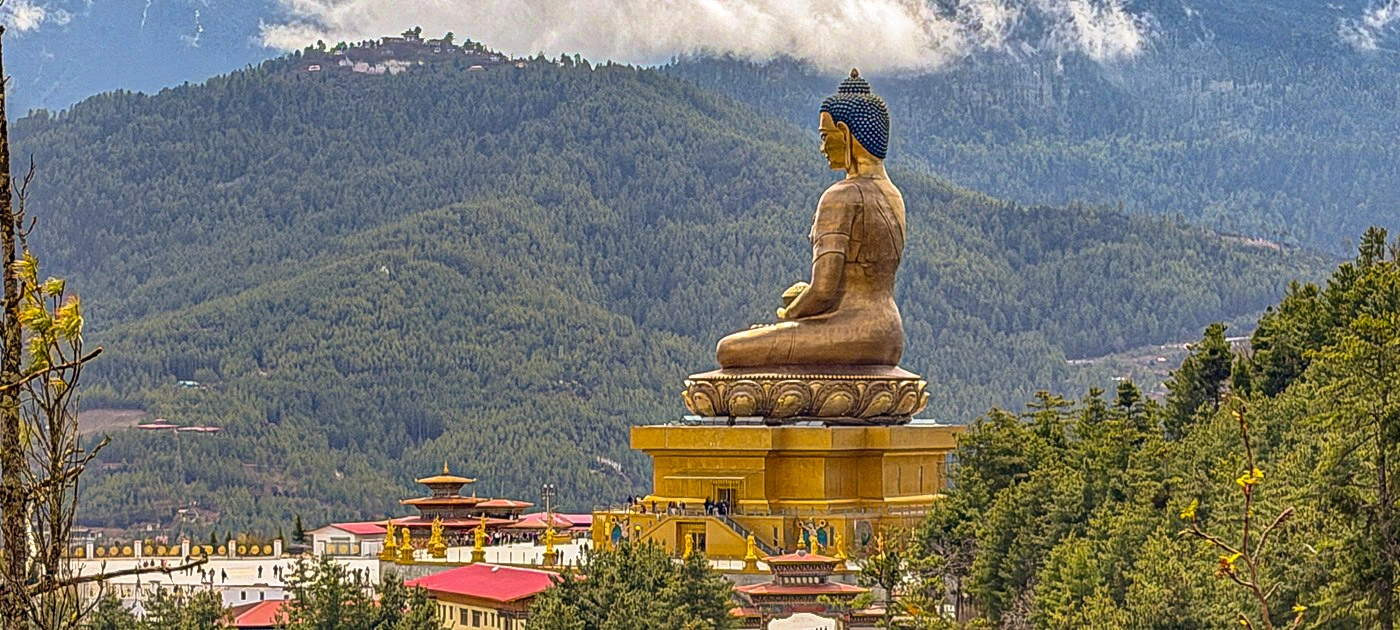
How to Build a Luxury Bhutan Itinerary That Actually Works
A luxury Bhutan itinerary lives or dies on two things that never appear in a brochure: the order you travel the valleys, and how many hours you hand over to the road between them. Get that right, and the trip breathes. Get it wrong, and you have paid a great deal of money to sit in a car looking at a pass you crossed in cloud.
We run private journeys through Bhutan across both main seasons, and the same four questions arrive in almost every planning call. How many days. Which valleys. When to walk up to Tiger's Nest. Whether the helicopter is worth what it costs.
Here is how we answer them, and why.
How Many Days a Luxury Bhutan Itinerary Really Needs
Five nights is the working minimum for a luxury Bhutan itinerary, and eight to eleven is where the country stops being a highlights reel. Below five nights you are looking at Paro and Thimphu, plus one crossing to Punakha if the flight lands on time.
That short shape has a real audience. Travelers adding Bhutan to a longer Asia trip get the dzongs, the Taktsang climb and one hot stone bath, and they leave satisfied.
The difference between six nights and nine is not more sightseeing. It is the ability to sit still. On a nine-night plan we can give Punakha two full days instead of one, which is when the valley stops being a photo stop and turns into farmhouse lunches, a river morning, and a chorten walk through rice terraces with nobody else on the path.
Eleven nights and up buys Bumthang. Bhutan's central valleys hold the country's oldest temples and its least commercial daily life, and they are far enough east that most itineraries quietly skip them.
The Valley Order That Makes a Bhutan Trip Work
Travel west to east and come back, rather than looping, because Bhutan's single east–west highway does not offer a genuine circuit. Every international flight lands at Paro, so the route opens and closes there, whatever else happens in between.
Our default sequence runs Paro to Thimphu, over Dochu La to Punakha, on to Phobjikha, and east to Bumthang if the days allow. The return retraces the same road, which sounds like a flaw and is not: Bhutan looks different in the other direction, and the second crossing of Dochu La is often the clear one.
There is an altitude logic buried in that order. Paro sits near 2,200 meters and Thimphu near 2,320. Punakha drops to roughly 1,200 meters, subtropical and warm, and that dip in the middle of a trip does more for how people feel than any amount of rest.
Phobjikha then climbs back to about 3,000 meters, and Bumthang settles near 2,600. Nobody is at altitude risk on this route. They are, however, noticeably less tired than travelers who spend a week bouncing between 2,300 and 3,100 without a low valley to recover in.
How Long the Drives Actually Take
Bhutan's road times are longer than the map suggests, and this is the single most common planning error we correct. Paro to Thimphu is quick, around 54 kilometers on the expressway and rarely more than 90 minutes.
After that the numbers change. Thimphu to Punakha crosses Dochu La at roughly 3,100 meters and takes about two and a half to three hours for 70-odd kilometers. Punakha to Phobjikha runs similarly. Phobjikha to Bumthang crosses two passes above 3,400 meters and takes six to seven hours, which is a full day gone.
We cap road legs at three and a half hours per traveling day and build the itinerary backward from that ceiling. When a day cannot be brought under it, we either add a night or we fly.
One habit worth stealing: cross Dochu La early. The 108 Druk Wangyal Chortens sit on the pass with the eastern Himalaya behind them, and the cloud usually arrives before late morning. Guests who cross at eight see Gangkhar Puensum. Guests who cross at noon see a car park.
Where Tiger's Nest Belongs in the Plan
Schedule the Taktsang climb in the last third of a luxury Bhutan itinerary, never on the first full day. Taktsang Palphug Monastery sits at roughly 3,120 meters, about 900 meters above the Paro valley floor, and the walk from the road-head car park gains around 520 meters over a steady forested switchback.
Most people take two to three hours up and rather less down, plus time inside. It is not technical. It is simply a long uphill hour after a long uphill hour, and it lands very differently on a body that has already been in the country a week.
Placing it late does something else useful. The monastery is the image everyone arrives holding in their head, and reaching it at the end gives the trip a shape rather than an anticlimax.
We walk it early in the day for light and cool air, break at the cafeteria viewpoint across the gorge, and carry the second half at whatever pace the group sets. Horses can carry riders as far as the cafeteria on the way up only. The descent is on foot for everyone, and knees, not lungs, are what people complain about afterward.
When a Helicopter Earns Its Place in Bhutan
A helicopter transfer is worth booking when it replaces a road day, not when it replaces a road hour. Bhutan's charter capacity is small and state-operated, flying out of Paro, and the honest constraint is that medical and rescue tasking outranks tourism.
That means we treat every heli leg as a preference with a road plan behind it. A Paro to Bumthang charter that saves a seven-hour drive over two passes is a genuinely different trip. A Thimphu to Punakha hop that saves ninety minutes is a photograph.
Weather is the other filter. Valley cloud can ground flights for a full morning even when the sky above Paro looks reasonable, and we would rather your itinerary absorb that than collapse around it.
There is a cheaper alternative most planners forget. Domestic fixed-wing flights connect Paro with Bathpalathang airstrip in Bumthang in around half an hour, on a limited weekly schedule that we confirm against your dates before anything is committed.
What the Sustainable Development Fee Buys
Bhutan's Sustainable Development Fee is a per-adult, per-night levy paid to the Department of Tourism, and it is settled before visa clearance is issued rather than on arrival. It applies to every night of the stay, not to the trip as a whole, which is why itinerary length changes the figure directly.
Children in the middle age band pay a reduced rate and the youngest travel exempt. The rate currently in force is a reduced one, running for a defined period announced by the Department of Tourism, so we confirm the exact figure applying to your dates rather than quoting a number that may have moved.
The fee funds free healthcare, free education and forest and conservation programs, and it is the mechanism that keeps visitor numbers low enough for a Punakha morning to feel private. You can read the current rate and the visa process in our Bhutan SDF and visa guide.
Two practical consequences. Longer trips carry a larger levy, and a spare recovery night is never free — which is exactly why we would rather spend those nights well than scatter them.
Choosing the Season
Spring and autumn are Bhutan's clear windows, and they give a luxury Bhutan itinerary very different characters. Spring, roughly March into May, brings rhododendron and magnolia through the forest belt and the valley floors turning green, with haze building as the season warms.
Autumn, late September through November, delivers the sharpest mountain air of the year. Skies clear, the rice comes in gold around Punakha, and the big festival calendar sits inside this window.
Winter is underrated, and we say so often. Days are bright and cold, the western valleys stay comfortably accessible, and the black-necked cranes are in Phobjikha from late October until around mid-February.
Monsoon, roughly late June through August, is genuinely wet and the eastern roads suffer. It is also when the valleys are greenest, prices soften, and you may have Taktsang almost to yourself. Our full season-by-season guide to visiting Bhutan goes through the trade-offs in detail.
Building an Itinerary Around a Tshechu
Every tshechu is anchored to the tenth day of a month in the Bhutanese lunar calendar, which is why its Gregorian date moves each year and why no itinerary should be printed with a fixed date attached. Paro's falls in spring, Thimphu's in autumn, and Punakha's pairs with the Drubchen re-enactment earlier in the year.
The dances are not performances. Cham is liturgy, performed by monks and trained laymen in masks that represent protectors and manifestations, and Bhutan's mask dance tradition from Drametse carries UNESCO intangible heritage recognition.
The moment worth planning around is the throngdrel. On the closing morning, a monumental appliqué thangka is unrolled down the dzong wall before dawn and rolled away again before direct sun touches it, which means arriving in the dark and being warm enough to stand still.
Festival weeks fill the good lodges months out, so we work backward from the lunar anchor and confirm exact dates at booking. If you are matching a trip to a specific festival, our guide to Bhutan's festival calendar sets out which tshechu falls in which lunar month.
Five Itinerary Shapes We Actually Build
These are the five structures that keep working, described by shape rather than by day list.
The five-night western introduction
Paro, Thimphu and one night in Punakha. Landing in the afternoon in Paro, the capital, and Dochu La in the middle, Taktsang on the closing morning. Tight, but it holds together because the driving stays short.
The eight-night western circuit with breathing room
The same valleys with two nights each in Punakha and Paro. This is our most-requested shape and the one we recommend by default: farmhouse lunch, the Mo Chhu rafting stretch, the Khamsum Yuelley Namgyal Chorten walk, and a hot stone bath that is not squeezed against a departure.
The nine-night festival journey
Built around a tshechu in Paro, Thimphu or Punakha, with the festival days pinned first and the rest of the route assembled around them. Requires the earliest booking of any shape we run.
The ten-night crane and valley route
Adds Phobjikha in the winter window for the black-necked cranes, with the glacial valley floor and the Gangtey Goenpa ridge walk. Cold, quiet, and the best photography of the year.
The twelve-night central valleys journey
The full west-to-east run through to Bumthang and its old temple cluster, with the return leg flown where the schedule allows. This is the version for repeat visitors and for anyone who wants Bhutan's oldest religious landscape rather than its most photographed one.
What We Change About the Standard Bhutan Circuit
The conventional circuit front-loads sightseeing and back-loads travel, and we invert it. Long road legs go early while enthusiasm is high, and the last three nights stay within the Paro valley so nobody is packing at dawn after the Taktsang descent.
We also refuse to promise access we cannot guarantee. Private blessings, senior monastic audiences and shrine-room openings do happen on our trips, and they happen because a relationship allowed it that week, not because a line in a brochure said so. Anything of that kind that appears in your plan is confirmed in writing before you travel, or it is not in the plan.
Accommodation follows the same rule. We book by style and by valley position rather than by brand loyalty — an eight-suite lodge on a Phobjikha ridge, a tented villa above the Mo Chhu, a hand-carved heritage house in Paro — and we confirm the exact property in your booking proposal.
One forward-looking note. The Gelephu Mindfulness City project in the south has published a masterplan that will eventually add a very different kind of stop to Bhutan itineraries, and we are watching its construction and aviation timeline. It is not yet a bookable destination, and we will not build a journey around it until it is.
Where Bhutan Sits in a Wider Himalayan Trip
Bhutan pairs unusually well with Nepal and awkwardly with almost everything else. The flight routing works, the cultures are genuinely different rather than repetitive, and the trekking-then-tour rhythm suits travelers who want one physical week and one gentle one.
The Paro approach is one of the more demanding commercial approaches in the world, flown by a small number of certified crews into a valley airstrip, and schedules move with weather more often than they do elsewhere.
We build a buffer the night before any onward international connection for exactly this reason.
If you are shaping a longer regional journey, our wider guide to luxury travel in the Himalayas covers how the Nepal, Bhutan and Tibet legs fit together.
Frequently Asked Questions
How many days does a luxury Bhutan itinerary need to reach beyond the western valleys?
Nine nights or more. Five to six nights covers Paro, Thimphu and a short Punakha stay, which is a complete trip in itself. Reaching Phobjikha comfortably takes nine, and Bumthang's central valleys need eleven or twelve unless a domestic flight replaces the eastward drive.
Why does a luxury Bhutan itinerary put Tiger's Nest near the end?
Because the Taktsang climb gains around 520 meters from the road-head to a monastery at roughly 3,120 meters, and a body that has been in Bhutan for a week handles it far better than one that landed yesterday. Ending there also gives the journey a natural high point rather than an early peak.
How long is the drive from Thimphu to Punakha over Dochu La?
About two and a half to three hours for roughly 70 kilometers, crossing Dochu La at around 3,100 meters. We schedule the crossing early in the morning, because the Himalayan view behind the 108 Druk Wangyal Chortens is usually gone by late morning cloud.
Is a helicopter transfer worth booking on a Bhutan trip?
It is worth it when it removes a whole road day, such as the six-to-seven-hour drive to Bumthang over two high passes. It is poor value on short hops. Charter capacity is small, medical tasking takes priority, and valley cloud grounds flights, so we always hold a road alternative.
Does the Sustainable Development Fee apply to every night of a Bhutan trip?
Yes. Bhutan's Sustainable Development Fee is charged per adult for each night of the stay and is paid to the Department of Tourism before visa clearance is issued. A reduced children's rate applies in the middle age band, and the youngest travel exempt. We confirm the current figure against your travel dates.
Can we fly instead of driving to Bumthang?
Yes, on a limited schedule. Domestic flights connect Paro with the Bathpalathang airstrip near Jakar in around thirty minutes, replacing a six-to-seven-hour mountain drive. Frequency is low and weather-dependent, so we check availability against your dates before the itinerary is fixed and keep a road plan in reserve.
Why do Bhutan tshechu dates change from year to year?
Because every tshechu is set by the Bhutanese lunar calendar and centers on the tenth day of its lunar month, so the Gregorian date shifts annually. Paro's festival falls in spring and Thimphu's in autumn. We plan around the lunar anchor and confirm exact dates at booking.
What is the best month for a Bhutan itinerary that includes Phobjikha?
Late October to mid-February, if the cranes matter to you. Black-necked cranes winter in the Phobjikha wetlands across that window, and the valley is at its clearest and quietest. Autumn brings sharper mountain views; deep winter brings cold nights, empty trails and the best light.
Planning Yours
Bhutan rewards a plan that respects its geography rather than fighting it. Fewer valleys, longer stays, early passes, and the climb saved for when you are ready for it.
That is how we build every private journey there, and it is what "held, not handled" means in practice on this particular map. If you would like to see one of these shapes fully drawn, our private Bhutan journey is a good place to start, and we will adjust it around your dates from there.
Need Help? Call Us+977 9851013196orChat with us on WhatsApp
Need Help? Call Us+977 9851013196