Luxury hotels in Paro range from the minimalist Amankora and the dramatic Six Senses to the Bhutanese-owned Zhiwa Ling Heritage and dedicated wellness sanctuaries. This guide covers where to stay across the Tiger's Nest valley, what each property does best, and how Bhutan's fees and seasons shape the trip.
Luxury Hotels in Paro Valley, Bhutan

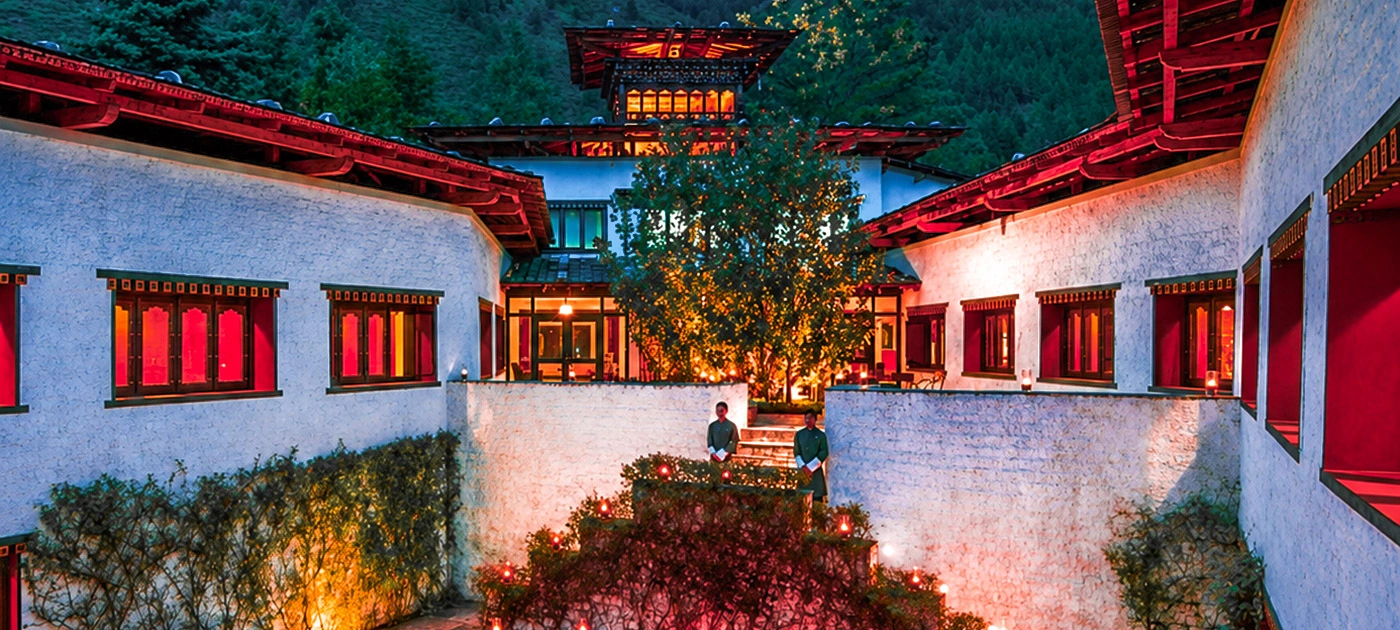
Luxury hotels in Paro have turned Bhutan's gateway valley into one of the finest places to stay in the Himalayas. Paro sits at around 2,250 meters, is home to the country's only international airport, and is crowned by the Taktsang, or Tiger's Nest, monastery clinging to its cliff.
Almost every Bhutan trip begins and ends here, which is why the valley now carries the deepest concentration of world-class properties in the country. We build private Bhutan journeys every season, so here is an honest look at where to stay in Paro and how to choose between them.
What luxury means in Paro
In Bhutan, luxury is shaped by the country's own rules as much as by the hotels. The kingdom runs a deliberate high-value, low-volume tourism model, and a daily Sustainable Development Fee applies to every visitor, funding healthcare, Education, and conservation. A discounted rate has been in effect, but the figure and its expiry shift with policy, so we confirm the current amount when you book.
That system keeps Paro quiet even at the top of the market. You won't find crowds or package tourism here, only a small set of properties competing on architecture, food, and wellness.
Almost all of them orient toward one thing: the Tiger's Nest. The best rooms in the valley frame Taktsang across the pines, and the walk up to it is the emotional center of most stays.
Amankora Paro: the minimalist pioneer
Amankora Paro is the property that started Bhutan's luxury story, and it remains the pick for travelers who want quiet, space, and restraint. Aman was the first international brand allowed into the country, and its Paro lodge is the largest of a five-lodge circuit that lets guests move between valleys within a single service system.
The building sits in a blue-pine forest near the ruins of the 17th-century Drukgyel Dzong, designed by the late architect Kerry Hill. Rather than copy Bhutanese ornament, Hill abstracted it: massive rammed-earth walls outside, a calm, pared-back shell within. There are 24 suites, each from around 52 square meters, warmed by a traditional bukhari wood stove that scents the room with cedar smoke.
Inside, the mood is tactile and spare, with timber paneling, a terrazzo soaking tub, deep window seats, and yak-hair and wool textiles. The spa centers on the Dotsho, a traditional hot-stone bath in which river water is heated by fire-roasted stones and infused with Artemisia and mountain herbs. Dining leans on wild mushrooms, red rice, and yak cheese in a circular pavilion with twin stoves. For understated privacy and frictionless logistics between valleys, nothing else in Bhutan matches it.
Six Senses Paro: the stone ruins
Six Senses Paro is the most architecturally daring hotel in the country and the choice for travelers who want drama and advanced wellness. It's built into and around the remains of a 12th-century stone farmhouse, set high above the valley floor for wide views across Paro.
The design fuses ancient stonework with open-plan rooms, natural materials, and huge sheets of glass. Accommodation ranges from lodge suites to multi-bedroom villas that suit families or private groups, with the largest villa spanning several hundred square meters. Sleep is taken seriously, with organic mattresses, linens, and pillows, and rooms include a wine fridge, an espresso machine, and yoga mats.
The food is theatrical. Guests can pick vegetables from the garden for a private cooking class, but the standout is the Ruins Regale, a dinner served by candlelight inside the restored courtyard of the old ruins, cooked over an open fire with live music. The spa is semi-underground, with a meditation cave, indoor pool, and an outdoor sauna paired with a cold plunge overlooking the mountains, which is a genuine rarity in Bhutan. Treatments often open with singing-bowl meditation, and the hotel adds astrology readings and morning sessions with resident lamas.
Bhutan Spirit Sanctuary: medicine as the whole stay
Bhutan Spirit Sanctuary is for travelers who want a genuine wellness intervention, not a spa menu. It sits high in the quiet Neyphu Valley, about 20 minutes from central Paro, and runs as the country's first fully wellness-inclusive five-star property.
The whole stay is built on Sowa Rigpa, the Bhutanese-Tibetan medical system that goes back more than a thousand years. On arrival, every guest sees the in-house traditional doctor, who reads the pulse at three positions on each wrist, observes, and talks through their lifestyle to assess their constitution and imbalances. From that, a personal daily treatment plan is set.
Because the model is all-inclusive, there are no add-on fees for therapies. The rate covers multi-course meals and daily treatments drawn from a store of more than sixty native Bhutanese herbs, including Ku Nye herbal oil massage, moxibustion, and herbal hot stone baths.
The 24-room building follows dzong principles, with high outer walls opening onto a still inner courtyard, and there's a heated indoor infinity pool behind glass over the rice fields. Five-night all-inclusive stays run from US$5,100 to US$7,000 for two. For deep rest and recovery, it's the most complete wellness stay in the valley.
COMO Uma Paro: boutique balance and food
COMO Uma Paro is the best blend of intimate scale, active exploration, and food in the valley. It sits on a 37-acre pine estate about ten minutes from the airport, with just 29 rooms and villas, which keeps it personal.
The style pairs Bhutanese craft with clean contemporary lines. Rooms feature hand-painted murals by local artists and cotton bedding stitched with Buddhist patterns, and the property scales up to a two-bedroom villa of around 300 square meters that once hosted a well-known celebrity wedding. Rates span roughly US$561 for a forest-view room to over US$3,000 for the largest villa in peak season.
The kitchen is a real draw. Its main restaurant, Bukhari, is named for the traditional wood stove at the center of its round pavilion, and the menu runs two ways: authentic Bhutanese dishes like phaksha paa and ema datshi built on garden and valley produce, alongside the lighter COMO Shambhala cuisine of raw and enzyme-rich plates. Wellness sits under the COMO Shambhala retreat, with a valley-view yoga studio, hydro pool, and two Bhutanese hot-stone bathhouses, which are exactly what you want after the Tiger's Nest climb or the Chele La bike descent.
Zhiwa Ling Heritage: the Bhutanese-owned masterpiece
Zhiwa Ling Heritage is the choice for indigenous craft and local ownership, and it holds a place no other property can claim. It's the first and only five-star hotel in Bhutan that is fully Bhutanese-owned and operated, set on 12 acres of alpine gardens with 45 suites.
Building it took over five years and more than sixty local artisans, and the main frame was raised in the traditional way, without a single nail. The interiors are extraordinary, with masterful stonework, hand-painted Buddhist murals, and carved wooden cornices in blue, red, saffron, green, and gold. Modern comfort is folded in quietly, including Swedish underfloor heating beneath Himalayan sandstone, which matters in the hard mountain winter.
Its heart is an in-house Buddhist temple built with reclaimed timbers over 450 years old, salvaged from the historic Gangtey Monastery, and used for meditation and monk-led blessings rather than display. The grandest room is a two-bedroom suite named for Bhutan's Raven Crown, with its own shrine room and hundred-year-old hand-hewn timbers. Two restaurants and a spa with an outdoor hot-stone bath round it out. For travelers who want Bhutan built by Bhutanese hands, this is the definitive stay.
Taj Paro and Le Méridien: the newer international arrivals
For standalone five-star comfort without the circuit commitment, two international names have recently arrived in Paro. Both offer easier entry points than the Aman or Six Senses systems.
Taj Paro Resort & Spa opened in late 2025 on a wooded estate by a stream, with 45 rooms and suites and rates from around US$1,135 a night. It uses local stone and reclaimed wood but brings the warmth of Indian hospitality, and many rooms, including the largest suite, look straight across at the Tiger's Nest. Wellness runs under Taj's J Wellness Circle, with a heated indoor pool and traditional hot-stone baths.
Le Méridien Paro sits right on the bank of the Paro River, a little apart from the town. It has 59 rooms that mix international standards with Buddhist art and hardwood, many with river views, and the property offers the largest event space in the valley, making it the practical choice for a luxury wedding or a group that smaller boutique hotels can't accommodate.
Glamping and boutique retreats
Paro also offers luxury under canvas for travelers who want nature close without sacrificing comfort. Two tented camps lead this style.
Tiger's Nest Camp offers 15 canvas suites on raised wooden platforms in the rural Nechu Phu area, about 20 minutes from the airport. The tents are heavily insulated and heated for year-round use, with king beds, en-suite bathrooms, and private patios framing the valley and the distant monastery. Tenzinling Luxury Villa Tents offers a near-identical concept, with 14 canvas suites arranged in an in-villa layout. Both pair wilderness romance with real comfort, adding guided walks, biking, and evening bonfires with cultural performances.
For strong value, a step below the top tier, Amba Paro is a four-star boutique hotel in the quiet Satsam area, with 36 rooms in dzong-style buildings. Each room measures about 42 square meters, with underfloor-heated bathrooms and a large private balcony, categorized by view as either Valley View or the higher Tiger's Nest View category. Rates sit around US$300 to US$450, which buys more room and warmth than the price suggests.
What you'll pay
Paro spans a very wide range, and every figure here shifts with season and demand, so treat them as indicative and confirm before booking. At the top, the wellness sanctuaries and circuit lodges reach into thousands of dollars per night or per package. The newer international hotels and strong boutiques sit lower, from around US$300 into the low thousands.
On top of the room rate, Bhutan adds its daily Sustainable Development Fee per person, a one-time visa fee, and a tourism tax may apply to services. We fold all of this into a single quoted price when you book, so there's no guesswork on the ground.
Getting there and when to go
You reach Paro by air, into the country's only international airport, and the approach is one of the most dramatic in the world. For the top of the market, private helicopter charters also offer scenic flights and transfers, though mountain weather means they fly early in the morning and require advance permits, which we arrange.
The best seasons are spring, roughly March to May, when rhododendrons bloom, and the air is stable, and autumn, roughly September to November, for clear skies and mountain views. These are also the windows for helicopter flights and the clearest views of the Tiger's Nest climb.
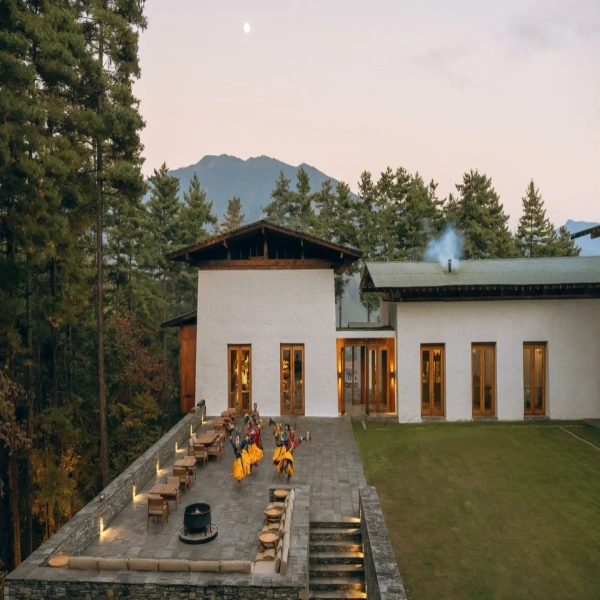
Spring also brings the Paro Tshechu, one of Bhutan's great masked-dance festivals, held over several days in the courtyards of the Rinpung Dzong. On our spring departures, we time the Tiger's Nest climb for first light, before the clouds lift off Taktsang and the trail fills. Exact festival dates follow the lunar calendar and are confirmed at the time of booking, and the best rooms sell out well ahead of that week.
How we build your Paro stay
We don't own hotels in Bhutan; we choose and secure them for you, which lets us place you in the property that fits your trip rather than one house we happen to run. For most travelers, Paro is both the first and last stop, so we pick the arrival hotel for a soft landing and save a standout for the end.
Once we know your dates, pace, and whether wellness, heritage, or design matters most, we build the entire journey, including permits, the Sustainable Development Fee, flights or helicopter transfers, guiding, and the right hotel at each stage. Tell us what you want the days to feel like, and we'll shape Bhutan around it.
FAQs
Which is the best luxury hotel in Paro?
It depends on what you want. Amankora is the choice for minimalist privacy, Six Senses for dramatic design and wellness, Zhiwa Ling Heritage for Bhutanese-owned craft, and Bhutan Spirit Sanctuary for a full medical-wellness stay. COMO Uma Paro is the finest all-rounder for food and boutique scale. We match the property to your trip.
Is Amankora or Six Senses better in Paro?
Both are outstanding and quite different. Amankora is quiet, spare, and minimalist, part of a five-lodge circuit ideal for touring several valleys under one service system. Six Senses is bolder, built into ancient stone ruins with theatrical dining and advanced wellness, including a cold plunge. Choose Amankora for calm restraint, Six Senses for drama and design.
Which Paro hotel is best for wellness?
Bhutan Spirit Sanctuary is the most complete and all-inclusive property built entirely around Sowa Rigpa medicine, with a doctor's consultation and daily prescribed treatments. Six Senses and COMO Uma Paro also offer serious spa programs, from cold plunges to COMO Shambhala therapies. For a structured healing stay rather than occasional treatments, the Sanctuary leads the way.
Do you need to pay Bhutan's Sustainable Development Fee to stay in Paro?
Yes. Every visitor pays Bhutan's daily Sustainable Development Fee, which funds healthcare, Education, and conservation, as well as a one-time visa fee. The amounts change with policy, so we confirm the current figures and fold them into your quoted price. It applies wherever you stay in Bhutan, including all hotels in Paro.
Which luxury hotels in Paro have views of the Tiger's Nest?
Several are positioned for it. Taj Paro looks straight across at the Tiger's Nest from many rooms, Amba Paro offers a dedicated Tiger's Nest View category, and the tented camps frame the distant monastery from their patios. We can request a Taktsang-facing room, if available at the time of booking.
When is the best time to stay in Paro Valley?
Spring, roughly March to May, and autumn, roughly September to November, are best, with stable weather, clear mountain views, and the finest conditions for the Tiger's Nest climb. Spring also brings the Paro Tshechu festival, when rooms book out early. Winter is cold but quiet and clear, and the monsoon summer is greener but wetter.
Need Help? Call Us+977 9851013196orChat with us on WhatsApp
Need Help? Call Us+977 9851013196