Zorig Chusum, the thirteen arts of Bhutan, is the kingdom's official register of traditional crafts, codified in the seventeenth century and still taught to full-time students today.
The name translates directly: zo means to make, rig means craft or science, and chusum means thirteen.
Together, they cover painting, sculpture, casting, carpentry, masonry, carving, woodturning, gold and silverwork, blacksmithing, bamboo weaving, papermaking, tailoring, and textile weaving.
That list is not a museum inventory. Every dzong you photograph, every gho and kira you see on the street, and every wooden bowl on a farmhouse shelf came from one of these thirteen disciplines. Understanding them changes how you see the whole country.
This guide walks through all thirteen arts, then gets practical: the classrooms, weaving sheds, and paper workshops where you can stand beside working artisans rather than behind museum glass.
What Zorig Chusum, the Thirteen Arts, Actually Means
Zorig Chusum is a formal classification of Bhutan's crafts, drawn up under Gyalse Tenzin Rabgye, the fourth civil ruler of unified Bhutan, in the late seventeenth century.
He gathered the skills the young state depended on, from building fortresses to casting temple statues, and gave them official standing.
The roots run older. The treasure-revealer Pema Lingpa, a blacksmith's descendant from Bumthang, was famous two centuries earlier for chain-forging, sculpture, and painting.
The codification simply organized what valleys across the kingdom already did well.
The classification survives because it was never decorative. Dzongs need carpenters and masons every restoration season. Monasteries commission statues and thangkas continuously.
National dress keeps thousands of looms working. In Bhutan, the thirteen arts are infrastructure, not heritage theatre.
The Thirteen Arts, One by One
Each of the thirteen arts of Bhutan has its own Dzongkha name, its own tools, and usually its own home region. Here is the full register.
Arts of the brush, chisel, and kiln
Lhazo (painting) covers thangka scroll paintings, temple murals, and the painted furniture and house facades you see everywhere. Painters grind their own mineral pigments and follow strict iconographic grids for sacred figures.
Jimzo (clay sculpture) produces the statues inside nearly every lhakhang, built up over armatures and finished with gold paint. Lugzo (bronze casting) produces metal counterparts, along with bells, cymbals, and ritual vessels, using the lost-wax method.
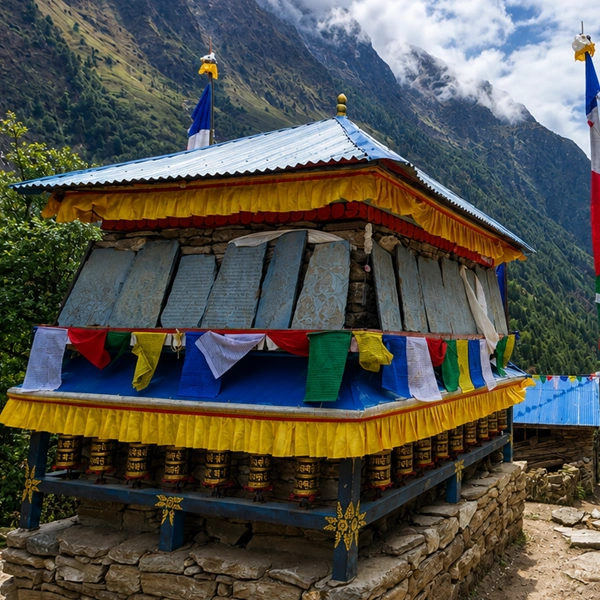
Parzo (carving) works in wood, slate, and stone: prayer-flag printing blocks, mask blanks, and the carved slate reliefs set into chortens. Shagzo (wood turning) is the lathe craft behind dapa serving bowls and lacquered cups, turned from burls and knots that resist splitting.
Arts of structure and metal
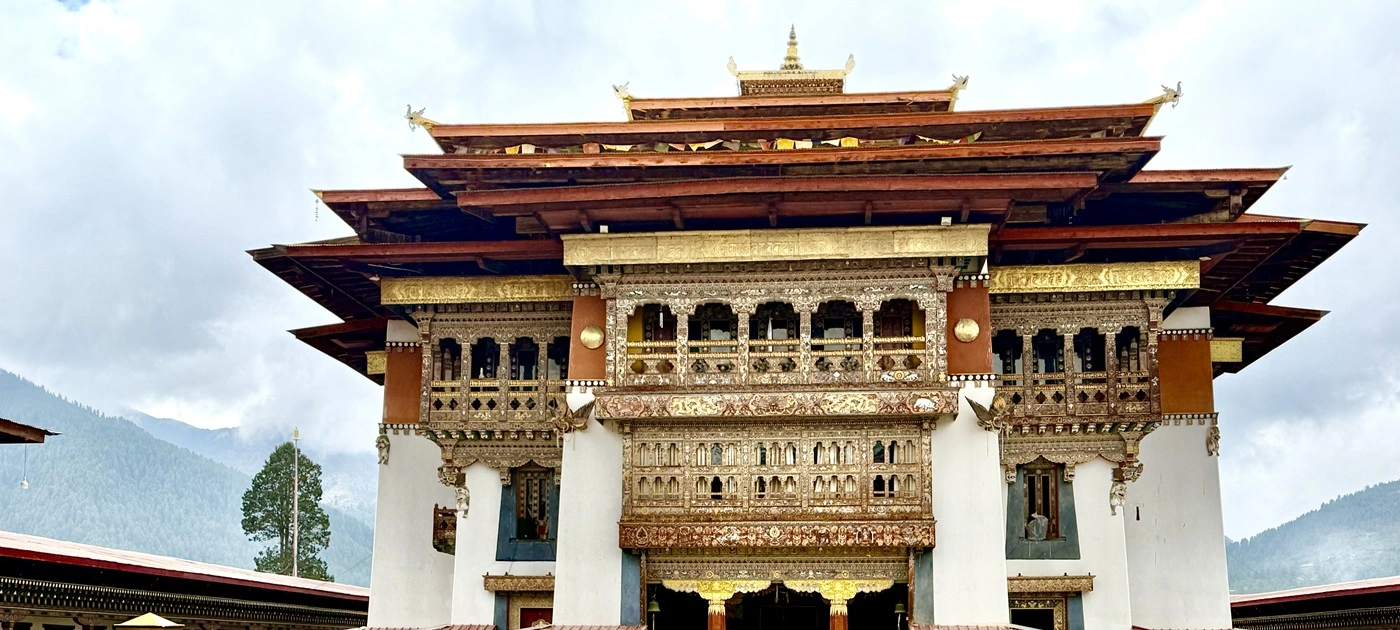
Shingzo (carpentry) raised the dzongs, and traditional practice joins the massive timber frames using interlocking joints alone, without nails. Dozo (masonry) built the rammed-earth and stone walls that those frames sit inside. Watch any dzong restoration, and both crafts are still on the scaffolding.
Garzo (blacksmithing) forges swords, axes, and farm tools. Trözo (gold and silversmithing) makes the ornaments worn with formal dress: brooches, betel boxes, and the silver komas that pin a kira at the shoulders.
Arts of fiber, bark, and thread
Thagzo (weaving) is the largest of the thirteen by the number of hands involved. Backstrap and frame looms across the country produce the cloth for kira and gho, and the most intricate patterns can take a single weaver months to complete.
Tshemzo (tailoring and embroidery) turns that cloth into garments, appliqué work, and the giant thongdrel banners raised at festivals. It also includes tshoglham, the embroidered knee-high boots worn by officials.
Tsharzo (bamboo and cane weaving) makes bangchung lidded baskets, floor mats, and bows. Dezo (papermaking) boils daphne bark into desho, the cream-toned paper traditionally used for scriptures and now sold as lampshades, notebooks, and gift wrap.
Where to Watch Masters Work in Thimphu
Thimphu is the easiest place in Bhutan to see the thirteen arts being taught, because the government's flagship crafts school sits right in the capital.
The National Institute for Zorig Chusum, known locally as the painting school, offers full-time courses lasting four to six years, and visitors can tour the classrooms on teaching days.
The rooms are arranged by discipline. In one, first-year painting students repeat the same measured Buddha head for months.
Next door, sculpture students press clay onto wire frames while embroidery students stretch silk across hoops. Nobody performs for you; the work simply continues, which is exactly what makes the visit worthwhile.
A short drive away, the Jungshi handmade paper workshop shows the full dezo process, from soaking daphne bark to lifting wet sheets on bamboo screens.
You can try pulling a sheet yourself. The Royal Textile Academy anchors the Thagzo story with weaving demonstrations and a collection of historic kira, and the Folk Heritage Museum and Simply Bhutan village both stage crafts in a traditional household setting.
Leave time for the craft stalls along Norzin Lam afterward. Seeing the disciplines first teaches you what skilled work looks like, and that changes what you buy.
Beyond the Capital: The East and the Valleys
The deepest craft traditions live far from Thimphu, in the eastern districts where several of the thirteen arts began.
Trashi Yangtse hosts the country's second crafts college and is the heartland of shagzo wood turning; its dapa bowls, cut from burled maple and finished in black and red lacquer, are the benchmark.
Khoma village in Lhuentse is home to kishuthara, the intricately patterned silk kira regarded as the pinnacle of Bhutanese weaving.
A single fine kishuthara can take a weaver most of a year, and in Khoma you can sit beside the backstrap looms as the pattern rows build. Radhi, near Trashigang, weaves raw bura silk, and the lower Kheng villages of Zhemgang supply much of the country's bamboo work.
Closer to the western circuit, Paro's thangka painters take commissions in small studios, and monastery restoration sites regularly put lhazo, shingzo, and parzo on open display.
If eastern Bhutan is on your route, these villages are worth the drive on their own. We build them into longer private itineraries such as our Eastern Bhutan journey.
Where the Thirteen Arts Hide in Plain Sight
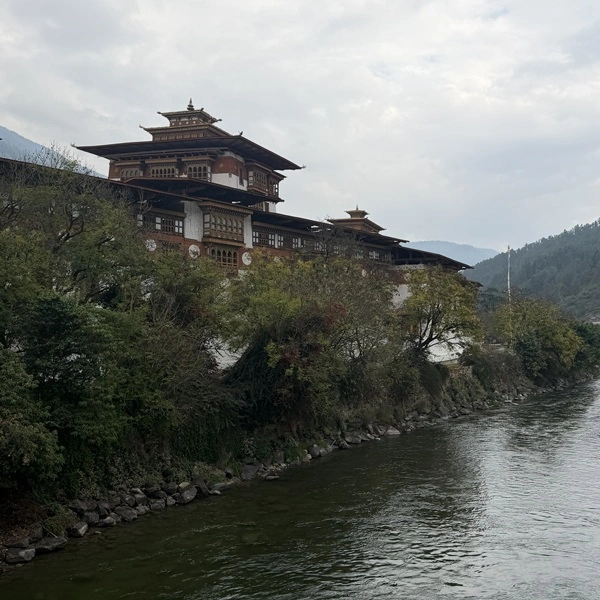
You do not need a workshop visit to encounter Zorig Chusum, because the thirteen arts surround you from the moment you land. Paro's Rinpung Dzong is a shingzo and dozo textbook with lhazo murals inside. The airport terminal itself carries carved and painted timberwork.
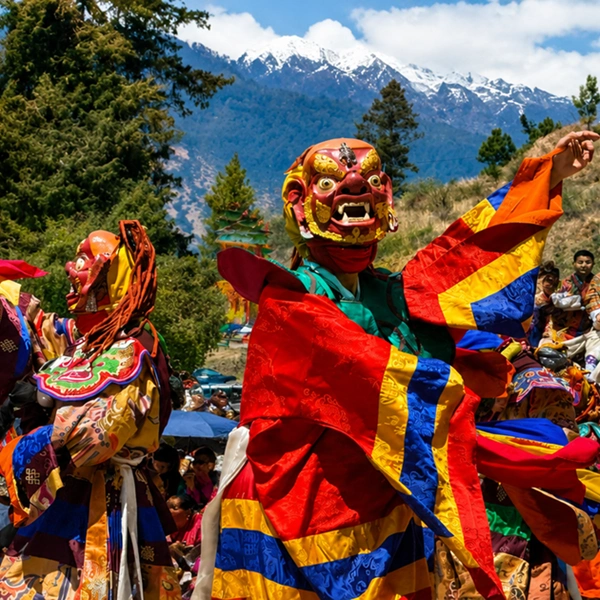
Festivals concentrate the arts further. The masks worn in cham dances come from parzo carvers, the costumes from tshemzo tailors, and the enormous thongdrel unrolled at dawn on the final morning is appliqué on a scale few textile traditions anywhere attempt. Our guide to Bhutan's festival calendar explains how those mornings unfold.
Even daily dress is a living gallery. Every gho and kira is thagzo; every silver koma pinning one is trözo. Once you can name the crafts, an ordinary Thimphu street reads like an exhibition, and our Thimphu guide maps the rest of the capital around it.
Buying Well: Telling Handmade from Imported
The honest test of a Bhutanese craft purchase is time: anything genuinely handmade carries the hours in it, and the hours show. Machine-made lookalikes, mostly imported, sit in the same shops, so a few checks help.
Hold the paper up to the light and look for visible bark fiber; uniform, bright-white sheets are usually mill paper.
On textiles, turn the piece over: hand-woven cloth shows the pattern nearly as clearly on the reverse, with small irregularities along the selvage, while powerloom fabric looks as if it were printed from behind.
A turned dapa bowl shows faint lathe rings and slight asymmetry; perfect circles suggest a factory.
Ask who made the piece and where. Weavers and turners are named with pride, and a shopkeeper who cannot answer has told you something.
Price follows the labor, so a months-long kishuthara costs what a months-long object should. We confirm current guidance on quality shops with our Thimphu partners each season rather than publishing a fixed list here.
How We Build the Thirteen Arts into a Private Journey
On our private cultural itineraries, we treat Zorig Chusum as a thread, not a stop. Our standing practice in Thimphu is to schedule the National Institute for mid-morning on a teaching day, when every classroom is working, and to walk it before the textile and paper visits so the disciplines land in order.
Because your trip is private, the thread can deepen anywhere. A painting commission conversation in Paro, an extra hour at the looms, a detour to a restoration site your guide knows is active that week: none of it needs a group's permission.
The thirteen arts are naturally situated along a full western circuit through Thimphu, Punakha, and Paro. If that is the shape of trip you are weighing, our Best of Bhutan private tour is where most guests start, and the wider set of options lives among our private cultural journeys.
To understand how Bhutan fits alongside Nepal and Tibet, start with our luxury Himalayan travel pillar.
FAQs: Zorig Chusum and the Thirteen Arts of Bhutan
What does Zorig Chusum mean in English?
Zorig Chusum translates to "the thirteen crafts": zo means "to make," rig means "craft" or "science," and chusum means "thirteen." It is the official register of Bhutan's traditional arts, covering painting, sculpture, casting, carpentry, masonry, carving, wood turning, precious-metal work, blacksmithing, bamboo weaving, papermaking, tailoring, and textile weaving.
Can visitors go inside the National Institute for Zorig Chusum in Thimphu?
Yes. The National Institute for Zorig Chusum welcomes visitors into its working classrooms on teaching days, and you can watch students painting, sculpting, embroidering, and carving at their benches. Your guide arranges timing so you arrive while classes are in session. Confirm current visiting arrangements when booking, as teaching calendars shift with national holidays.
When were the thirteen arts of Bhutan codified?
The thirteen arts were formally classified in the late seventeenth century under Gyalse Tenzin Rabgye, Bhutan's fourth civil ruler after unification. The crafts themselves are older; the fifteenth-century master Pema Lingpa was already renowned for forging, sculpture, and painting two hundred years before the register existed.
Which of the thirteen arts is Khoma village famous for?
Khoma, in the eastern district of Lhuentse, is the home of kishuthara, the most intricate form of thagzo weaving. Its patterned silk kira are woven on backstrap looms, and a single fine piece can occupy a weaver for the better part of a year. Visitors can sit beside working looms in the village weaving sheds.
What is a bangchung, and who makes it?
A bangchung is a round, double-lidded bamboo basket that closes on itself, traditionally used to carry food. It belongs to tsharzo, the bamboo and cane weaving art, and much of the finest work comes from the Kheng villages of Zhemgang in south-central Bhutan. Bangchung are light, durable, and among the most practical crafts you can bring home.
How long does training at Bhutan's Zorig Chusum institutes take?
Full-time courses at the crafts institutes in Thimphu and Trashi Yangtse run roughly four to six years, depending on the discipline. Painting students spend their early months repeating measured practice drawings before touching a thangka, and graduates go on to temple commissions, restoration work, and teaching posts.
Is Bhutanese desho paper still made by hand?
Yes. Desho paper is made from the bark of daphne shrubs, boiled, beaten, and lifted in sheets on bamboo screens, and the Jungshi workshop in Thimphu still produces it this way daily. Visitors can watch the full process and pull a sheet themselves. Genuine desho shows visible bark fiber when held to the light.
How can I tell handmade Bhutanese textiles from imported copies?
Turn the cloth over. Hand-woven Bhutanese textiles show the pattern almost as clearly on the reverse, with small irregularities along the edges, while machine-made copies look as if printed from the back. Ask the seller who wove the piece; genuine work is usually attributed by name. Price is the final signal, since months of loom time cannot sell cheaply.