Getting a Tibet travel permit for Kailash is not one process but two, running in sequence: legal entry into China, then a stack of regional clearances for restricted western Tibet. Which pathway you take depends on your passport and your border — and choosing the wrong combination is the most expensive mistake in yatra planning. Here is the strategy.
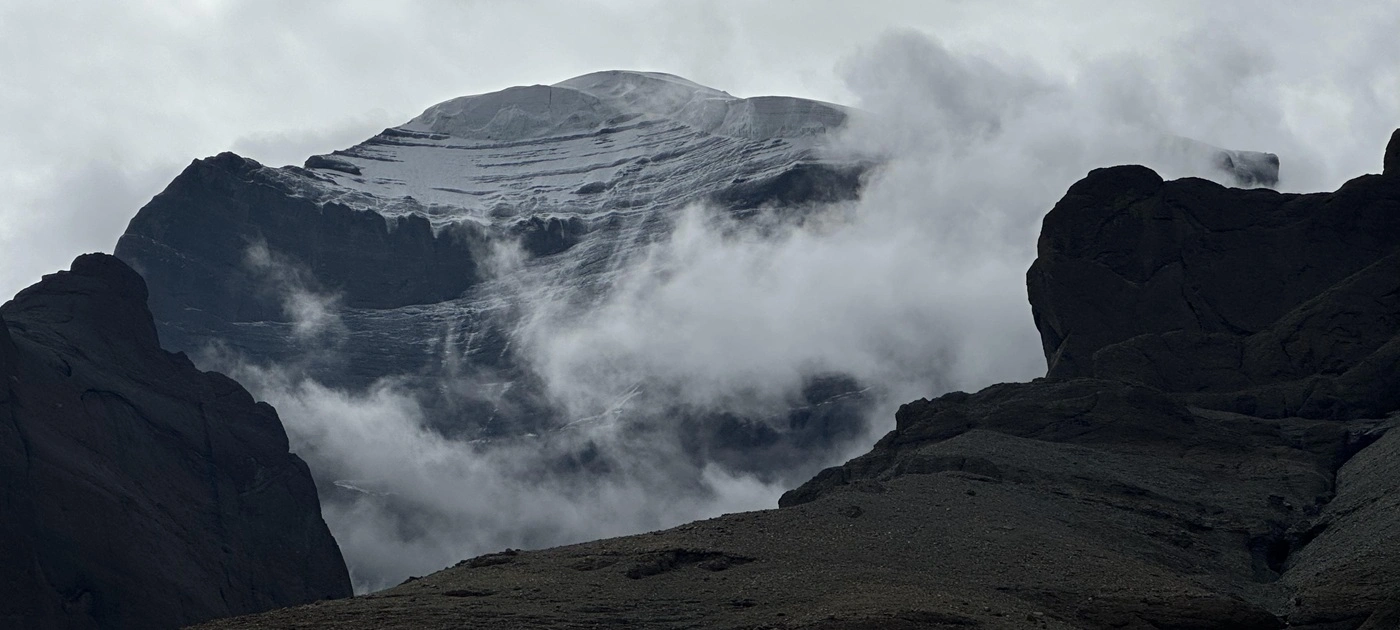
Tibet Travel Permit for Kailash: The Entry Strategy Your Passport Dictates

Securing a Tibet travel permit for Kailash is where more pilgrimages quietly fail than on any mountain pass. Mount Kailash sits in Ngari, a restricted border prefecture close to where China, India, and Nepal meet, and reaching it means satisfying two entirely separate bureaucracies in the right order. Clear one and fail the other, and you do not travel — no appeal, no expediting, no exception at the checkpoint.
What almost nobody explains is that this is a strategic decision, not just a paperwork exercise. Your passport and your chosen border together determine which pathway you must use, how long it takes, whether you can travel alone, and whether an existing Chinese visa in your passport survives the process. Get that pairing right at the planning stage, and everything downstream is routine.
Here is the whole framework: the two systems, the permit stack, the strategic choice between entering via Nepal or mainland China, and the timeline that protects all of it.
Two Systems, Not One
The first system is simply legal entry into the People's Republic of China — either a standard tourist visa, known as the Category L visa, or nothing at all if you hold a passport from a country China currently admits visa-free.
The second system is regional and independent, and it is the one that strands people. Tibet requires its own stack of clearances issued by Tibetan and military authorities, none of which your Chinese visa provides. A traveler holding a perfectly valid ten-year Chinese visa can still be refused boarding on a flight to Lhasa for want of a Tibet permit.
One rule underpins everything below: independent travel in Tibet is not permitted for foreign nationals. Every visitor must travel on an organized itinerary through a licensed agency, with a registered guide and vehicle, and every permit is applied for by that operator on your behalf. Your paperwork timeline is really your operator's timeline.
The Permit Stack Behind a Kailash Journey
Four separate authorizations sit behind a completed yatra, issued sequentially by different authorities, each depending on the one before it.
The Tibet Travel Permit is the foundation, issued by the Tibet Tourism Bureau in Lhasa. Without it, you cannot board a flight or train into Tibet at all. It requires a clear scan of your passport bio-page and your active Chinese visa, and typically takes around two weeks to process.
The Military Area Entry Permit is the bottleneck. Because Kailash and Lake Mansarovar sit near sensitive international borders, the regional military command must clear the entire Ngari prefecture, and this is the slowest document in the chain — budget several weeks, filed alongside the Tibet permit.
The Foreign Affairs Permit covers travel through sensitive frontier checkpoints and depends on the military clearance being approved first. Finally, the Alien's Travel Permit authorizes the restricted prefectures beyond Lhasa — Shigatse, Saga, and Ngari — and is the only one handled on the road: your guide takes your original passport to the local Public Security Bureau during the journey, a process of an hour or two.
The system's defining feature is fragility. These documents are sequential; they take weeks, and a clerical error or a passport with insufficient validity collapses the chain.
| Permit | Issued by | Covers | Rough timeline |
|---|---|---|---|
| Tibet Travel Permit | Tibet Tourism Bureau, Lhasa | Entry to Tibet; boarding flights and trains | About two weeks |
| Military Area Entry Permit | Regional military command | The whole Ngari prefecture, incl. Kailash and Mansarovar | Several weeks — the bottleneck |
| Foreign Affairs Permit | Foreign Affairs Office, Lhasa | Sensitive frontier checkpoints | Follows military approval |
| Alien's Travel Permit | Public Security Bureau, en route | Shigatse, Saga, and restricted prefectures | One to two hours, collected en route |
All four are arranged by your operator. Timelines overlap where they can, but the chain only moves as fast as its slowest link — which is why the whole process is measured in months, not weeks.
The Strategic Decision: Nepal or Mainland China
Here is the choice that shapes everything, and the reason most travellers never consider it: there are two completely different ways into Tibet, and they carry very different risks.
Entering from Nepal — flying Kathmandu to Lhasa, or crossing overland at Kyirong or by air to Hilsa — has traditionally required a Chinese group visa issued at the embassy in Kathmandu. That means arriving in Kathmandu several working days early, surrendering your original passport for biometric processing, and being part of a qualifying group. It is the classic route; it is well-trodden, and for many travelers it works perfectly.
Entering via mainland China — obtaining an individual Category L visa in your home country, flying into a gateway city such as Chengdu, Beijing, or Shanghai, then continuing to Lhasa by air or rail — avoids the Kathmandu process entirely. Your operator applies for the Tibet permits using a scan of the visa already in your passport, and the physical permit reaches you before you fly to Lhasa.
For travelers whose passports require a Chinese visa — American citizens among them — the mainland route is the more stable choice, and the reasons are worth understanding in detail.
Why the Group Visa Carries Structural Risk
The Kathmandu group visa is not a sticker in your passport. It is a single sheet of paper listing every member of the traveling party, and that format creates four distinct vulnerabilities.
The group requirement. The Kathmandu embassy issues group visas to parties meeting a minimum size, whose members hold passports from the same country. For travelers from nations with few Kailash departures, assembling enough compatriots willing to travel the identical itinerary on the identical dates is a genuine obstacle — and if the threshold is not met, the application fails, and the tour cancels.
The waiting window. Processing requires physical presence in Kathmandu for several working days, with your original passport surrendered to the visa centre for biometric capture. The office does not process every weekday, so a weekend arrival or public holiday quietly stretches the wait further.
The visa cancellation. This one catches out frequent China travelers every season. Issuing a Kathmandu group visa cancels any existing individual Chinese visa in your passport, including hard-won ten-year multi-entry visas. Business travellers lose years of validity for a single pilgrimage.
The collective liability. Because one sheet binds everyone, the party must enter, travel, and exit together on a fixed itinerary. If a member suffers a serious altitude emergency on the kora and needs evacuation across the border, the shared document is compromised, and splitting it requires slow emergency processing that can leave the rest of the group stranded at a checkpoint. On a route where evacuation is a real possibility, that is not a small risk.
An individual visa paired with a personal Tibet permit carries none of these exposures.
Why the System Is Sequential — and What That Means for Your Application
There is a structural quirk in this process that confuses many first-time applicants, and understanding it saves considerable frustration.
The Chinese visa and the Tibet permit are issued by different authorities in a fixed order. The Tibet Tourism Bureau cannot issue your Tibet permit until you already hold a valid Chinese visa, because your operator must submit a scan of it with the application. The visa comes first; Tibet authorization comes second, arranged by your operator afterward.
This is simply how the system is built, and it is why your visa application concerns your entry to China rather than your onward Tibet plans — those are authorized separately, through the permit process, once the visa exists. Chinese immigration procedure allows travellers to adjust domestic travel plans after a visa is issued, which is what makes the sequence workable.
The practical guidance is straightforward: follow your operator's direction on exactly what your application should contain, send them a color scan of the visa page the moment it is issued, and let them handle the Tibet stack from there. This is routine work for a licensed operator and the part of the process you should think least about.
Applying for an Individual Chinese Visa: What to Expect
The Category L tourist visa is applied for in your country of residence, through the Chinese embassy or consulate covering your area, or a designated visa application center. Requirements vary meaningfully by country, so treat the following as the shape of the process rather than a checklist.
Everywhere, you will complete China's online visa application form and submit your physical passport — it needs at least six months of remaining validity and blank visa pages. Most jurisdictions require an in-person appearance for biometric fingerprinting, though some arrangements exempt certain applicants.
Beyond that, the burden diverges: some consulates require confirmed flights and hotel bookings for your mainland stay, while others have relaxed those requirements; some request proof of residency or bank statements.
One detail rejects more applications than any other: the photograph. China enforces unusually strict specifications — a particular size, a pure white background, both ears visible, hair clear of the eyebrows, a neutral expression with the mouth closed, and no glasses.
Photos meeting standard passport requirements elsewhere are routinely refused. Have them taken to Chinese specifications, and confirm the current requirements at the time of application, because they are revised periodically.
Allow considerably more time than the stated processing period suggests, and start before you book anything non-refundable.
Indian Passports, NRIs, and OCI Holders
This is where families most often discover a problem late, so it deserves saying plainly: what governs your route is the passport you physically hold, not your heritage or your cards.
Indian passport holders travel under a distinct administrative system rather than the standard international tourist channel, with its own authorities, its own submission windows, and its own group-composition rules that generally keep Indian nationals traveling together.
Documentation is required substantially further in advance, and access operates within centrally administered limits, so late applications in a busy season can meet a closed door regardless of merit.
OCI and PIO cards are not travel documents for this purpose. They do not function as Chinese entry documents, and holders cannot use them to access the Indian government's own pilgrimage routes either.
An Overseas Citizen of India traveling on a US, British, Canadian, or Australian passport is processed as a regular international traveler on that country's pathway — with all its requirements and all its advantages.
The consequence for mixed families is significant. A party holding a combination of Indian and foreign passports may not be able to travel as a single administrative group, and this needs to be raised at first inquiry rather than after deposits are paid. We work around it regularly, but only when we know early.
Permits Are Not the Only Gate
A valid permit does not guarantee you reach the kora, because physical eligibility is assessed separately and enforced on the ground.
Age limits apply at both ends, and travelers in the older brackets should expect to supply cardiac and respiratory screening from home.
More importantly, that assessment is repeated en route—health checks at checkpoint clinics on the way west can revoke onward access on the spot, permit or no permit. Our senior citizens' guide covers the medical framework in full, and it is worth reading before booking rather than after.
When Something Goes Wrong
Three failure modes account for almost every entry problem we see, and each has a straightforward answer if you know about it early.
Permits delayed. Applications occasionally stall — a busy season, an administrative pause, a document queried. This is the strongest argument for the ninety-day rule and for holding refundable flights until your permits are confirmed.
Reputable operators will tell you the moment a submission is filed and again when it clears, and will not encourage you to book non-refundable travel before that second call.
Permits refused. Refusals happen, sometimes without a stated reason, and there is no appeal. What matters is what your operator's terms say about it: whether deposits are refundable in the event of a permit denial, and how far your money is exposed before clearance comes through.
Ask that question before you pay anything — it is the single most revealing question you can put to a Kailash operator.
Professional eligibility. This one blindsides people. Tibet permits have long been difficult or impossible to obtain through ordinary tourist channels for journalists, media professionals, diplomats, and government officials, who typically require separate approval.
If your occupation falls into any of these categories, raise it at your very first inquiry — not because the journey is closed to you, but because the pathway is different and needs arranging from the outset. Discovering it after booking is an expensive way to learn.
None of these is a reason for anxiety. They are reasons to start early, ask direct questions, and work with someone who volunteers the awkward information before you pay.
Timeline: The Rule That Protects Everything
Every constraint above resolves into one planning rule: your documents, not your diary, decide when you can travel.
Military clearance alone runs to several weeks; permits are issued in sequence, so each delay compounds the next; and the individual visa must be obtained before any of it begins. Peak season lengthens every queue. Our standing advice across all Kailash journeys is ninety days, and festival departures need longer still.
Within that window, the process is undramatic: you send us your passport details, we confirm which pathway your specific passport and chosen border require, we submit and track, and you travel. Outside it, you are gambling with something that has no appeal process.
Send us your passport details early and let us confirm your route before you book flights. It costs one message and removes the only genuinely dangerous unknown in planning a yatra — which is how we build every journey, on the standards we keep across all our luxury travel in the Himalayas.
FAQs — Kailash Entry, Visas, and Permits
How do you get a Tibet travel permit for Mount Kailash?
Only through a licensed operator — individual travelers cannot apply. Your operator submits a scan of your passport and valid Chinese visa to the Tibet Tourism Bureau in Lhasa, then files for the Military Area Entry Permit covering Ngari, the Foreign Affairs Permit for frontier checkpoints, and finally the Alien's Travel Permit, collected on the road. The chain is sequential and takes several weeks.
Do you need a Chinese visa for the Kailash Yatra?
It depends on your passport and your entry route. Travelers from countries currently in China's visa-waiver program may enter the mainland without one; others need a Category L tourist visa. Either way, the Chinese visa is only the first layer — the Tibet permits are separate, mandatory, and cannot be obtained without either a visa or verified visa-free status. Confirm your specific position before booking.
Should you enter Tibet via Nepal or mainland China for Kailash?
For travelers whose passports require a Chinese visa, the mainland route is generally more stable: obtain an individual visa at home, fly into a gateway city like Chengdu, and continue to Lhasa with permits arranged in advance. It avoids the Kathmandu group visa's group-size requirement, its multi-day waiting window, and its cancellation of existing visas. The Nepal route remains the classic path and works well for many travelers.
What are the risks of the Kathmandu group visa?
Four. It requires a qualifying group whose members share a nationality, so small or mixed parties can fail to qualify. It demands several working days in Kathmandu with your passport surrendered for biometrics. It cancels any existing Chinese visa in your passport. And because one paper sheet binds the whole party to a fixed itinerary, a single member's medical evacuation can compromise everyone's documentation.
Will a Kathmandu group visa cancel my ten-year Chinese visa?
Yes — this is the detail frequent China travelers most often learn too late. Issuing the group visa invalidates any existing individual Chinese visa in your passport, including long-validity multi-entry business and tourist visas. If preserving one matters to you, plan to enter Tibet via mainland China on your existing visa instead of processing a new group visa in Kathmandu.
How do you apply for an individual Chinese tourist visa?
Through the Chinese embassy, consulate, or visa application center covering your area of residence. You complete China's online application, submit your passport with at least six months' validity and blank pages, and in most jurisdictions attend in person for biometric fingerprinting. Requirements for flights, hotels, and financial proof vary by country. Photograph specifications are unusually strict and are the most common cause of rejection.
Why does the Chinese visa have to come before the Tibet permit?
Because the system is sequential by design: the Tibet Tourism Bureau requires a scan of your valid Chinese visa before it can issue a Tibet Travel Permit, so the visa must exist first. Your entry to China and your authorization for Tibet are handled by different authorities, in that order, with your licensed operator managing the Tibet stack once your visa is issued.
Are Tibet permits included in the tour price, and what if they're refused?
Permit arrangement is normally included in a licensed operator's package price, since travelers cannot apply independently — but what varies enormously is the refund position if a permit is refused, and refusals do happen without a stated reason or right of appeal. Ask any operator directly what happens to your deposit in that event, and hold refundable flights until your permits are confirmed rather than assuming approval.
Can children travel to Mount Kailash?
Generally no. Age limits apply at both ends of the range, and minors are typically excluded from these high-altitude permits — a restriction that reflects genuine physiological risk as much as administration, since the kora crosses 5,630 meters and remains above 4,500 meters for days. Families planning a multi-generational pilgrimage should confirm current age thresholds before making any arrangements.
Are OCI or PIO cards valid for the Kailash Yatra?
No. They are not Chinese entry documents and cannot be used to access the Indian government's pilgrimage routes either. Your pathway is governed by the passport you physically hold—an OCI holder traveling on a foreign passport is processed as a regular international traveler under that country's rules. Mixed-passport families should raise this at first inquiry, as it affects how the party can be arranged.
Need Help? Call Us+977 9851013196orChat with us on WhatsApp

Need Help? Call Us+977 9851013196