Nepal holds four UNESCO World Heritage inscriptions covering ten remarkable places—the seven monument zones of the Kathmandu Valley, the Buddha's birthplace at Lumbini, the jungle wildlife of Chitwan National Park, and Sagarmatha National Park, home to Everest. Together they span medieval Newar cities, living temples, subtropical safari, and the highest mountains on earth. Here's how to experience each one.
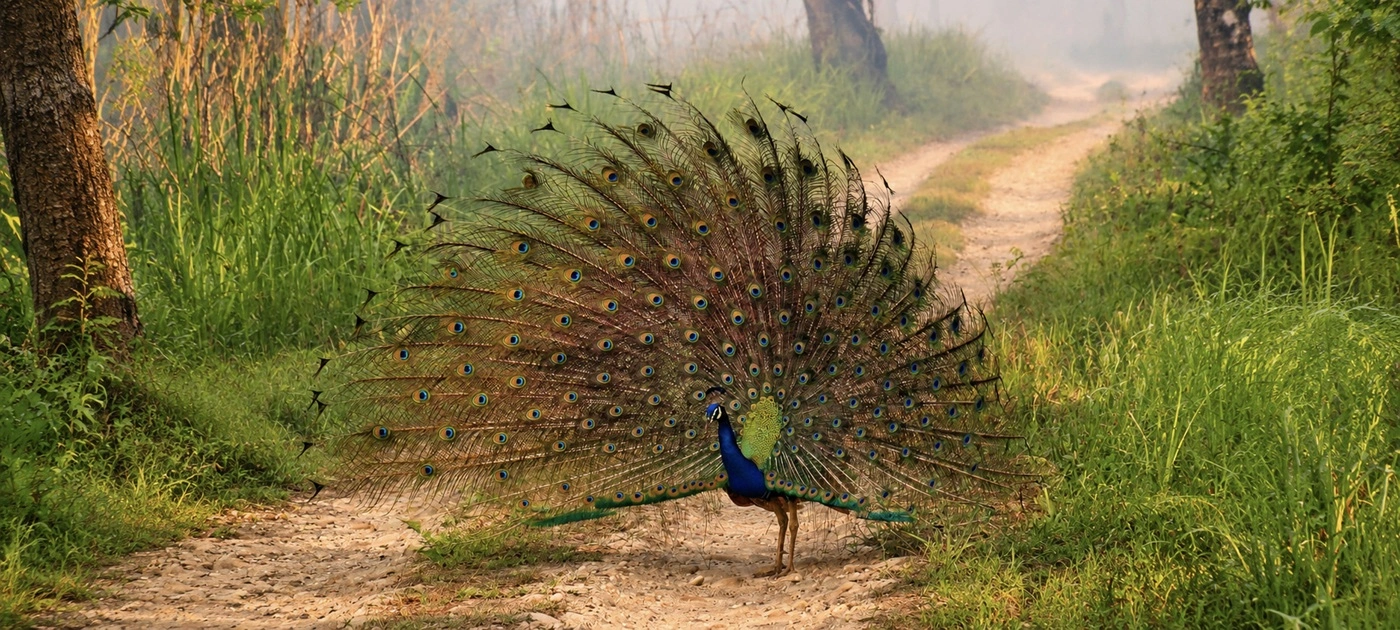
The UNESCO World Heritage Sites of Nepal

Nepal's Four World Heritage Inscriptions
Nepal has four UNESCO World Heritage Sites, but that number understates the wealth, as the Kathmandu Valley inscription alone bundles seven distinct monument zones into a single listing.
For a country of its size, Nepal safeguards an extraordinary concentration of heritage. Two of its inscriptions are cultural—the Kathmandu Valley and Lumbini—and two are natural—Chitwan National Park in the subtropical lowlands and Sagarmatha National Park in the high Himalaya.
Between them, they cover medieval palace squares, the birthplace of the Buddha, one-horned rhinos and Bengal tigers, and Mount Everest itself. Few places on earth pack such a range into a single country.
These ten places sit at the heart of how we design journeys through Nepal. Several frames a trip beautifully from the Kathmandu Valley, one is the goal of the Everest trek, and another is a jungle contrast to the mountains.
This guide walks through all four inscriptions and the sites within them, with a note on how each fits into a journey. Since the 2015 earthquake, Nepal has painstakingly restored well over a hundred damaged heritage structures, blending ancient craft with modern engineering—so much of this is not just preserved but freshly, carefully renewed.
The Kathmandu Valley: Seven Zones in One Listing
The Kathmandu Valley inscription, listed in 1979, is the cultural crown of Nepal—seven monument zones that together tell the story of the Newar civilization and the centuries-long blending of Hinduism and Buddhism.
The seven are three royal palace squares (the Durbar Squares of Kathmandu, Patan, and Bhaktapur), two great Buddhist stupas (Swayambhunath and Boudhanath), and two revered Hindu temple complexes (Pashupatinath and Changu Narayan).
You could spend a week among them and not exhaust their detail. What follows walks through each because they're genuinely different from one another, not variations on a theme.
Kathmandu Durbar Square: The Old Royal Heart
Kathmandu Durbar Square, also called Hanuman Dhoka, is the historic seat of the city's kings and the most atmospheric introduction to the valley's heritage.
Its foundations reach back to the Licchavi era, but it took its present form under the Malla and Shah dynasties. It's a maze of tiered pagodas, hidden courtyards, and palace buildings, named for the stone monkey-god Hanuman set at the palace gate in 1672.
Highlights include the coronation courtyard within the old palace, the towering Taleju Temple, which opens to the public only once a year, and the reconstructed Kasthamandap pavilion—the wooden building said to have given Kathmandu its name —rebuilt after the 2015 earthquake and reopened in 2022.
The square is also home to the Kumari Ghar, the carved palace of Nepal's Living Goddess, where the young Kumari occasionally appears at her window to bless those gathered quietly below.
Photography of the goddess isn't permitted, and this is a living tradition to approach with respect rather than as a spectacle. We like to visit the square early, between about 7:00 and 8:30 in the morning, when the rituals are underway, and the crowds haven't yet gathered.
Patan Durbar Square: The City of Beauty
Patan Durbar Square, across the river in Lalitpur, is widely considered the artistic heart of the valley, holding the highest density of temples and palaces anywhere in Nepal.
Lalitpur means "City of Beauty," and it earns the name. Laid out historically as a Buddhist mandala ringed by ancient stupas, it's now recognized as a UNESCO Creative City of Music, its traditions of performance still woven through daily life.
The square's masterpiece is a stone temple carved in the Shikhara style, unusual among the valley's brick-and-wood pagodas, with friezes that tell stories from the great Hindu epics.
Within the palace lie three courtyards, one holding an exquisite sunken royal step-well carved with deities and serpents—a marvel of old hydraulic engineering. The palace museum here is regarded as one of the finest in South Asia.
Beyond the square, Patan's alleys hide a gleaming 12th-century golden Buddhist monastery, still active today, and a terracotta temple built from bricks, each bearing an image of the Buddha. Late-afternoon light on Patan's red-brick and gilded roofs is the best there is.
Bhaktapur Durbar Square: The Medieval City Preserved
Bhaktapur is the most intact medieval city in the valley, and because its historic core is free of traffic, walking it feels like stepping directly into the past.
Known as Khwopa in Newar, Bhaktapur has escaped much of the modern sprawl that touched Kathmandu and Patan. Its centerpiece is the 55-Window Palace, a masterwork of carved timber, beside a resplendent gold-plated gate leading to the inner courtyards.
A short walk away rises the Nyatapola Temple, a five-story pagoda that is the tallest temple in Nepal—and so soundly engineered on deep foundations that it has ridden out major earthquakes in 1934 and 2015 intact.
Bhaktapur rewards wandering: a temple said to be carved from a single tree, the celebrated Peacock Window, and Pottery Square, where artisans still throw and sun-dry clay pots in the open as they have for generations. One practical tip we always pass on—the entry ticket can be extended to a multi-day pass for up to a week at no extra cost, so Bhaktapur is worth more than a single rushed visit.
Swayambhunath and Boudhanath: The Two Great Stupas
The valley's two Buddhist stupas, Swayambhunath and Boudhanath, are among the most sacred and atmospheric sites in Nepal, and together they anchor the region's Buddhist life.
Swayambhunath, on a forested hilltop, is one of the oldest Buddhist sites in the world, reached by a dramatic 365-step stairway flanked by Buddha statues and the resident macaques that give it the "Monkey Temple" nickname. From the summit, the great white dome and the all-seeing eyes of the Buddha preside over a sweeping view of the whole valley—best at sunrise or sunset. A gentler Western approach is available for families and anyone who'd rather skip the steps.
Boudhanath, on the old trade route to Lhasa, is one of the largest stupas on earth and the center of Tibetan Buddhism in Nepal. Its life is the kora—the clockwise walk around the stupa, past hundreds of spinning prayer wheels, among maroon-robed monks and pilgrims, in the scent of juniper and butter lamps. Rooftop cafes ring the plaza, and late afternoon into sunset is the time to be there, watching the devotional flow from above. Both reward the same thing: unhurried, respectful presence.
Pashupatinath and Changu Narayan: Living Hindu Heritage
The valley's two great Hindu sites—Pashupatinath and Changu Narayan—complete the seven zones, one a vast temple of life and death, the other Nepal's oldest temple still in use.
Pashupatinath, on the Bagmati River, is the holiest Shiva temple in Nepal, its golden-roofed sanctuary dating to the 5th century. The wider complex is a place of ash-covered ascetics, free-roaming deer, and the open riverside cremation ghats where Hindus seek liberation—a powerful, confronting experience best witnessed from a respectful distance without intrusive photography.
Non-Hindus can't enter the inner sanctum, but the outer complex and river terraces are open, and the evening lamp-and-chant Aarti by the river is unforgettable.
Changu Narayan, on a hilltop near Bhaktapur, is the oldest functioning Hindu temple in Nepal, founded in the 4th century and dedicated to Vishnu. Its courtyard holds a stone pillar inscribed in 464 CE—the earliest dated record in Nepal's history—and some of the finest ancient stone carving in the Himalaya.
It pairs beautifully with a gentle downhill day hike from Nagarkot through terraced farmland, blending heritage with easy walking. For the deeper spiritual meaning behind these sites, our companion guide to Nepal's sacred places goes further.
Lumbini: The Birthplace of the Buddha
Lumbini, in the subtropical Terai plains, is the birthplace of the Buddha and one of the four holiest places in the Buddhist world—listed by UNESCO in 1997.
At its heart is the Sacred Garden, where the Maya Devi Temple shelters archaeological ruins and a marker stone denoting the exact birthplace, beside the pillar raised by the emperor Ashoka in 249 BCE, which historically confirms the site, and the sacred pond where tradition holds that the infant received his first bath. Photography is not permitted inside the temple, and shoes must be removed before entering.
The wider site follows a visionary master plan by the Japanese architect Kenzo Tange, a vast park bisected by a long canal, with monastic zones where nations across the Buddhist world have each built a monastery—Thailand, Myanmar, Sri Lanka, Japan, China, Korea, and more—leading to a gleaming World Peace Pagoda.
It's large and hot, so we explore it by bicycle or electric rickshaw, gliding along the tree-lined paths between temples. A recently expanded airport nearby means Lumbini is now a short flight from Kathmandu rather than a long overland haul, making it far easier to fold into a journey.
Chitwan National Park: Jungle and Wildlife
Chitwan National Park, listed in 1984, protects nearly a thousand square kilometers of subtropical lowland jungle and is one of the world's great strongholds for the one-horned rhino and the Bengal tiger.
Nepal's first national park, Chitwan, was once a royal hunting ground and is now a conservation success story, with its Sal forests, grasslands, and rivers alive with wildlife.
The safari here is wonderfully varied: open jeep drives deep into the park in search of tigers, silent dugout-canoe trips past basking crocodiles and waterbirds, and—rare in Asia—guided walking safaris with armed naturalists that bring you thrillingly close to rhino and other megafauna.
The ethics have moved on, too, with travelers now steered toward observing elephants in sanctuaries rather than riding them.
Where you stay shapes the experience. The eastern edge is the lively, accessible hub, while the quieter western sectors hold low-volume luxury lodges with private naturalists, farm-to-table dining, and access to pristine, uncrowded parts of the park.
We describe lodges by their setting and confirm the exact property in your booking proposal. Chitwan is a short flight from Kathmandu, and it makes a superb warm-weather contrast to a mountain trek—jungle after the high Himalaya.
Sagarmatha National Park: The Roof of the World
Sagarmatha National Park, established in 1979, protects the highest reaches of the planet—Everest, Lhotse, and Cho Oyu—along with the Sherpa homeland and rare wildlife such as the snow leopard and red panda.
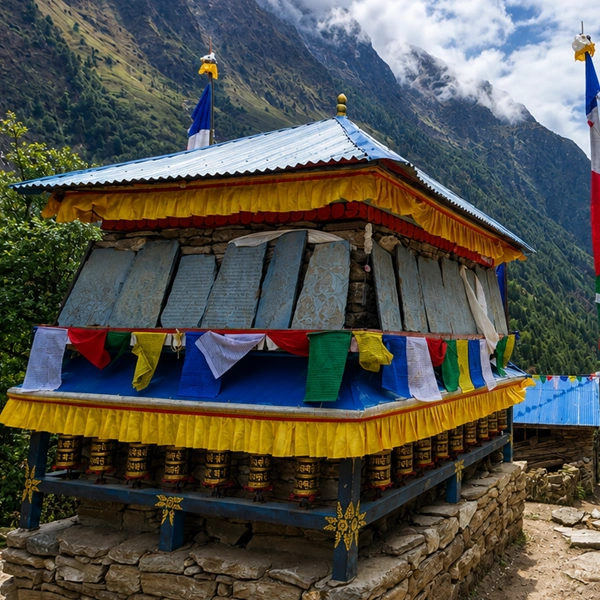
This is the park at the core of the Everest Base Camp trek, a landscape of glaciers, deep valleys, and high villages where Sherpa Buddhist culture is woven into every ridge and monastery.
Beyond the staggering peaks, it shelters Himalayan tahr, musk deer, and, higher up, the almost-mythical snow leopard. To enter is to walk into both a natural wonder and a living culture.
Reaching it means flying into the airstrip at Lukla, one of the world's most dramatic airports—a short, steeply sloped runway perched at 2,845 meters, served by small aircraft flying by sight rather than radar, so weather delays are common.
In the busiest seasons, flights sometimes shift to a more distant airport, requiring a pre-dawn drive, which is exactly the kind of friction we plan around with private helicopter transfers and buffer days. For how the park's trek actually works, our Everest guides go into full detail.
Planning Your Visit: Fees, Permits, and Guides
Visiting Nepal's World Heritage sites in 2026 means working within a modernized system of fees and permits, and its structure is worth understanding before you travel.
Each monument zone and national park charges its own entry fee—modest for the cultural sites, higher for the national parks—and the trekking regions require permits on top.
Nepal has also moved firmly toward regulated, guided travel: a licensed guide is now required for the major trekking regions, the old paper trekking permit has been digitized, and rules for restricted border areas like Upper Mustang have been eased to allow solo travelers to travel with a guide. The Everest region sits slightly apart, relying on its national park and local municipality fees rather than the general trekking permit.
We handle all of this for you—every entry fee, permit, and licensed guide arranged in advance—so you walk past each checkpoint without a queue or a form. It's one of the quiet advantages of a fully organized journey.
FAQs: UNESCO World Heritage Sites in Nepal
How many UNESCO World Heritage Sites does Nepal have?
Nepal has four UNESCO World Heritage inscriptions, but they cover ten distinct places. The Kathmandu Valley listing alone bundles seven monument zones—three Durbar Squares, two stupas, and two temple complexes. The other three are Lumbini, the Buddha's birthplace; Chitwan National Park in the lowlands; and Sagarmatha National Park, home to Everest. Two are cultural sites, and two are natural.
What are the seven monument zones of the Kathmandu Valley?
The seven are the Durbar (palace) Squares of Kathmandu, Patan, and Bhaktapur; the Buddhist stupas of Swayambhunath and Boudhanath; and the Hindu temple complexes of Pashupatinath and Changu Narayan. Together, they showcase the medieval Newar civilization and the centuries-long blending of Hinduism and Buddhism. They're close enough together to explore across a few days from a single base in the valley.
Which is the best UNESCO site in Nepal to visit?
It depends on what moves you. For medieval architecture, Bhaktapur's traffic-free old city is unmatched. For a Buddhist atmosphere, Boudhanath at dusk is extraordinary. In terms of spiritual weight, Pashupatinath and Lumbini are profound. For wildlife, Chitwan; for mountains, Sagarmatha and Everest. We usually weave several together—the valley sites to frame a trip, with a national park as the centerpiece.
Can I visit Nepal's UNESCO sites without trekking?
Yes, most of them. The seven Kathmandu Valley zones are short drives from the city, Lumbini is a quick flight to the plains, and Chitwan's safari requires no trekking at all. Only Sagarmatha National Park involves serious walking, and even that can be experienced by helicopter. This makes Nepal's heritage remarkably accessible to travelers seeking culture and wildlife without a demanding trek.
How do the Kathmandu Valley sites fit into a trekking trip?
Beautifully, as the opening and closing chapters. We typically spend time among the valley's Durbar Squares, stupas, and temples before flying to the mountains, and again on return, so the trek is framed by deep culture rather than airport hotels. Lumbini and Chitwan can be added as flights to the plains, giving a trip the full sweep of Nepal—mountains, heritage, and jungle.
What is Sagarmatha National Park?
Sagarmatha National Park is Nepal's Everest-region World Heritage Site, protecting the highest mountains on earth—Everest, Lhotse, Cho Oyu—along with the Sherpa homeland and rare wildlife like the snow leopard and red panda. It's the setting for the Everest Base Camp trek. Entry requires a national park permit and a local municipality fee, and access is via the dramatic mountain airstrip at Lukla.
Is Chitwan National Park worth adding to a Nepal trip?
Very much, especially as a contrast to the mountains. Chitwan offers jeep, canoe, and rare guided walking safaris in search of one-horned rhinos, Bengal tigers, crocodiles, and abundant birdlife in warm subtropical jungle. It's a short flight from Kathmandu, and after the cold and effort of a high trek, a few days of jungle safari and lodge comfort make a wonderful finale.
Do I need a guide to visit Nepal's UNESCO sites?
For the cultural sites, you don't strictly need one, but a good guide transforms them—unlocking the meaning behind the architecture, rituals, and iconography. For the trekking regions, including Sagarmatha, a licensed guide is now required under Nepal's regulations. We arrange all guiding, permits, and entry fees in advance, so every checkpoint is handled and every site comes with genuine context.
The Journey We Build Around You
Nepal's UNESCO World Heritage Sites are the country in miniature—medieval cities, the Buddha's birthplace, jungle wildlife, and the roof of the world, all within one compact, extraordinary nation.
We weave them into our journeys with intention: the Kathmandu Valley's monument zones to open and close a trip, Sagarmatha as the goal of a great trek, and Lumbini or Chitwan as flights to the plains for those who want the full range of Nepal.
Handled well, these sites turn a trip into a complete portrait of the country.
If you'd like a journey shaped around Nepal's World Heritage, our team will design it with you from the first conversation. Explore our luxury journeys in Nepal, or write to us directly.
Need Help? Call Us+977 9851013196orChat with us on WhatsApp
Need Help? Call Us+977 9851013196