The Ura Yakchoe festival is the one Bhutanese festival we send guests to when they tell us the big tshechus feel too polished. It happens in Ura, the highest of Bumthang's four valleys, in a village of stone lanes and shingle roofs at roughly 3,100 meters.
No grandstand, no ticket booth. You stand in a temple courtyard with farmers who brewed the ara being poured around you.
Paro and Thimphu stage Bhutan's famous festivals. Ura keeps one.
What Is the Ura Yakchoe Festival?
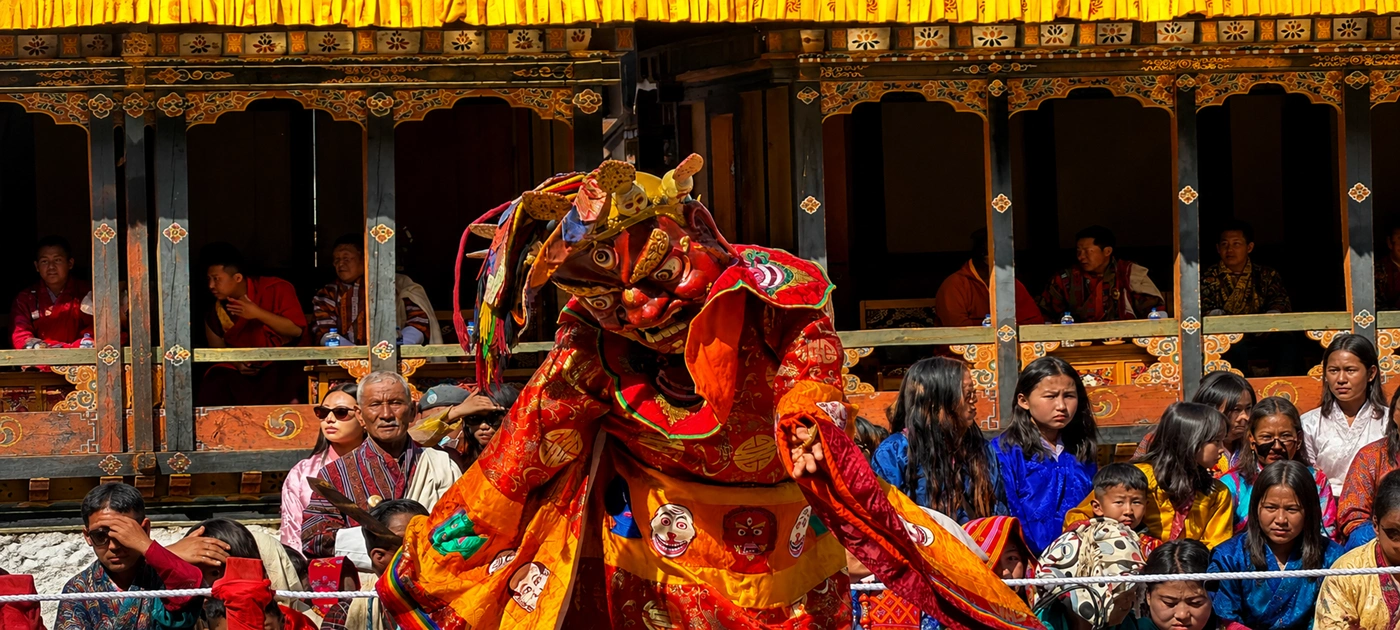
The Ura Yakchoe festival is a several-day village celebration at Ura Lhakhang, the temple at the heart of Ura village, centered on masked dances and the display of a sacred relic. Unlike the dzong tshechus of western Bhutan, Yakchoe belongs to one community.
Many of the dancers are village laymen who rehearse in the weeks before, alongside monks, and the whole valley cooks, hosts, and attends.
The relic makes it singular. On the festival's key day, a small statue kept in private custody is carried out and shown to the crowd, and Bhutanese travel from other districts to see it.
Locals hold that witnessing the relic cleanses misdeeds, which is why grandmothers who have seen it fifty times still queue.
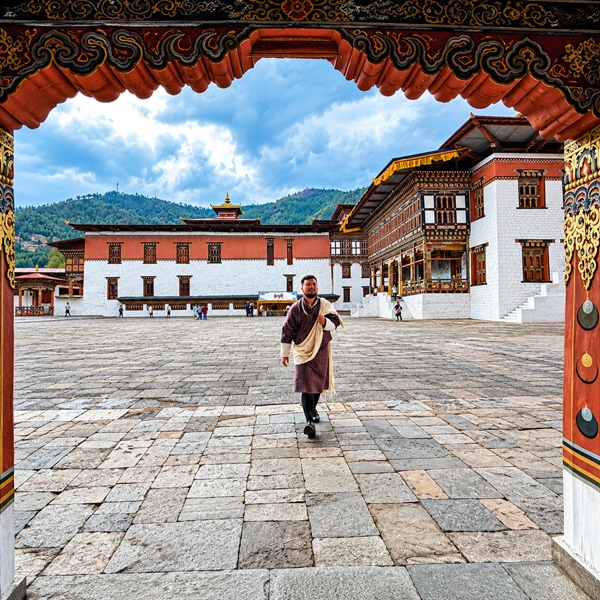
The scale stays human. On our departures, the courtyard holds a few hundred people at its fullest, and by the outer wall you can watch a full cham dance with nobody in front of you.
The Legend Behind the Relic
Legend holds that a wandering lama once stopped at the house of an old woman in Ura and vanished before she could serve him, leaving behind a sack.
Inside, she found a statue of Chana Dorje, the wrathful protector known in Sanskrit as Vajrapani. The lama was later understood to have been no ordinary traveler, and the statue no ordinary object.
The relic never entered the temple's permanent keeping. It passed down through the woman's descendants, and her family line still holds custody today, which is rare in Bhutan, where sacred objects usually rest with monastic bodies.
During Yakchoe, the family releases it for the procession and public viewing.
We tell guests this story on the drive over the pass, before they see the statue, because it changes how you read the crowd. The queue is not tourism. It is a valley renewing a promise it has kept for generations.
When Does Ura Yakchoe Happen?
Ura Yakchoe follows the Bhutanese lunar calendar and typically falls in spring; the exact dates are announced each year and confirmed at booking. Every Bhutanese festival works this way.
The lunar month drifts against the Gregorian calendar, so a festival can land weeks apart from one year to the next, and printed date lists go stale fast.
Spring suits Ura anyway. The valley sits high, so winter bites and summer brings monsoon clouds, but the festival window catches clear mornings, blossoms in the lower Bumthang valleys, and passes free of snow. Pack for cold evenings regardless.
At this altitude, the temperature drops quickly once the courtyard empties.
Our practice is simple: tell us the season you want to travel, and we build the Bhutan itinerary around the confirmed festival days rather than squeezing the festival into a fixed route.
What the Festival Days Actually Look Like
Expect a rhythm rather than a schedule: mornings of ritual and masked dances in the Ura Lhakhang courtyard, afternoons that loosen into village life, and one day that belongs to the relic.
Cham dances unfold in long cycles — drum dances, the dance of the fearsome deities, clowning atsaras working the crowd between sets. Nobody hurries.
Around the dances, Ura eats and drinks together. Households cook in quantity, and you will be offered ara, the local grain spirit, more than once. Accept a little. Refusing outright reads colder than a small sip and a smile.
The relic procession draws the biggest crowd of the festival. Villagers line up to receive blessings, and our guide will read the moment and tell you where guests can respectfully stand or join. Some years, the line moves for hours.
Getting to Ura Village
Ura sits in eastern Bumthang, about an hour and a half's drive from Chamkhar town over the Shertang La pass at roughly 3,600 meters.
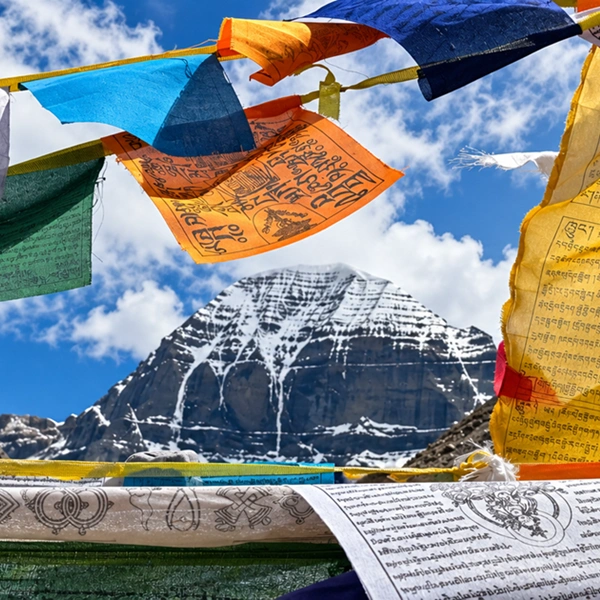
On a clear morning, the pass gives you a straight view of Gangkhar Puensum, at 7,570 meters, the highest unclimbed mountain on earth.
We always build in a stop here. It is one of the few road viewpoints in Bhutan from which that summit is visible.
Reaching Bumthang is the longer leg. The quick way is the short domestic flight from Paro to Bathpalathang airstrip near Jakar, weather permitting.
The slow way is the two-day overland route through Trongsa, crossing a string of high passes — beautiful and worth it if you have the days.
On our private festival journeys, we drive you in and fly you out where the schedule allows, so you see the country once without repeating it.
How Ura Compares With the Big Tshechus
Choose Ura Yakchoe for intimacy and the relic; choose Paro or Thimphu for spectacle and scale. The famous dzong festivals are magnificent, with hundreds of performers, giant thongdrel unfurlings, and crowds in the thousands.
They are also photographed to death, and at peak moments you will watch through a hedge of phones.
Ura offers the opposite trade. Fewer dances, smaller courtyard, no thongdrel — and in exchange, proximity, conversation, and a festival that has not rearranged itself for visitors.
Strictly speaking, it is a yakchoe, a village festival, not a tshechu tied to Guru Rinpoche's tenth day, which is why its character differs from that of the dzong events.
Many of our guests do both on a single journey. Bumthang rewards the extra days regardless: Ura's stone lanes, the yathra weavers of Chumey Valley, and buckwheat fields that feed the valley's kitchens.
Staying, Eating, and Festival Etiquette
There are no large hotels in Ura itself, so we base festival guests in the Choekhor valley near Jakar and drive over the pass for the festival days. Lodges there run to warm rooms, wood stoves, and kitchens that cook what Bumthang grows.
We confirm the exact property in your booking proposal.
Eat the valley's own food while you are here. Puta, Bumthang's hand-pressed buckwheat noodles and khuli, buckwheat pancakes eaten with ezay chili paste, exist almost nowhere else in Bhutan in their proper form.
Ura's altitude is too high for rice, so buckwheat became the staple of this cuisine.
At the festival, dress modestly and cover shoulders and knees; long sleeves earn quiet approval. Walk clockwise around the lhakhang and any chorten.
Photograph the dances freely from the crowd, but never the relic, the inner shrine, or a person praying without asking — your guide will flag the moments to lower the camera.
Planning a Private Ura Yakchoe Journey
The honest planning constraint is the calendar: festival dates confirmed by lunar reckoning, so we anchor your Bhutan itinerary to the announced days and build outward.
A comfortable shape is a week to ten days — Paro and Thimphu at the start, the flight or drive into Bumthang, three nights around the festival, then west again with a spare day for weather.
Bhutan requires visitors to travel on arranged visas with the daily Sustainable Development Fee paid, and we handle both, along with the domestic flights that make Bumthang easy. Your guide and vehicle are yours alone for the whole route.
If Ura Yakchoe sounds like your kind of festival, our Ura Yakchoe Festival Tour times the whole journey to the confirmed dates — and we are happy to reshape it around the valleys you want most.
Ura Yakchoe Festival FAQs
How are the Ura Yakchoe festival dates decided each year?
The festival follows the Bhutanese lunar calendar, so its Gregorian dates shift annually and are announced for each year. It typically falls in spring. Because the drift can span weeks, we never lock a Bhutan itinerary before the days are confirmed; instead, we hold your preferred season and finalize the route once the festival calendar is published. Exact dates are confirmed at booking.
What is the sacred relic displayed at Ura Yakchoe?
Legend holds that it is a statue of Chana Dorje (Vajrapani) left in an Ura household by a mysterious lama and passed down through that family ever since. The family, not the monastery, keeps custody and releases the statue for the festival's procession and public viewing. Bhutanese believe seeing it cleanses misdeeds, which is why pilgrims travel from other districts for that single day.
How do you get to Ura village from Paro?
The fastest route is a short domestic flight from Paro to the Bathpalathang airstrip near Jakar, then about an hour and a half by road over the Shertang La pass into the Ura Valley. The overland alternative runs through Trongsa, crossing several high passes, and is best split over two days. On private journeys, we usually drive one direction and fly the other.
Is Ura Yakchoe worth visiting instead of Paro Tshechu?
Yes, if you value closeness over scale. Paro Tshechu delivers spectacle — hundreds of performers, the giant thongdrel, crowds in the thousands. Ura Yakchoe is a working village festival: fewer dances, a small courtyard, villagers who will talk to you, and the relic viewing that the big tshechus have no equivalent of. Many guests pair the two in one itinerary.
How high is Ura Valley, and does the altitude matter at the festival?
Ura sits at roughly 3,100 meters, with the Shertang La approach near 3,600 meters. Most visitors feel nothing worse than breathlessness on stairs, but we still pace the itinerary with a night or two lower in Bumthang first, keep the driving days short, and carry an oximeter as standard practice. Drink more water than you think you need.
Can visitors photograph the dances at Ura Yakchoe?
The courtyard dances, yes — photograph freely from the crowd without blocking villagers' sightlines. The relic itself, the inner shrine rooms of Ura Lhakhang, and people at prayer are off-limits unless your guide confirms otherwise. When the procession begins, follow the locals' lead: many lower their cameras entirely for the blessing, and joining them is the better memory anyway.
Where do you stay when attending the Ura Yakchoe festival?
Ura village has no sizeable hotels, so we lodge festival guests in the Choekhor Valley near Jakar — warm, wood-stove properties within a comfortable morning drive of the festival — and cross the pass each day. We confirm the exact property in your booking proposal. Three nights around the festival gives you the key days without rushing through the valley.