Phobjikha Valley is the one place in Bhutan where the country slows down enough to live up to its reputation. Most valleys here are V-shaped river gorges. Phobjikha is the opposite — a broad, U-shaped glacial bowl at roughly 3,000 meters in Wangdue Phodrang district, its flat floor carpeted in marsh grass and dwarf bamboo rather than paddy.
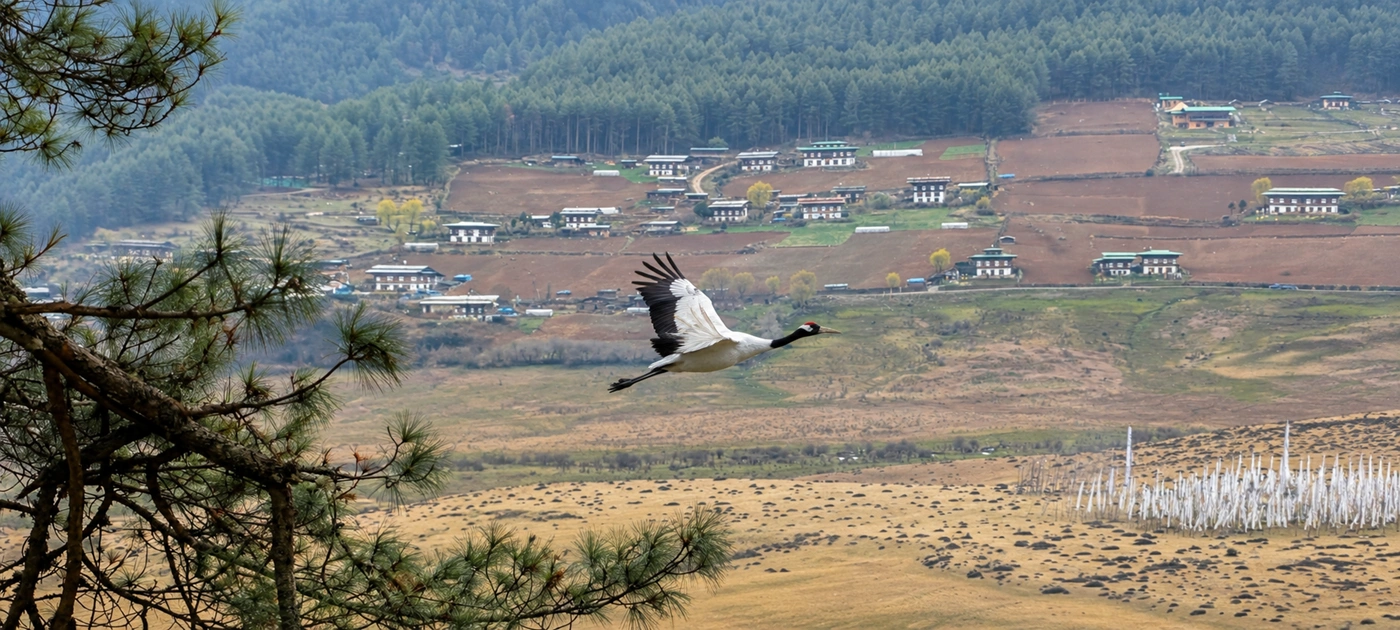
Every autumn, black-necked cranes fly in from the Tibetan Plateau to winter on that marsh. A 17th-century monastery, Gangtey Goenpa, watches them from a ridge at the head of the valley. Between the two sits some of the most rewarding easy walking in the kingdom.
We route almost every Bhutan journey of eight days or more through Phobjikha, and it is consistently the place guests tell us they wish they'd given a second night. This guide explains why — and answers the question we're asked most: can you actually get in during winter?
What makes Phobjikha Valley different from the rest of Bhutan
Phobjikha Valley is a protected high-altitude wetland, not a farming gorge, and that single fact shapes everything you see.
The bowl was carved by ice, so instead of terraced rice, you get open pasture, potato fields along the fringes, and a silver ribbon of marsh down the center where the Nakay Chhu drains the floor.
The valley sits on the edge of the Black Mountains, within the conservation landscape of Jigme Singye Wangchuck National Park, and the Gangtey–Phobji wetland is listed under the Ramsar Convention.
Locals grow the potatoes that trucks carry south to Indian markets each autumn. Farmhouses stand far apart, whitewashed and heavy-beamed, with smoke curling from bukhari stoves by late afternoon.
Look up, and you'll notice something missing: power poles. When electricity finally reached Phobjikha, the lines were buried underground so the cranes would never strike a cable in flight.
It remains one of the clearest examples anywhere of a community redesigning modern life around a bird.
The black-necked cranes of Phobjikha Valley
Black-necked cranes arrive in Phobjikha Valley from late October and stay until around late February, with numbers peaking through December and January.
Several hundred birds — the largest wintering flock in Bhutan — feed across the valley floor by day and return to the central marsh to roost as the light fades.
The cranes are treated as sacred. Local belief holds that arriving birds circle Gangtey Goenpa three times clockwise before settling, the same direction pilgrims walk around a temple, and that they repeat the circuit before leaving in spring.
Farmers time their winter routines around them, and harming a crane carries both legal penalties and a deep social taboo.
The Black-necked Crane Visitor Center, run by the Royal Society for the Protection of Nature, sits on the western rim of the marsh with mounted spotting scopes and staff who log every arrival.
We time our visits for late afternoon, when the day's feeding ends, and skeins of cranes glide back over the wetland to roost — the calls carry across the whole bowl. Early morning, as they lift off into the frost, is just as good.
Gangtey Goenpa: the monastery above the marsh
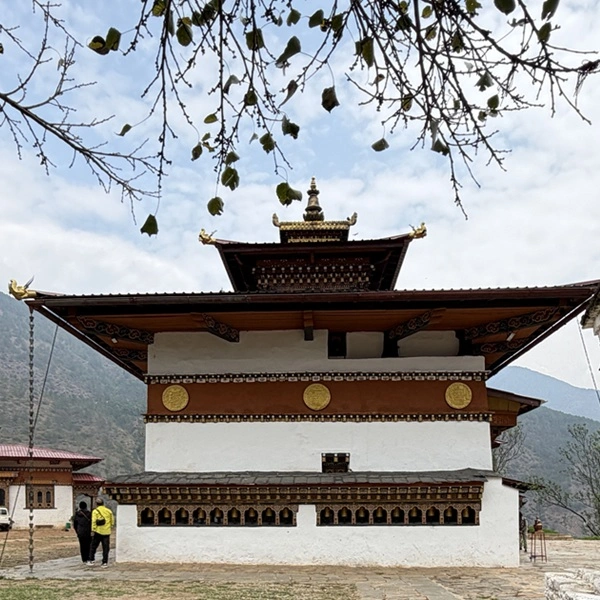
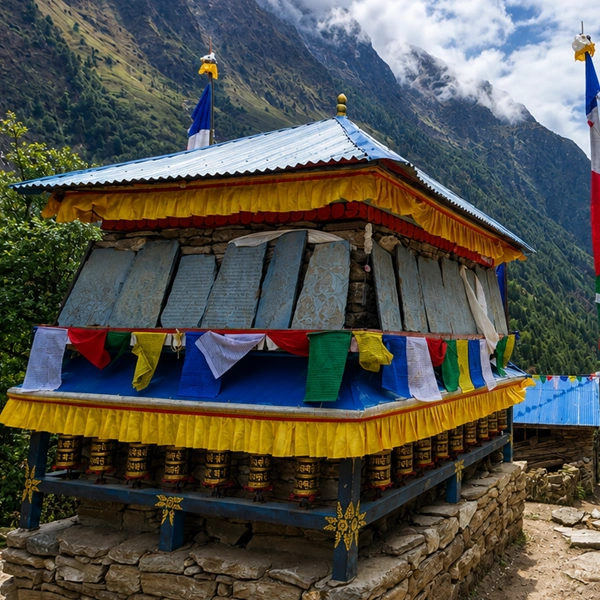
Gangtey Goenpa is a 17th-century Nyingma monastery situated on the forested ridge at the head of Phobjikha Valley, and it serves as the valley's spiritual anchor.
The great treasure-revealer Pema Lingpa is said to have prophesied the founding of a goenpa on this spur; his grandson, Gyalse Pema Thinley, founded it in 1613.
It remains the seat of the Gangtey Trulku lineage and one of the most important centers of the Peling tradition in Bhutan.
The complex is worth unhurried time. Craftsmen restored it over a decade using traditional building arts, and the carving in the main tshokhang rewards a slow, neck-craning circuit.
Monks move through the courtyard between prayer sessions; if the inner hall is open, your guide will take you in and read the murals with you.
Each November, the monastery courtyard hosts the Black-necked Crane Festival, a community celebration timed to the birds' arrival.
Schoolchildren perform a crane dance in black-and-white costume alongside masked cham dances, and the whole valley turns out.
Unlike Bhutan's tshechus, which follow the lunar calendar, this festival has a fixed mid-November slot — we confirm the exact timing when you book, and our Bhutan festivals overview explains how the wider festival calendar works.
The Gangtey Nature Trail and what else to do in the valley
The Gangtey Nature Trail is the single best short walk in central Bhutan, and it needs no fitness beyond a comfortable 90 minutes on your feet.
The trail covers about four kilometers, dropping gently from the ridge near Gangtey Goenpa through Semchubara village, then blue pine forest hung with old-man's-beard lichen, before opening onto the valley floor near Khewang Lhakhang.
You walk it downhill, one way. Our crew repositions the vehicle to the far end, so the trail finishes at the marsh edge rather than with a climb back up. In crane season, you'll often hear the birds before the forest opens.
Beyond the trail, the valley rewards slowness. Visit Khewang Lhakhang's ancient statues, try a round of archery with local players, or take a hot stone bath at a farmhouse — river stones heated in a fire and dropped, hissing, into a wooden tub of artemisia-infused water.
Accommodation in the valley runs from heritage farmhouse stays to full-service lodges with valley-facing tubs; we confirm the exact property in your booking proposal.
Getting to Phobjikha: the drive over Lawala Pass
Phobjikha Valley is reached by road, branching off Bhutan's east–west highway at Nobding and climbing over Lawala Pass at about 3,350 meters.
From Punakha, the drive takes around two and a half to three hours; from Thimphu, allow four and a half to five, and from Paro, closer to six. Most of our itineraries pair Phobjikha with a stay in Punakha, which keeps each driving day short — our Punakha planning guide covers that end of the route.
The final climb is the memorable part. Above, the road switchbacks through oak and rhododendron, then breaks into an open hillside of dwarf bamboo grazed by yaks.
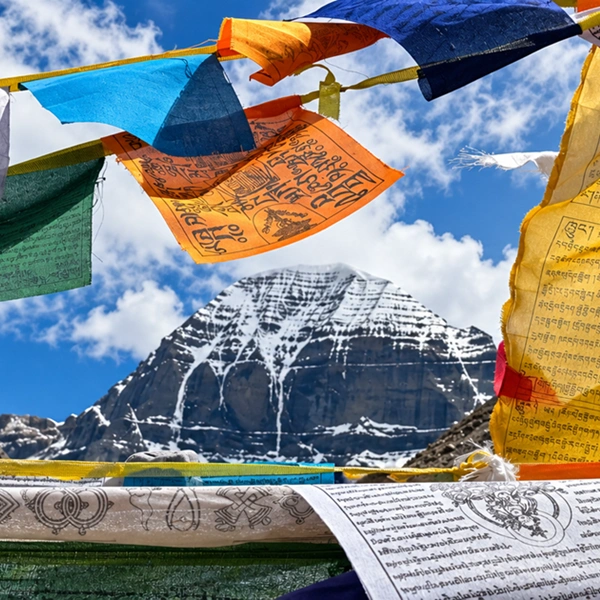
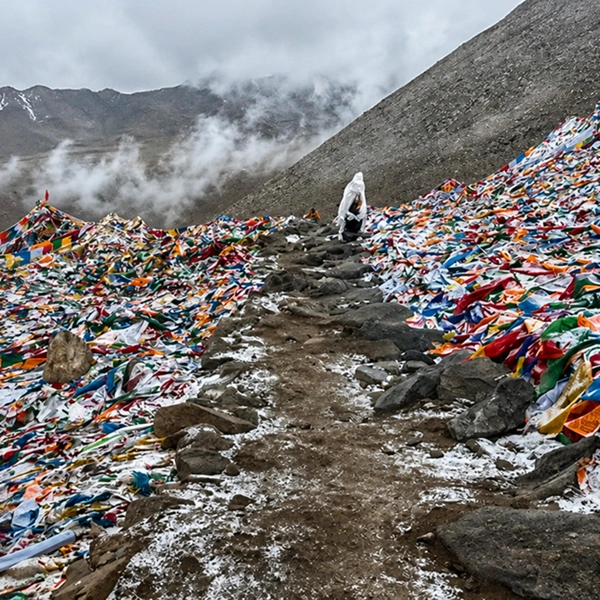
Cross the prayer-flagged crest of Lawala, and the bowl appears below you all at once — flat, silver-veined, improbably wide.
Build the drive into the day rather than treating it as dead time. There's a good tea stop at Nobding, and in spring the rhododendrons bloom on the pass, which is a destination in itself.
Winter access: what actually changes when the snow comes
Phobjikha Valley stays open through winter, and winter is precisely when the valley is at its best — but the crossing needs respect. Snow falls in the bowl several times most winters, and Lawala Pass is the one point where ice genuinely matters.
Days are usually clear and sharp; nights drop well below freezing.
Our standing practice is to schedule the Lawala crossing for mid-to-late morning on winter days, after the sun has worked on the shaded switchbacks above Nobding, and our drivers run the pass with chains carried from December through February.
On the rare day the pass closes outright, it typically reopens within hours once the plow has passed through; we build flexible margins into winter itineraries for exactly this.
Inside the valley, winter life is simple and warm. Lodges heat rooms with bukharis, and hot water bottles appear at turndown; the cranes are at full number; and the light on frosted marsh at dawn is the best photography of the Bhutan year.
Pack for the cold with our Himalayan packing guide, and the valley gives you its finest season in return.
When to visit Phobjikha Valley
Late October to late February is the headline window, because that is when the cranes are in residence.
December and January bring peak numbers and the sharpest light, at the price of the coldest nights. November balances birds, the festival, and milder temperatures.
The valley is far from empty the rest of the year.
Spring paints the pass with rhododendron and fills the floor with wildflowers, while summer turns the bowl an intense green under monsoon clouds. Bhutan-wide seasonal planning — flights, festivals, and how the Sustainable Development Fee shapes trip length — is covered in our best time to visit Bhutan guide and our Bhutan SDF and visa guide.
However you time it, give Phobjikha two nights. One night forces the valley into a drive-in, drive-out glimpse. Two lets you walk the trail, sit with the cranes at dusk, and feel the silence the bowl is famous for — the reason it anchors so many of our luxury Himalayan journeys.
Phobjikha Valley FAQs
When do black-necked cranes arrive in Phobjikha Valley?
The first black-necked cranes reach Phobjikha in late October or early November, flying in from breeding grounds on the Tibetan Plateau. Numbers build through November, peak across December and January at several hundred birds, and thin out through February as the flock departs north. For guaranteed sightings, plan between mid-November and mid-February and keep dawn or late afternoon free for the roost flights.
How long is the drive from Punakha to Phobjikha Valley?
Allow two and a half to three hours from Punakha to Phobjikha. The route follows the east–west highway to Nobding, then climbs switchbacks to Lawala Pass at about 3,350 metres before dropping into the bowl. Roadworks and winter ice can add time, which is why we build the crossing into the day's plan rather than rush it.
Is Phobjikha Valley worth visiting without the cranes?
Yes — the valley's landscape, Gangtey Goenpa, and the nature trail stand on their own in any month. Spring brings rhododendron bloom on Lawala Pass and wildflowers on the valley floor; summer turns the wetland a deep monsoon green. What you lose without the cranes is the dawn roost spectacle, so bird-focused travelers should still target the winter window.
Can visitors go inside Gangtey Goenpa?
Visitors can enter Gangtey Goenpa's courtyard and, outside prayer sessions, its main hall, accompanied by a licensed guide. Dress modestly with shoulders and knees covered, remove shoes and hats before the tshokhang, and photograph only outside — interior photography is not permitted. Your guide will confirm same-day access, since ceremonies and retreats occasionally close the inner halls.
How cold does Phobjikha Valley get in winter?
Winter nights in Phobjikha regularly fall well below freezing, often to around minus ten degrees Celsius, while clear days climb back to comfortable walking temperatures in the sun. Lodges heat rooms with wood-fired bukhari stoves and provide hot water bottles. Pack a genuine down layer, warm sleeping wear, gloves, and sunglasses for the glare off frost and snow.
Why are there no overhead power lines in Phobjikha Valley?
Phobjikha's electricity cables were laid underground so that black-necked cranes would never collide with wires in flight. The valley community accepted a slower, costlier electrification to protect the flock, working with conservation bodies rather than against them. The result is a rare landscape where the skyline holds nothing but marsh, forest, farmhouse rooflines, and the ridge-top monastery.
What happens at the Black-necked Crane Festival at Gangtey Goenpa?
The Black-necked Crane Festival fills Gangtey Goenpa's courtyard each November to welcome the returning flock. Schoolchildren perform a crane dance in black-and-white costumes, monks and villagers stage masked cham dances, and conservation groups run stalls and talks. It keeps a fixed mid-November slot on the civil calendar rather than moving with the lunar year; we confirm exact dates when you book.
Ready to meet the cranes yourself? Our private Black-necked Crane Festival journey pairs festival morning at Gangtey Goenpa with two unhurried nights in the valley — held, not handled, from the moment you land in Paro.