48 hours in Kathmandu is enough for a private luxury layover covering Malla-era palace squares, an Everest helicopter landing at Kala Patthar, a heritage spa afternoon, and certified Chyangra Pashmina shopping — provided arrival handling, hotel choice, and flight timing are planned before you land. Here's how we structure it.
48 Hours in Kathmandu: A Private Luxury Layover Guide

48 hours in Kathmandu can hold more than most travelers manage in a week — if the two days are engineered, not improvised. The valley sits at roughly 1,400 m, so no acclimatization is needed, yet Everest is one morning's flight away. We build this layover for guests every season, usually as the opening or closing chapter of a longer Nepal journey.
The plan below is the one we actually run. Arrival handling first, one heritage day, one Everest morning, and a deliberate afternoon of recovery in between.
Is 48 Hours in Kathmandu Enough?
Yes — 48 hours in Kathmandu is enough for the valley's two great architectural traditions, a Kala Patthar helicopter landing, an evening of living Hindu ritual, and time in a heritage spa, as long as nothing is left to chance at the airport.
The city rewards sequencing. Its anchors sit 30–45 minutes apart through dense traffic, so each half-day gets one anchor, not three.
Kathmandu also earns the stopover on its own terms. The valley holds seven UNESCO-listed monument zones inside a 25 km basin — palace squares, stupas, and temple complexes still in daily religious use.
Two days here stand comfortably inside any program of luxury travel in the Himalayas.
Arrival: Clearing Tribhuvan International Airport Calmly
There's no government fast-track lane at Tribhuvan International Airport — every arriving passenger clears immigration in person, and any service claiming otherwise is overselling. What good handling changes is everything around that moment.
Our airport team meets you inside the terminal with your visa-on-arrival paperwork already prepared, walks you through the counters, and manages your baggage while you wait in the first-floor lounge instead of the hall.
Two practical notes from years of arrivals. The airport runs a single runway, so spring and autumn afternoons stack up, and we schedule onward connections with slack built in. In winter, morning fog can sit in the valley until mid-morning, so we plan winter arrival days with nothing time-critical before noon.
Visa on arrival is available to most nationalities. Check current requirements on our Nepal visa information page before you fly.
Where to Stay: Carved Courtyards or Palace Lawns
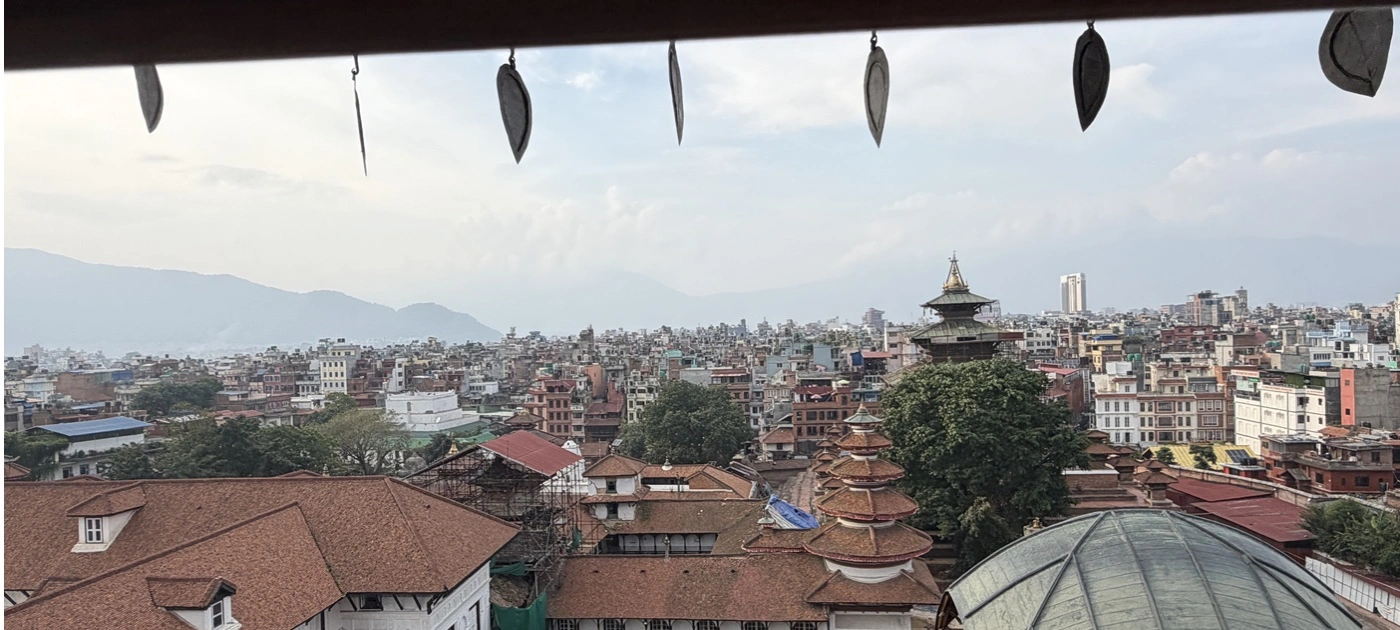
Choose your hotel by architectural lineage, because Kathmandu offers two and they feel nothing alike. The first is Newar — the indigenous style of the Malla dynasty (12th–18th centuries), built in deep-red fired brick with carved timber windows, rooms arranged around quiet courtyards.
A handful of hotels in this tradition run their own restoration workshops, where artisans still work centuries-old beams with hand chisels.
The second lineage is Rana-era neoclassical. After 1846, Nepal's ruling family built stuccoed, columned palaces on the European model — Singha Durbar, finished in 1908, is the grandest survivor — and several boutique properties now occupy buildings of that period.
International five-stars with pools and gardens round out the choice for guests who want familiar systems.
We confirm the exact property in your booking proposal. For the current shortlist, see our guide to the top luxury hotels in Kathmandu.
The First 24 Hours: Gardens, Palace Squares, Fire on the River
Start gently at the Garden of Dreams, on the edge of Thamel. Built in the early 1920s for Field Marshal Kaiser Sumsher Rana as a formal garden of six seasonal pavilions, it fell derelict after his death and was later restored with Austrian support over years of careful work.
Three pavilions survive among lotus ponds and pergolas, and the garden café does a proper espresso and an early lunch.
Spend the afternoon in Patan. The Patan Museum, inside the Keshav Narayan Chowk of the old royal palace, is where we send every guest who has one museum slot — a 15-year, Austrian-led restoration that kept the Malla brickwork legible while making the galleries modern.
Give it 90 minutes, then step into Sundari Chowk for the Tusha Hiti, a sunken royal bath carved so densely the stone reads like metalwork.
Prefer a wider canvas? Bhaktapur swaps in cleanly: the 55-Window Palace, potters working open squares, and a clay bowl of Juju Dhau — the buffalo-milk "king curd" this city is famous for.
As dusk falls, take reserved seating at the Pashupatinath evening aarati on the Bagmati River. Fire offerings, oil lamps, Vedic chant, cremation ghats within sight — it's devotional, not staged for visitors, and it resets what the word heritage means.
Dinner afterward is either a farm-to-table garden restaurant or a ceremonial Newari feast: shoes off, low carved stools, course after course served on brass. Our current picks are in our guide to fine dining in Kathmandu.
The Everest Morning: Kathmandu to Kala Patthar and Back by Lunch
A private Everest helicopter flight from Kathmandu takes about four hours door to door and puts you on the ground at Kala Patthar (5,545 m), facing the summit of Everest, before descending to breakfast at 3,880 m.
We fly the first-light slot. Khumbu winds build from late morning, and the early departure buys calm air and clean light on the peaks.
The aircraft and the route
Everest operations fly the Airbus H125 family — the AS350 B3 line — because nothing else handles the altitude with the same margin; a B3 landed on the summit of Everest in 2005, a record that still stands.
The profile runs 45 minutes to Lukla for a mandatory refuel, then up the Khumbu past Namche Bazaar and over the glacier. Larger groups shuttle in pairs from Pheriche, because thin air cuts what the aircraft can safely lift.
Why the landing lasts 15 minutes
Ground time at Kala Patthar is capped at 10–15 minutes for medical reasons, not scheduling ones. At 5,545 m, the air holds roughly half the oxygen of sea level, and you've skipped every acclimatization stage a trekker earns over ten days.
Short exposure keeps that safe — the engines stay running, and our guides carry a pulse oximeter as standard practice. The helicopter then drops to a hilltop lodge terrace at Syangboche (3,880 m), where breakfast comes with Ama Dablam filling the window.
One honest note. Everest Base Camp itself sits on a moving glacier with no safe commercial landing zone, which is why Kala Patthar, with its direct line to the summit, is the landing.
Park authorities have also moved in recent seasons to restrict sightseeing landings inside Sagarmatha National Park, and those rules keep shifting — we confirm the current landing status when we book your flight, with a high flyover as the fallback.
The full picture, route by route, is in our Everest helicopter tour guide.
The Afternoon of Recovery
Book the spa for the afternoon you land back, because the altitude swing earns it. Kathmandu's heritage spas draw on Himalayan and Ayurvedic traditions rather than a generic menu. An oil massage worked with ajwain, fenugreek, and camphor eases the stiffness of a pre-dawn start; shirodhara — warm oil poured slowly across the forehead — settles a nervous system that spent the morning at 5,500 m.
The most distinctive option is singing bowl therapy. A practitioner places hand-beaten brass bowls on and around the body and strikes them, and you feel the sound through muscle as much as you hear it. Sixty minutes of that is the quietest you'll have been all trip.
What to Bring Home: Certified Chyangra Pashmina
Skip the souvenir stalls and buy one thing well: genuine Chyangra Pashmina. The fiber comes from Himalayan mountain goats living above 3,000 m, combed out each spring when the animals shed their winter undercoat — no shearing, no harm done.
Much of the "pashmina" sold in tourist districts is blended with sheep's wool or outright synthetic.
The reliable marker is the Chyangra Pashmina trademark of the Nepal Pashmina Industries Association, backed by laboratory fiber testing and carried on certified pieces as a hologram with a serial number.
We take guests to certified workshops where you can watch the weaving before you buy — an industry that supports thousands of Nepali weavers, most of them women.
When to Plan a Kathmandu Layover
The best windows are mid-March to mid-June (spring) and mid-October to mid-December (autumn). Autumn brings the sharpest mountain visibility for the Everest morning; spring adds flowering trees to the valley's courtyards.
Winter works too, with crisp light and thin crowds, if you build in slack for morning fog. The monsoon months turn the flight into a gamble we'd rather not sell you.
However your dates fall, the same architecture applies: land softly, go deep on the first day, fly high on the second, and leave with something woven above 3,000 m. When you're ready to hold a date, our private Everest helicopter tour is the piece to anchor the layover around — we'll build the rest of the 48 hours to fit.
FAQs
Is there a fast-track immigration lane at Tribhuvan International Airport?
No — Kathmandu's airport has no government-sanctioned immigration bypass, and every arriving passenger clears the counters in person. What a good meet-and-greet changes is the rest: visa-on-arrival paperwork prepared before you land, a walked escort through the sequence, baggage handled, and lounge access while formalities finish. Budget 30–60 minutes on a normal day, longer at spring and autumn peaks.
Can an Everest helicopter landing fit inside a 48-hour Kathmandu layover?
Comfortably — the flight takes about four hours door to door from Kathmandu, so it occupies one early morning and returns you to the city by lunch. We fly the first-light slot for calm air, which leaves the same day free for a spa afternoon and a farewell dinner. The main constraint is weather, so we hold the second morning for it rather than the first.
Why is ground time at Kala Patthar capped at 15 minutes?
Because at 5,545 m the air holds roughly half the oxygen of sea level and you've had no acclimatization. A short, supervised stop keeps altitude exposure well inside safe limits, while longer stays raise the risk of acute mountain sickness. The engines stay running, our guides monitor guests with a pulse oximeter, and the descent to breakfast at 3,880 m restores comfort within minutes.
Do I need to acclimatize for 48 hours in Kathmandu?
No. Kathmandu sits at roughly 1,400 m, where almost everyone feels normal on arrival — no medication, rest days, or special preparation required. Altitude only enters the picture if you add the Everest helicopter morning, and that exposure is managed by design: minutes at height, engines running, a rapid descent. Travelers with heart or lung conditions should still consult their doctor before booking the flight.
How can I verify Chyangra Pashmina is genuine before buying in Kathmandu?
Look for the Chyangra Pashmina trademark of the Nepal Pashmina Industries Association: certified pieces carry a hologram and serial number backed by laboratory fiber testing. Beyond the label, genuine pashmina feels warm within seconds of touching skin and weighs almost nothing for its warmth. Prices that look too good usually are — much of what's sold in tourist districts is blended or synthetic.
Patan or Bhaktapur: which fits a 48-hour Kathmandu itinerary better?
Patan, for most guests — it's closer to the city hotels, and the Patan Museum plus Sundari Chowk deliver the deepest hit of Malla-era art per hour spent. Choose Bhaktapur instead if you want scale: pedestrianized squares, the 55-Window Palace, working potters, and Juju Dhau eaten where it's made. With a private car and an early start, both fit into one long afternoon.
What should I wear to the Pashupatinath evening aarati?
Dress modestly — shoulders and knees covered — and wear shoes that slip off easily, as some areas require bare feet. The ceremony happens riverside near active cremation ghats, so keep photography discreet and never point a lens at mourners. Evenings cool quickly beside the Bagmati, so bring a layer. Non-Hindus can't enter the main temple, but the aarati itself is open to respectful visitors.
Need Help? Call Us+977 9851013196orChat with us on WhatsApp
Need Help? Call Us+977 9851013196